Gas prices halve, no surprise

Who would’ve thought that Gas prices could go down, let alone halve.

Well, the Dutch TTF Gas price has as has the Japan Korea LNG Marker (JKM) price.

It may seem perverse that this can happen but not really to others.

Henry Hub Natural Gas has nearly halved from its $10 peak.

Well, its currently $6 and nearing that $5 call I made in this note;

Market forces tend to fix extreme moves in prices.

October 18, 2022

by Rob Zdravevski

rob@karriasset.com.au

Still not time to buy the ASX 200

When the S&P Goldman Sachs Commodity Index (SPGSCI) registers a Weekly Oversold reading, it may provide a ‘safer’ moment to buy the ASX 200 (XJO) Equity Index

Safer, doesn’t the lowest or ‘best’.

It’s a reminder to space out the accumulation of the XJ) whilst the SPGSCI is wallowing in Oversold territory.

At the most wicked periods of declines seen in 2008 and 2020, the maximum drawdown of 20% from the first moment the SPGSCI went Oversold.

In every other occurrence, we didn’t a drawdown of more than 7% from the minute the SPGSCI trickled into Oversold territory.

While I use a number of other indicators to help finesse entry prices, I always remind myself that ‘no one deserves the bottom’.

As a side note, this study also tells me to wait for lower commodity prices which will also reflect on related equities in that sector.

Keep in mind that the phrase ‘commodities’ covers the whole basket.

There are specific commodities which are already or closer to buying levels today.

October 17, 2022

by Rob Zdravevski

rob@karriasset.com.au

Aussie vs Canadian Loonie is nearly Oversold

A Weekly Oversold reading in the AUD/CAD signals a reasonable buying opportunity in the ASX 200

One hiccup occurred in September 2018 denoted by the red vertical line.

The AUD/CAD isn’t Oversold at the moment, nor is the ASX 200

October 17, 2022

by Rob Zdravevski

rob@karriasset.com.au
Health Check – the Copper/Gold Ratio

Checking in on the Copper/Gold Ratio and if it is Oversold on a Weekly basis because its coincides with a “low” in the S&P 500.

We saw the most recently occurrence in June 2022.

We can also look at the Copper/Gold Ratio as an indicator of the economy’s health.

A glass half-full suggests the economy currently isn’t ‘too sick’

A glass half-empty view ponders that the economy is heading into sickness.

There is no written rule that the Copper/Gold Ratio needs to ‘double dip’ into Oversold territory again. It may already have done its ‘sickness’ signalling and we haven’t seen it make such a double dip before.

Would would it take to do so?

One scenario would be to see the Copper price trade to $3.00 (12% lower than today) while the price of Gold remains steady.

My studies suggest this is plausible while Copper’s medium term trend remains downward.

It’s worthy to note that the Copper/Gold Ratio (HG/GC) correlates well with the direction of interest rates and currently there is a notable divergence occurring, with U.S. 10 year bond yields drifting higher and apart from the HG/GC.

That’s for another post.

October 17, 2022

by Rob Zdravevski

rob@karriasset.com.au
Being a ‘markets guy’ is an occupational hazard

I remember watching a program on Bloomberg in October 2021 where Eric Schatzker interviewed Lloyd Blankfein, in which the latter described himself as a “markets guy”.

These type of people know the price of many things in many markets around the world and as Mr Blankfein said, it’s an occupational hazard.

After last Thursday intra-day reversal in the U.S. stockmarket, where the market fell 2.5% and then rose 5% to close, up 2.5%…..Mr Blankfein said this, “This is one of those trading days where if you had the news in advance (above-expected CPI), you REALLY would have lost a lot of money.”

He’s not a prolific quote dropper but he does, they’re good.

Another is, “The best traders are not right more than they are wrong. They are quick adjusters. They are better at getting right when they are wrong.”

And then there is this one, “At the end of the day, it’s not a normal condition to have interest rates at zero.”.

October 16, 2022

by Rob Zdravevski

rob@karriasset.com.au

Macro Extremes (week ending October 14, 2022)

The following assets (on a weekly timeframe) registered an Overbought or Oversold reading and/or have traded more than 2.5 standard deviations above or below its rolling mean.

Extremes “above” the Mean (at least 2.5 standard deviations)

EUR/AUD

Overbought (RSI > 70)

U.S. Dollar Index (DXY)

TBX

U.S. 2,5, 10, 20 and 30 year government bond yields

German 2, 5 & 10 year government bond yields

British 5 year government bond yields

Spanish, French, British, Greek, Italian, Korean, Portuguese and New Zealand 10 year government bond yields

The Overbought Quinella – Both Overbought and Traded at > 2.5 standard deviations above the weekly mean)

TBT

Extremes “below” the Mean (at least 2.5 standard deviations)

INR/AUD

AUD/CAD

Shanghai Composite

CSI 300 

FTSE 100

Oversold (RSI < 30)

Tin

Hot Rolled Coil Steel (HRC)

TLT

IEF & IEI

CAD/USD

EUR/USD

NZD/USD

CNH/USD

DKK/USD

JPY/USD

ZAR/USD

KRW/USD

SEK/USD

Hang Seng’s HSCEI and HSI equity indices 

And Taiwan’s TAIEX equity index

The Oversold Quinella – Both Overbought and Traded at > 2.5 standard deviations above the weekly mean)

AUD/USD

AUD/SGD

Notes & Ideas:

The big news for the week was the first visit for the AUD/USD into a quinella of Oversold readings not seen for 2.5 years, which last occurred in March 2020.

The Aussie was also weak against the Singapore Dollar and the Euro (it has lost 8% vs EUR in a month) although more interestingly against another commodity sensitive peer, being the Canadian Loonie.

There will be a seperate post about my thoughts on the AUD/CAD currency cross.

This somewhat correlates with the was weakness in the energy commodities complex but that is OK for in last week’s edition I wrote, “ Gasoline, Brent, Heating Oil and Diesel rose somewhere between 15% and 26% in a single week”.

In other news, equities were mostly muted except for the movers in the list below while Palladium and Silver had a rough week.

If you are a ‘market person’ you’d know that many government bond yields (albeit they rose for the week) are not higher than seen 3 weeks ago.

The British Pound against the USD and other currencies is no longer Oversold. In fact, the Aussie has weakened 8% against Pound Sterling in the past 2 weeks. That’s a heck a move for a developed world currency cross however the fact that the AUD/GBP is no longer overbought isn’t a surprise as it was reported at such an extreme in this publication 3 weeks ago.

In other news, Bitcoin hit an intra-week low of $18,131. It’s lowest since June 13, 2022. The prior time that it traded that low was in December of 2020.

Cotton and Toronto’s TSX mean reverted to its 200 week moving average.

The New Zealand 10 year yields reappeared into Overbought territory.

The South Korean KOSPI isn’t Oversold this week.

The Philadelphia Semiconductor Index (SOX) has now fallen 30% in the past 10 weeks. 

The second biggest news was that most of the energy complex (attributing much to the CRB Index percentages rise) had a cracker of a week with Gasoline, Brent, Heating Oil and Diesel rose somewhere between 15% and 26% in a single week……all except Gas, including Natural Gas which saw an intra-week low of $6.30 and closing in on my $5.00 target.

Dutch TTF Gas and the Japan-Korean LNG Marker continue their string of notable weekly declines.

It’s not a surprise that Rotterdam delivered coal rose 5% follow a 34% drubbing over the past 5 weeks and after touching an Oversold extreme last week and that the Baltic Dry Index fell 6% following its tear of 81% over the past 5 weeks.

The larger advancers over the past week comprised of; 

Australian Coking Coal 3.9%, Aluminium 1.8%, Rotterdam Coal 4.7%, Lumber 10.9%, Uranium 4.1%, Oats 5%, DAX Index 1.3%, Copenhagen 2.6% and Helsinki rose 1.9%.

The group of decliners included;

Bloomberg Commodity Index )3%), Baltic Dry Index (6.3%), WTI Crude (7.6%), Gasoil (13.7%), Gold (3%), Lean Hogs (11.5%), JKM LNG Marker (6.4%), Coffee (9.8%), Tin (2.2%), Natural Gas (4.4%), Palladium (8.9%), Platinum (2.5%), Gasoline (3.8%), Silver (9.2%), CRB Index (3.1%), Dutch TTF Gas (9.1%), Brent Crude (6.8%), Silver in AUD (6.9%), Wheat (2.3%), SP GSCI (5.2%), AEX (2.6%), HSCEI (7.3%), HSI (6.5%), Bovespa (3.7%), Nasdaq 100 (3.2%), Oslo (2%), SOX (8.3%), STI (3.4%), TAIEX (4.2%), FTSE 100 (1.9%), Nasdaq Composite (3.1%) and Australia’s ASX 200 was flat for the week. It fell 0.06%.

October 16, 2022

By Rob Zdravevski

rob@karriasset.com.au   
Oversold Aussie yield curve is good for an ASX 200 rally

The vertical lines show when the AU 10Y-2Y yield curve becomes oversold (on a weekly basis) it coincides with a starting point for an advance in the ASX 200.

Keep in mind, this is not a study about an inverted yield curve. On that topic, the current Australian 10 year minus 2 year government bond yields are not forecasting a recession.

October 14, 2022

by Rob Zdravevski

rob@karriasset.com.au

An Oversold US 5Y – 3M yield curve is good for SPX longs

Checking in to look at the U.S. 5 year bond yield minus 3 month bill rate (yield curve)

Rather than watching whether this yield curve inverts in order to predict a recession…….this study shows you that when this yield curve trades Oversold on a Weekly basis (irrespective of its percentage spread), it portends the beginning of a new or an extension of an immediately preceding rally in the S&P 500.

The most recent moment occurred this past July.

October 14, ,2022

by Rob Zdravevski

rob@karriasset.com.au
No one is going to blow up Taiwan Semiconductor

Additional tension between China, the United States and the importance of Taiwan Semiconductor Manufacturing Company may signal the end, at least when it comes to the plunge in stock prices of affected or related semiconductor companies.

Today’s news is as close to a crescendo of threats as may be possible, without the next step being actual action.

https://www.bloomberg.com/news/articles/2022-10-12/no-need-to-blow-up-tsmc-in-china-war-taiwan-security-chief-says?sref=qLOW1ygh

This heightened angst may signal we are nearing the end of the tough talk but it’s a reminder that he deeper reason for many stoushes involving the United States are about trade and economics.

Will China actually take over TSMC?

This post I wrote in February 2022 put TSMC’s importance in perspective.

This post also written in February 2022 posed a put option trade idea should things become a little more ‘hairy’.

Since late February, shares in TSMC have fallen 50% and those options have risen 4-fold.

Was Pelosi’s visit to Taiwan worth it?

Since Nancy Pelosi arrival on Taiwan soil on August 2nd, 2022, the SOX Index has fallen 27%. 

Good one Nance ! 

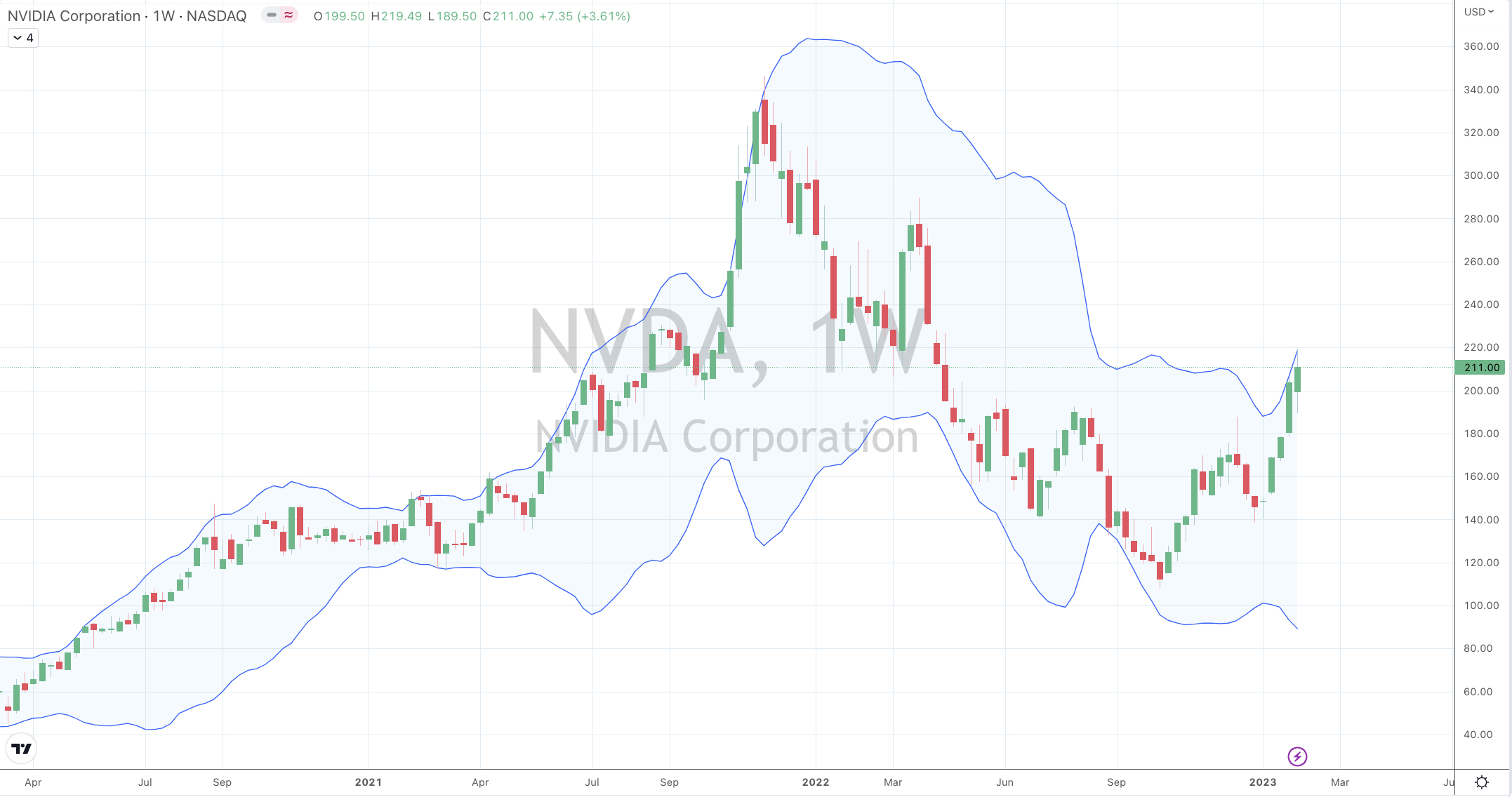
All of that in 2 months but I think hubby, Paul’s call option buying of Nvidia in the days prior to you announcing the trip to Taiwan haven’t worked out either (presuming he’s still holding them) as that stock has tanked 39% since your visit.

Is Biden’s decision on Friday October 7th, 2022 to ban semiconductor (and equipment) exports to China wise?

https://www.bloomberg.com/news/articles/2022-10-07/white-house-announces-new-restrictions-on-chip-exports-to-china?sref=qLOW1ygh

Since then (in 3 trading sessions) the shares in LAM Research, Applied Materials, Intel, AMD, Nvidia, KLA Corp, ASML and TSM have fallen 19%, 14%, 8%, 15%, 12%, 15%, 13% and 15% respectively.

Biden is still help bent on his pre-mid term election strategy of being tough on China and invoking massive domestic spending (the opposite to Obama, whom Biden blames for their mid-term mauling in 2014) but he causing higher inflation by ‘de-globalising’ relations which have traditionally assisted the United States and various nationalism and protectionist measures are adding to global tensions.

I don’t think Biden realises the job losses and investment losses he is about to cause with these export bans, let alone the investment losses being caused. 

For some perspective, notwithstanding overvaluations and possible slowing product demand, since is price peak in November 2021, Nvidia has seen its shares fall 65% and its market capitalisation has declined by $554 billion.

That is the same amount of money if you wiped out the entire market capitalisation of Australia’s largest 4 banks, BHP, Rio Tinto, Wesfarmers and Woolworths or 50% of the total market capitalisation of companies listed on the Australian Stock Exchange (ASX).

October 12, 2022

by Rob Zdravevski

rob@karriasset.com.au

Banks not only feed the piggies but they slaughter them too

I keep reiterating that what is more important about where interest rates have traded up to isn’t about the nominal rate, but rather the quantum or factor which the nominal rate have risen by.

Yes, the numbers look bigger when rates are rising from 0.5%…..but people, households, companies, governments etc etc don’t necessarily temper their borrowing when rates are low…..We tend to become accustomed to the ‘going rate’.

In general, the piggies are always at the trough.

When a family is seeking a mortgage of $600,000 but their credit provider announces the good news that they have been approved for $680,000, I suspect that they accept all of the $680,000. After all, they can use it for the landscaping etc etc.

We are happy to continue taking as much we can get or is available.

If my mobile phone plan allows for 20GB of data, I’m sure I’ll use it up and then ask for an upgrade to 40GB. Soon after, I’ll be requesting for an upgrade to 60GB of data.

When the Australian cash rates were 0.25% in last 2020, I was asked if I thought the Reserve Bank of Australia would cut rates at the next meeting.

My response was, “who cares”. The questioners were often shocked by my seeming flippancy.

At this point, I would add by asking, “How much debt do you have and how pressure are you under, that you need a further 15 or 25 basis points of relief”.

Today, if your cost of borrowing has risen from 3% to 6% and you are now speculating whether interest rates go up a further 1% receives the same response from me with the difference being, are you still carrying so much debt that you may ‘break’.

Is it the Fed that is possibly going to ‘break something’ or have we simply kept taking on more debt?

In the graphics below, you can see where the citizens of various nations sit in the indebted stakes.

source: Trading Economics
https://tradingeconomics.com/country-list/households-debt-to-gdp

Look at those frugal and financial responsible Latvians and Hungarians.

Household Debt as % of net disposable income
source: OECD

Let me get back to the illustrating the ‘factor’ of the rise.

When rates went from 6% to 8%, it was only a 33% increase.

When rates went from 8% to 16%, it was ONLY a 50% increase.

Mortgage rates in Australia have nearly doubled. In the U.S., they have easily doubled.

The U.S. 2 years Treasury Bond yield has risen 10 fold.

When your interest repayments or the total cost of capital increase by such a factor, it is the quantum of the rise from the previous levels where you were comfortable with, that hurts the most.

My studies show that government bond yields have never risen by factors of 3 or 4 from their lows within any credit cycle.

At these extremes, as the chart within the below shows, the 2 year bond yield is miles above its 200 week moving average.

Why doesn’t mean reversion matter now, when it has many times prior?

Expecting rates to go higher and challenge gravity, probability and mathematics is a very foolish and crowded trade.

This is not about calling doom and whether the Fed ‘breaks something’……but rather it’s about thinking independently and reading the market tape as it is.

Behind the talk of where rates go to, sits speculative or investing opportunity.

If you have a view….then make the trade and take a position.

Those who shorted bonds when rates were 1% have made a fortune.

Today, if you think rates go up noticeably more……enough to tempt you into a trade, then short bonds and ride the expectation of whether the Fed keeps hiking rates to a point where ’they break something’.

If you think interest rates will fall, you could buy bonds.

Although, this is not a binary choice and the bond market may not be your natural business.

You can express you trade idea in many different manners.

For example, if interest rates keep rising, then you could short the equity of heavily indebted companies or technology stocks which aren’t profitable and have negative free cash flow, or

If you think rates are going to decline, then perhaps owing shares in high growth companies may see their prices ‘catch a bid’.

Of course, this is not personal advice and it’s important to do your research and analysis.

October 12, 2022

by Rob Zdravevski

rob@karriasset.com.au