Low Bitcoin volatility leads to a violent move

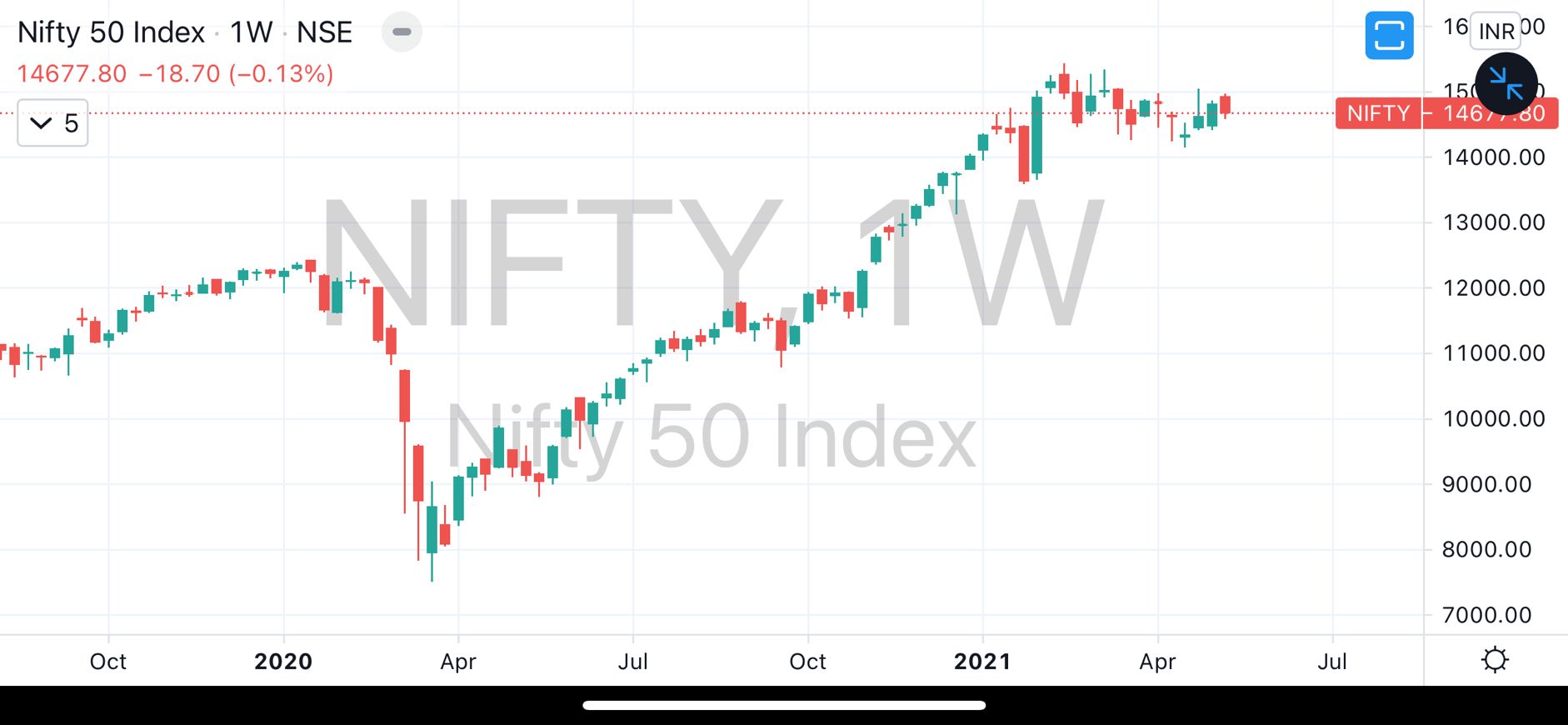
I am studying Bitcoin volatility and have found that the its 30 day historical volatility has fallen to its lowest level in my 10 years of data.

6 out of 7 times when its fallen to similar levels Bitcoin has rallied notably.

Last night, Bitcoin rose 3% or $300. It is currently trading at $10,878.

And Bitcoin’s correlation to the S&P 500 is ‘growing’.

The weekly chart below paints a clearer picture.

October 9, 2020
by Rob Zdravevski
rob@karriasset.com.au
Illustrating De-equitisation

In August 2020, there were 1,891 * companies listed on the Australian Stock Exchange (ASX), the lowest amount since May 2007.

Which is 7% less from the 2,026 record high of February 2018.

This figure would be drastically lower if we exclude over 200 ETF’s and 100 Listed Investment Companies (LIC’s).

And what if we consider the 1,324 listed entities (61% of the total*) with markets caps below $100 million ?

One-third (733) of the companies have market capitalisations below $25 million)

Incidentally, the lowest amount of companies listed over the past 18 years was 1,341 companies which was in March 2002, which is when my data ends.

The de-equitisation story is intact and made acute when an enormous amount of money is chasing fewer opportunities.

And Australia has the world’s 4th largest pension system with $2.1 trillion in savings.

Albeit, fiduciaries and managers in the superannuation world do allocate them globally, home currency bias and local currency obligations does favour a steady flow towards the ASX.

* there are 2,167 listed entities in total which includes foreign equity issuers including those comprising a stapled group along with wholesale & retail debt issuers.

October 9, 2020
by Rob Zdravevski
rob@karriasset.com.au

More Mid Cap happiness

My recent writings (publicly and separately to clients) about the Nasdaq being at extremes, the overweight (an over reliance) on the top 5-8 stocks in that index and investors paying for “growth or revenue at any price”, ultimately lead to commentary about allocating monies in mid cap stocks and especially as I stick with my bottom-up fundamental value and contrarian based investing style.

Whilst short-term news about relative outperformance and phrases involving “style or sector rotation” can irk me…

the S&P 400 Mid Cap and the Russell 2000 index have both soared 13.5% since their September 24, 2020 lows,

while the S&P 500 and the Nasdaq 100 have climbed 7.3% and 8.1% respectively.

Of course, we’ll take any of those returns any fortnight of the year,

but the movement of money away from expensive (growth with zero earnings) towards cheap (companies with actual profit) isn’t the most radical suggestion I have made.

October 9, 2020

by Rob Zdravevski

rob @karriasset.com.au

A good bounce for now

In the linked post below, I signalled that my various equity index targets were reached.

For the ASX 200, I was calling a retracement to 5,803. On that day (September 22, 2020) it traded to 5,763.

12 days onwards, the ASX 200 has risen 5% and it’s now trading at nearly 3 standard deviations above its daily mean.

It’s not a time to add to holdings today.

Be patient !

https://lnkd.in/gNr52Qv

October 8, 2020
by Rob Zdravevski
rob@karriasset.com.au

Oil Rigs…going cheap !

This is the lowest amount of oil rigs in operation within the United States since……”like ever”.

For the Oil, Gas and Statistic nerds – Scroll through the historical data in this link and you’ll be quite amazed.

Do you know what is currently going cheap in the world ?

Buying or renting an oil rig……

October 8, 2020

by Rob Zdravevski

rob@karriasset.com.au
Are they “natural buyers” ?

Gold ETFs now make up 35 per cent of global gold demand compared with just 8 per cent a decade ago.

October 8, 2020
By Rob Zdravevski
rob@karriasset.com.au

Anticipating a Country Rotation

Last week I wrote about my two best Equity Index ideas.

Buy the U.K.’s FTSE 100 and Spain’s IBEX 35.

I wanted to attach some better charts showing the monumental extremes of an index being oversold, not on a daily or weekly terms, but on a Monthly basis.

Because we’re looking at them on a Monthly view, we’re not about to trade out this position next month.

When you’re a buyer of securities at such extremes, you’ve got to give yourself 10% of price movement. After all, in the case of the IBEX, I’m looking for a 45% rise over the next 2-3 years as the index means revert towards its 200 day moving average, which is currently 10,000.

October 7, 2020
by Rob Zdravevski
rob@karriasset.com.au

Coffee filled the gap

Hello coffee lovers !

On Friday night, 2nd chance to buy coffee at $1.05 happened.

Arabica Coffee futures traded to $1.0490.

Will keep you posted how it turns out.

Rule # 1: Be sure to roll over your futures contract otherwise you’ll need a lot of room if you accidentally take physical delivery.

https://robzdravevski.com/2020/09/29/2nd-chance-to-buy-coffee/

Watching the AUDJPY

The AUDJPY….

I’m watching an acute short-term moment on this quite reliable indicator of “risk” or at least market direction and sentiment.

The chart below shows today’s early action of the AUDJPY peppering that descending trend line. Tie that into yesterdays post (link below) and you can watch how other assets react.


https://robzdravevski.com/2020/10/05/short-term-aud-fx-range/

October 6, 2020
by Rob Zdravevski
rob@karriasset.com.au

Bullish on Exxon Mobil (finally)

I have been negative on Big Oil but there have been some monumental moves lately. Some stocks are trading at “monthly” oversold levels not seen the 1960’s.

At $33, my calculations tell me you can Buy Exxon Mobil at its intrinsic value.

So this example turns XOM into a bond and still have some optionality.

Buy stock at $33 and
Buy January 2023 $30 strike Put option for $6.50.

Dividends are slated to be 87 cents per quarter. You’ll earn $7.83 over 9 quarterly dividends.

And the difference paid between your put option insurance and dividends earned is $1.33 or equivalent to 4% of the price paid for the stock today.

Over the next 2 1/4 years, this cash difference easily beats (even if it’s taxed) the 0.35% yield on the 5 year U.S. Government Treasury bond.

And the optionality is limitless, ranging from whether the oil price rises to $70, XOM returning to the Dow Jones Industrial Average or improving free cash flow, margins and EBITDA from a low base.

With a market cap of $145 billion (net debt of $57 bn) thus an Enterprise Value of $202 bn on 2019 revenues of $214 bn (2020 likely to be $185 bn) and EBITDA of $30 bn.

The Queen Mary is about to do a U-turn.

I’ll write about Gazprom & Russian oil, later.

October 6, 2020
by Rob Zdravevski
rob@karriasset.com.au