Why is the ‘Western’ way considered superior?

“Westerners” make up somewhere between 11% – 15% of the world’s population (depending if we include Latin America and Eastern Europe)……

but ‘the west’ seems to dictate the principles of how business is done…..

and ‘the west’ actively publish books on the topics of ‘how to do business’ in other parts of the world, aiming to teach readers how to adapt and what to look for and do, when dealing with other cultures.

Do you think Africans, Asians, Arabs (and Persians), Latinos or Eskimos produce guides on how to do business with westerners?

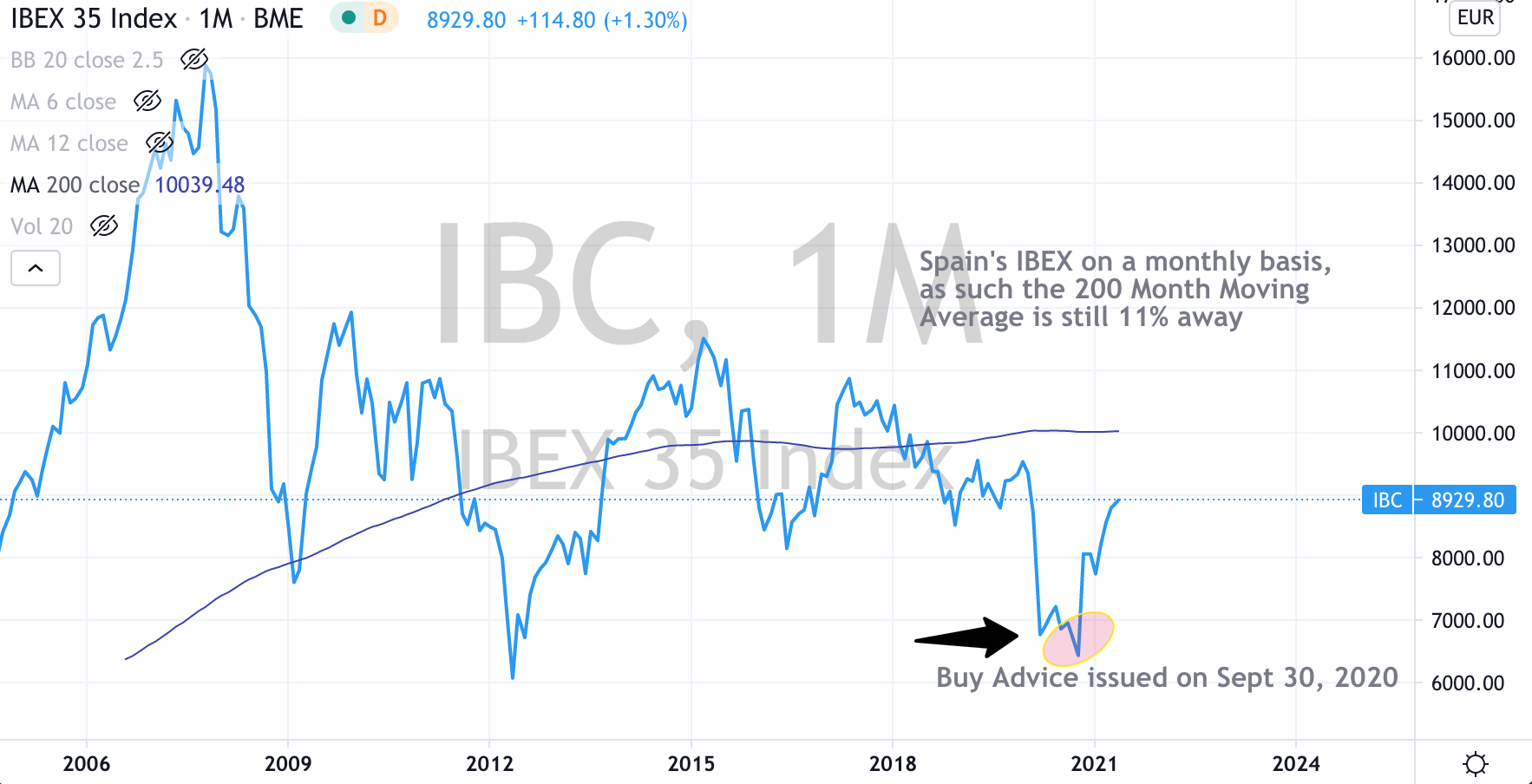
Copper Rally To Fizzle

At today’s $3.48, Copper’s bull run from April’s $2.30 is done for now.

I’m still a commodities bull and will watch closely and may become interested again at $3.15.

Also, watch for implications a falling Copper price has on U.S. 10 Year Government Bond Yields.

Linked Post.

December 2, 2020
by Rob Zdravevski
rob@karriasset.com.au

Reading the Bitcoin signals

In this October 9th, 2020 post I highlighted the 10 year low in Bitcoin volatility (BVOL) and in 6 out of 7 previous times that we saw an extreme low in BVOL, the price of Bitcoin rallied ‘notably’.

Since then it has risen from the $10,800 mark to $19,200…….or 78% in 8 weeks.

The BVOL story has also changed. It has risen from 29 to 71.

December 2, 2020
by Rob Zdravevski
rob@karriasset.com.au

Tesla, ETF’s and Distortion

I can’t help think the return of the stock picker is nigh.

Here are some samples of concern with being invested in passively managed market capitalisation based Exchange Traded Funds (ETF’s)

Tesla’s entry into the S&P 500 Index will force index funds to buy about $73 billion worth of its shares, S&P Dow Jones Indices said.

‘Your’ S&P 500 ETF will be “forced” to acquire Tesla shares and I think many ‘active’ managers may do the same, simply to prevent underperforming against the index.

This means that investors in a S&P 500 ETF will become owners of Tesla shares on December 21, 2020 when the company has a whopping market capitalisation of ~$554 billion.

Furthermore, the market cap of whichever company leaves the S&P 500 (to make room for Tesla) will hardly be comparable.

For example, lowly weighted HollyFrontier and Xerox have market caps of $4 billion.

Adding to the peril, is that the six FAANGM stocks (Facebook, Apple, Amazon, Netflix, Google & Microsoft) already account for 27% of the index’s composition;

while the top 10% weighted stocks in the S&P 500 provide 54% of the index’s concentration and risk;

and lastly, ‘indexing’ now accounts for or controls 45% of the whole market.

Distortion is everywhere.

https://www.reuters.com/article/usa-stocks-tesla/update-1-tesla-to-join-sp-500-in-single-tranche-idUSL4N2IG4SA

December 2, 2020

by Rob Zdravevski

rob@karriasset.com.au
I don’t call them ‘wicked’ for no reason

As markets came to a close on November 9th, 2020 (U.S. time), I wrote a post which highlighted a trading day not seen too often. The final paragraph summarises it well.
Link: 

3 weeks later, let’s compare;

On that ‘wicked’ November 9th day,
The major U.S. indices rallied hard during the day, then gave up most or all of those gains. This is what I call a reversal and a potential bull trap.

The S&P 500 saw a high of 3,646. Today, it’s 3,638.
The Nasdaq 100 intra-day high was 12,268, the current price is 12,258.

No change in 3 weeks.
The trap is still in progress.

Silver & Gold tanked on Nov 9th.
Such large ‘down days’ tell us to stay on the sidelines for a little longer.
Silver’s low was $24.08, todays its 8% lower at $22.13.
Gold traded to a low of $1,850, now its 4.3% lower at $1,770.

Oil boomed 6% higher to an intra-day peak of $43.46 and has advanced a further 10% up to $48.00.

The U.S. KBW Bank Index which soared an incredible 13.5% eeked out an additional 3% in the next couple days.

10 year bond yields surged from 0.81% to 0.93%. They rose to 0.98% yet failed a weekly close above that. Now, they are 0.83%. My comments in the link were spot-on.
https://lnkd.in/e-H5XY3

In summary, whoever reversed remained steady, those who tanked carried on falling and whoever soared, advanced a little more.

November 30, 2020
by Rob Zdravevski
rob@karriasset.com.au
Selling some Singapore Dollars

Following some stellar returns over the past 30 days, many equity indices (Italy & Spain, both +25%, U.S. Midcaps +17%, FTSE 100 +17%, Korea’s KOSPI +16%) and some commodities (Brent Crude +31%, Heating Oil +29%, Cocoa +22%, Platinum +14%) are due for some mean reversion and little digestion……

the only clear ‘extreme’ that I see in macro global markets today is an Overbought Singapore Dollar (SGD) against the USD.

So at 0.7470, Sell your strong SGD and buy the weak, cheaper USD.

Incidentally, the Strait Times Index has risen 17% since the beginning of November.

November 27, 2020

by Rob Zdravevski

rob@karriasset.com.au

* the link to my disclaimer is below.

https://lnkd.in/gMfFyCp

A 3-sigma event in Bitcoin

A week ago I wrote this about Bitcoin’s price action.

The arrival of the Bitcoin cavalry saw it trade to 3 standard deviations above its weekly mean and thus it’s logical to assume that the ‘fat part of the trade’ has been seen.

Such a 3-sigma event is expected approximately every 3 years.

Earlier this week, it lurched a $1,000 higher to reach $19,500 before falling 11% in the past 2 days.

As I write this, it’s now trading at $17,180.

Whether you consider Bitcoin a currency (which is different to a store of value) or a speculative digital asset, its underlying price volatility makes it a most fascinating asset to monitor, both mathematically and behaviourally.

Over the next couple months, I expect Bitcoin to trade back to the $13,500 level and notwithstanding any upheaval, likely to hold $12,000 as illustrated by the trend lines in the chart below.

Incidentally, over the past 2 days ,XRP and Ethereum (other cryptocurrencies) have fallen 24% and 15% respectively.

November 27, 2020
by Rob Zdravevski
rob@karriasset.com.au
Weekly Bitcoin price with 3 standard deviation Bollinger Bands

Warming to Airbnb

Some reasons I am taking a shine to Airbnb’s IPO include;

a) Airbnb is the largest brand in hospitality.

b) It’s so ubiquitous in our vernacular that I simply choose to “airbnb it” on my next trip.

c) It has an incredibly large business moat with a huge network of supply (hosts) and demand (guests).

d) the 2 most gleaning lines that I picked up from its S-1 are;;

“Our hosts largely come to us organically with 79% of our hosts coming directly to our platform to sign up to host in 2019.”

“Most of our guests discover Airbnb organically, with approximately 91% of all traffic to Airbnb coming through direct or unpaid channels during the nine months ended September 30, 2020.”

This means Airbnb doesn’t really need to pay any third party sites including Google or Facebook, in order to direct traffic and potential customers their way, unlike the hotel chains and other associated accomodation businesses.

Such organic traffic is ‘golden’ and unique.

e) And the company is choosing to go public at a point at a trough in the travel and leisure industry. 

Critics may focus on the company being “asset-light”. 

Well, I say, why not ?

I don’t think I want to own shares in an accomodation business with relatively fixed costs, which in turn owns (or needs to service debt) properties and then manage and maintain these hard assets which are only (if not singular) in a selected few locations.

It’s not tempting to own shares in Marriott or Hilton?

Amongst the ‘asset light’ universe, Mastercard and Visa both trade near 22 times revenue.

If we take Airbnb’s $5 billion revenue and place it on 15 times multiple, you get a market cap of $75 billion, which is notably higher than the touted $30-$35 billion IPO valuation.

And if we look at ‘asset light’ Uber, which has a market cap of $88 billion, I somewhat dismiss their $13 billion of revenue when they are losing $5 billion per annum and have never had a profitable quarter.

While Airbnb have reported profitable quarters, with its most recent (Q3 2020) being $220 million and on track to be in the black in 2021.

Below is the link to Airbnb’s S1 registrstion.

https://www.sec.gov/Archives/edgar/data/1559720/000119312520294801/d81668ds1.htm#toc81668_11

November 24, 2020

by Rob Zdravevski

rob@karriasset.com.au
Introducing the Gold/Oil Ratio

Readers of my posts would realise that I am bullish Oil and am somewhat subdued about the prospects of Gold.

The Gold/Oil Ratio which illustrates how many barrels of oil are needed to buy an ounce of gold.

The chart below shows us a 50 year history and never has Oil traded so cheap relative to Gold. A distortion in the ratio (around April 2020) occurred recently when the price of West Texas Intermediate Oil went negative for a moment,

and thus I prefer to watch the price of Brent Crude.

While Gold bulls are calling for its price to double, I don’t see why I can’t make a similar claim for Oil especially when I present you with some historical analysis and while there is quite a deficit in supply and inventories.

Since 1900, Crude has averaged a 12-month gross return of 7% while Gold has averaged a 12-month gross return of 5%. Oil has generated a negative 12-month return 39% of the time while gold has generated a negative return 32% of time.

However, when the Gold/Oil Ratio has exceeded 30:1 (i.e., oil is cheap relative to gold), Crude has returned 32% on average over the next twelve months (over four times its long-term average), while gold has returned 4% on average. Oil was lower only 13% of the time. On average, oil outperformed gold by 28% during these periods compared with 2% normally.

And so today, the Gold/Oil Ratio is trading at 41 which is still near an all-time record.

FYI, the 50 year mean of the Gold / Oil Ratio is 16.

November 23, 2020
by Rob Zdravevski
rob@karriasset.com.au
source credit: Goehring & Rozencwajg

Facebook vs. Airbnb – Comparing IPO’s

Facebook’s IPO in May 2012 was a big event.
As a private company, it raised $1 billion.

At the IPO, FB sold $16 billion worth of shares of which the company kept $6.8bn. The rest went to expenses, brokers and selling shareholders.

FB’s IPO market cap was $104 billion. For 2012, FB produced $5 billion in revenue and net profit of $1.3 billion.

AirBnb has raised $6 billion cash as a private company and it’ll “raise” $2 billion at the IPO (don’t yet know how much the company keeps – see selling shareholders).

It’s market cap at IPO will be $35 billion.

AirBnB has $5 billion revenue although it’s not profitable yet. That doesn’t matter ’cause the market these days is only paying for multiples on revenue.

Facebook’s stock price halved soon after the IPO to reach a low of $17.55 per share. Since then, it has risen to a price of $272 per share and boasts a market cap of $777 billion.

Comparatively to other recent “tech” IPO’s, Facebook’s value saw the majority of its appreciation as a public company.

Inversely, AirBnB has raised a lot of money as a private company at ever escalating valuations, so I say be careful being the absorbing buyer of the selling shareholder, however this stock could be a real crackerjack.

Incidentally, AirBnb, Uber etc etc are not “tech” companies.