9th occurrence in 34 years

The weekly Relative Strength Index (RSI) for the Nasdaq 100 Index has just registered a reading of 33 or less, for only the 9th time in 34 years.

I’m watching for an extension of the March swoon before initiating some new equity investments and adding to some existing ones.

But under the heading of conditioning for lower and perhaps ‘normal’ returns, don’t expect a moonshot rebound, while I’ll also keep in mind that nobody ‘deserves the bottom’.

March 13, 2022

by Rob Zdravevski

rob@karriasset.com.au
Macro Extremes (week ending March 11, 2022)

The following assets (on a weekly timeframe) registered an Overbought reading or traded more than 2.5 standard deviations above its rolling mean.


Extremes “above” the Mean (at least 2.5 standard deviations)

China Coal

Gasoil

Heating Oil

Japanese Korean (JKM) LNG Marker

Tin

Nymex LNG

Platinum

Palladium

Dutch TTF Gas

Uranium

Rice

AUD/GBP


Overbought (RSI > 70)

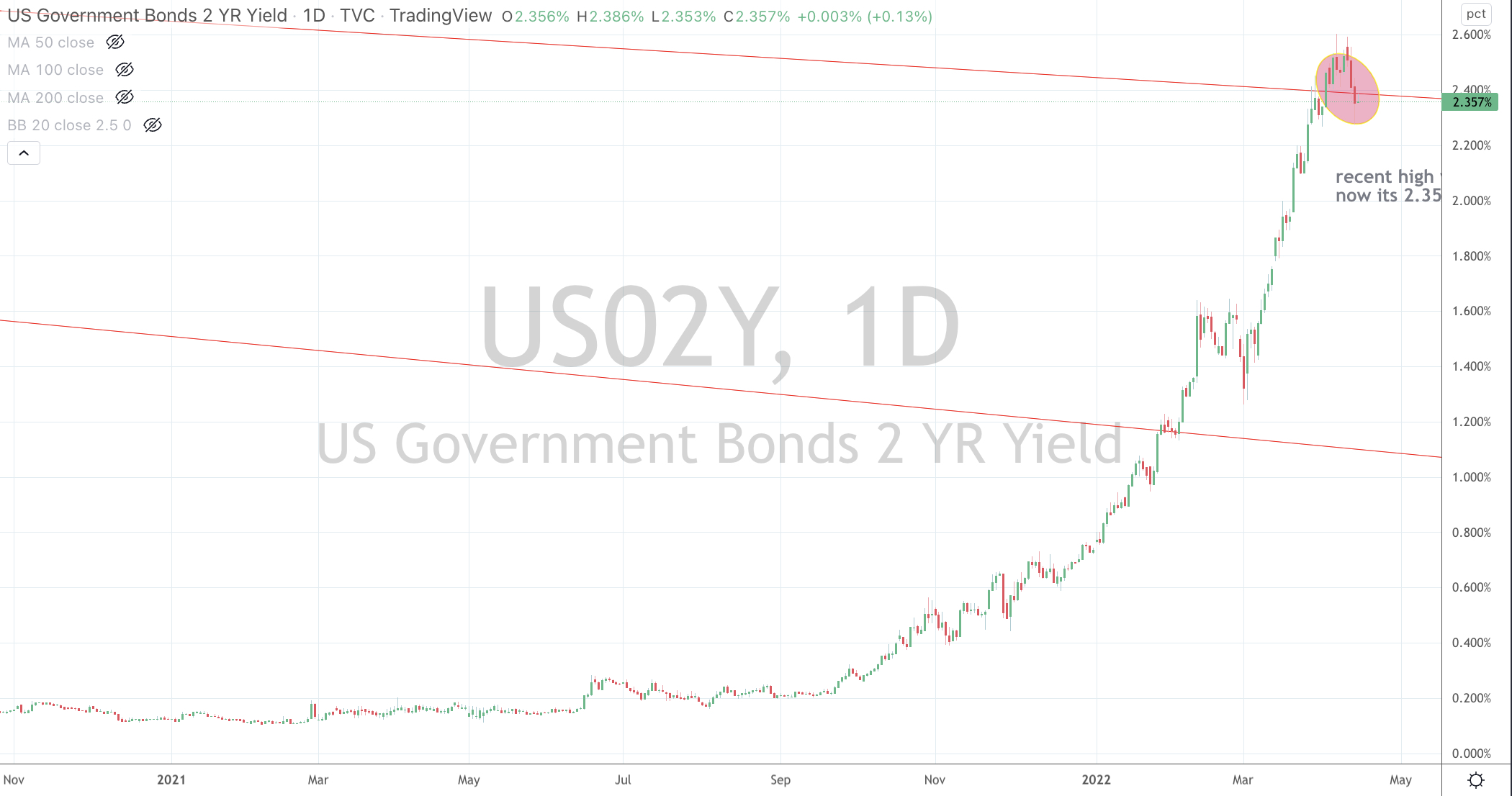
Australian 2, 5 & 10 year government bond yields

U.S. 2 & 5 year government bond yields

Greek, Spanish, Turkish & New Zealand 10 year government bond yields

Soybeans


The Overbought Quinella – Both Overbought and Traded at > 2.5 standard deviations above the weekly mean)

Australian 3 year government bond yields

U.S. Dollar (DXY) Index

Bloomberg Commodity Index

CRB Index

WTI Crude Oil

Brent Crude Oil

Gasoline 

Rotterdam Coal

Australian Coal

Nickel

Corn

Wheat

Gold Volatility Index

Gold (in AUD & USD)

Assets (securities) which touched the other side of the extreme, being Oversold (where the RSI is < 30) or were at least 2.5 standard deviations below its mean are;


Extremes “below” the Mean (at least 2.5 standard deviations)

U.S. 10 year minus Australian 10 year government yield spread

Copper/Gold Ratio

Oil/Gold Ratio

EUR/AUD

EUR/GBP

EUR/USD

DKK/USD

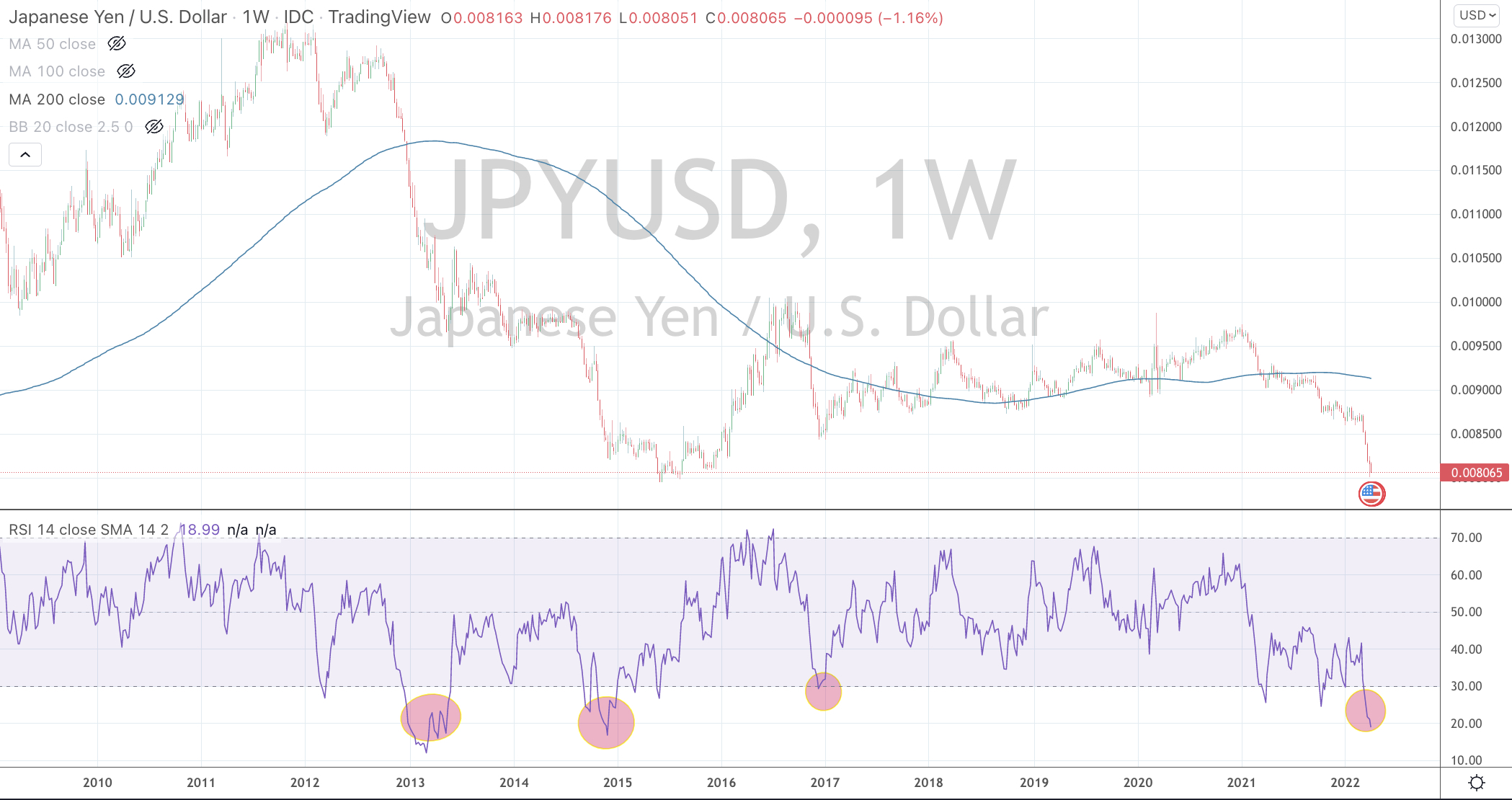
JPY/USD

Dow Jones Industrial Average

S&P 500

U.S. (KBW) Banking Index

Sensex, IBEX, Nikkei 225, DAX, FTSE-100 and Italy’s MIB equity indices


Oversold (RSI < 30)

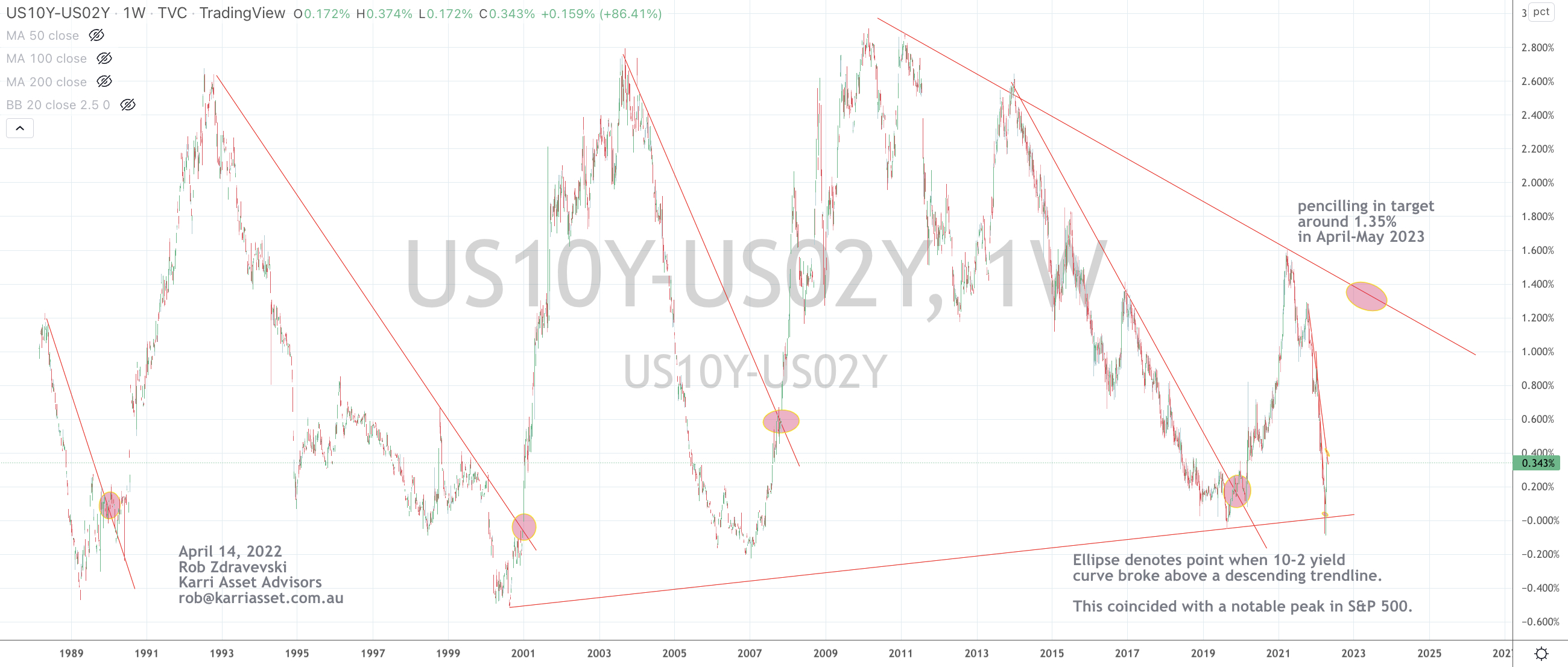
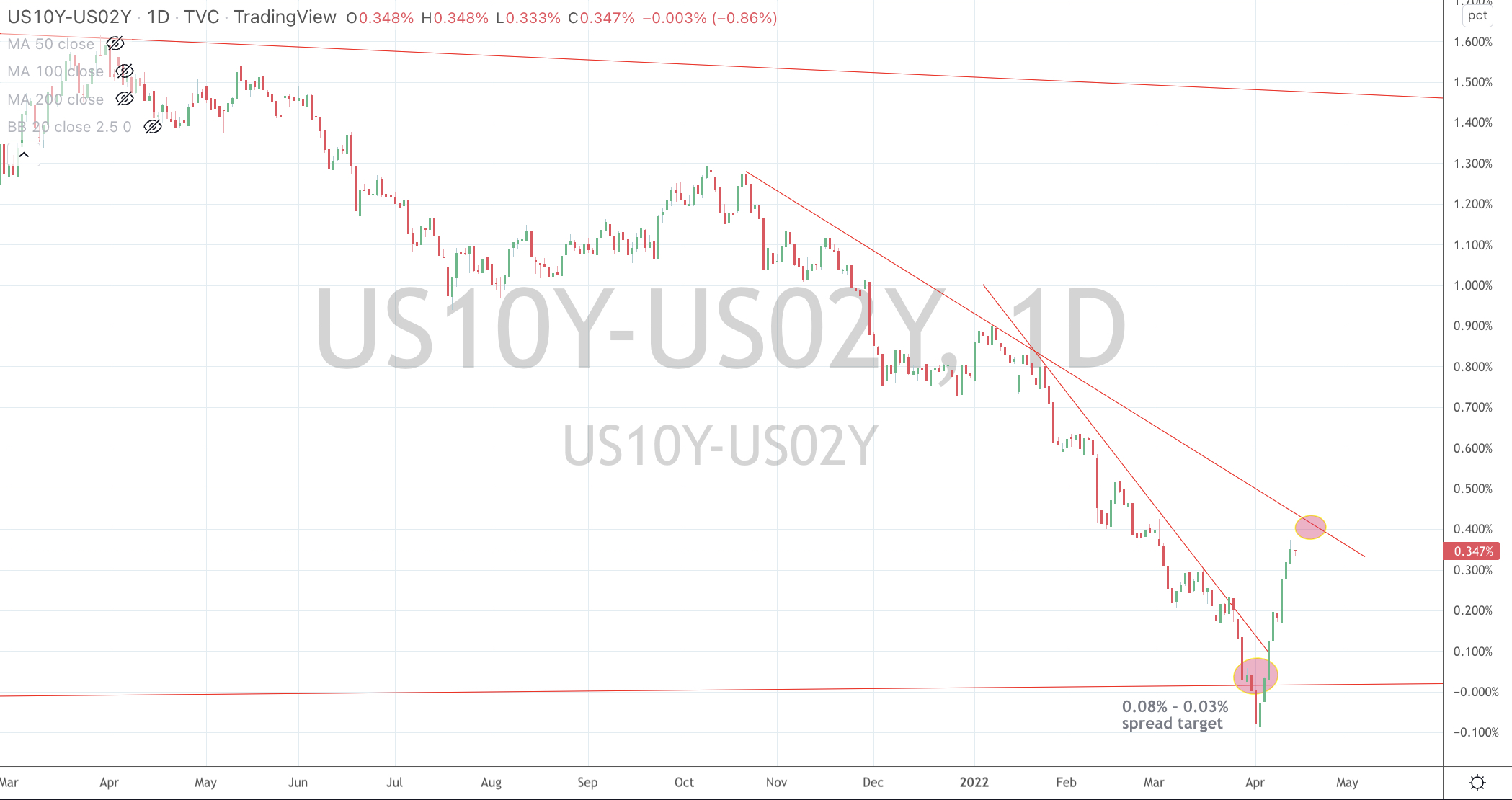
U.S. 10 year minus 2 year government bond yield spread

(Now at the same level as March 9th, 2020)


The Oversold Quinella – Both Overbought and Traded at > 2.5 standard deviations above the weekly mean)

KRW/USD

SEK/USD

HKD/USD

AEX, CSI 300, HSCEI, Hang Seng, Helsinki, Stockholm & Switzerland’s SMI equity indices


Notes & Ideas:

Broadly, we have seen an opposite of the previous week. It was a resumption of weakness for American indices and a rebound in Europe. For some context, a 4% bounce in an Oversold DAX merely recovers part of the previous week’s 10% decline and Helsinki’s 7% rise recouped part of last week’s 1% slump.

But we did see reasonable declines amongst Asian bourses.

Last week, I wrote that it “was a week for the record books”. 

Alas, that has all been trumped by even higher intra-week highs, some resembling ‘blow-off tops”and then followed by wicked retracements and reversals.

For example, Gasoil (diesel) was up 40% at one stage to end up closing the week 14.6% lower. JKM was up 34%, Palladium surged 39% and then registered a 6% decline on the week, Nickel soared 152% and saw a 13 standard deviation weekly move while Copper traded 4 standard deviations above its mean.

If you didn’t look at the numbers, you’d think Oil was up on the week while mild mannered Cocoa was steady and unchanged. 

Incidentally, it’s OK that Wheat fell 8% for the week because it rose 40% last week.

In other reversal news, bond yields rose, meaning prices fell suggesting geopolitical risk was waning.

While it remains a sellers market in commodities, it is a buyers market in selected equities.

As I’ve written in recent newsletters, I am finding the most amount of investible opportunities than I’ve seen in the past 15 months.

The larger advancers over the past week comprised of; 

Baltic Dry Index 26.5% (which is + 76% in 6 weeks), Aust. Coal 9.8%, Gold 1%, Hogs 2.3%, Nickel 25.4%, Silver 1.4%, Cotton 4%, Urea 4.2%, Uranium 16.5%, Gold (in AUD) 2.1%, Corn 1.1%, CAC 3.3%, DAX 4.1%, MIB 2.6%, IBEX 5.5%, Sensex 2.4%, Helsinki 6.6%, Stockholm 4.3%, SMI 1.7%, FSTE 2.4% and Istanbul rose 4%.

The group of decliners included;

Aluminium (11%), Rotterdam Coal (15.9%), China Coal (11%), WTI Crude (5.5%), Gasoil (14.6%), Copper (6.3%), Heating Oil (9.5%), HRC (4.3%), JKM (3.9%), Lumber (11.6%), Nymex LNG (33.3%), Tin (5%), Natural Gas (5.8%), Orange Juice (6.2%), Palladium (6.2%), Gasoline (6.5%), Brent Crude (4.8%), Rice (3.6%), Wheat (8.5%), Shanghai (4%), KBW (2.3%), CSI 300 (4.2%), DJIA (2%), HSCEI (8.2%), HSI (6.2%), IBOV (2.4%), Kospi (2%), S&P Midcap 400 (1.7%), Nasdaq (3.9%), Nikkei (3.2%), SMI (3.5%), S&P 500 (2.9%), TAIEX (2.7%), DJ Transports (3.8%) and Australia’s ASX 200 only declined 0.7%, erasing part of last weeks 1.6% advance.

March 13, 2022

by Rob Zdravevski

rob@karriasset.com.au 

Bitcoin and S&P 500 may swoon together

As a proxy and correlation for ‘risk-on’ and risk-off’ sentiment, Bitcoin is once again poised at a support level (~$38,000) worth watching.

And more so, as it remains in a medium term downtrend.

Failing to hold this near term support, Bitcoin should visit the $29,700 (+/- $250) area.

Such a 24% decline should coincide with my previous writings about a 20% decline in the S&P 500.

March 11, 2022
by Rob Zdravevski
rob@karriasset.com.au

Nickel’s price doesn’t add up

While Nickel is used in the manufacture of stainless steel, it’s also used in producing shiny things on cars such as grilles and wheels.

Furthermore, it’s part of the production in lithium-ion batteries for electric vehicles.

But now, 1 tonne of Nickel (US$80,000) is worth more than the cost of an above average whole, manufactured and finished car.

March 9, 2022
by Rob Zdravevski
rob@karriasset.com.au

Brent extremes update

While Brent is yet to hit its highest ever price…..

it has traded to its highest percentage above its 200 week moving average,

and 3.5 standard deviations above its weekly mean,

which hasn’t happened too often.

March 7, 2022

by Rob Zdravevski

rob@karriasset.com.au

Gold stocks still haven’t broken September highs

In the coming days, I’m watching whether gold stocks make higher highs than those seen a few months ago.

This will help decide if we see a further leg higher.

This is important (and against growing probability) because the Gold price has just touched a weekly overbought extreme in RSI and my preferred greater 2.5 standard deviation.

The charts below feature the prices of Newmont and the U.S. junior gold miners index along with Australia’s Northern Star Resources and Evolution Mining.

March 7, 2022

by Rob Zdravevski

rob@karriasset.com.au

Macro Extremes (week ending March 4, 2022)

The following assets (on a weekly timeframe) registered an Overbought reading or traded more than 2.5 standard deviations above its rolling mean.


Extremes “above” the Mean (at least 2.5 standard deviations)

Gold

LNG

Copper

USD Index (DXY)

Uranium


Overbought (RSI > 70)

Australian 2, 3 and 5 year government bond yields

U.S. 2 year government bond yields

Greek & New Zealand 10 year government bond yields

Tin

Soybean


The Overbought Quinella – Both Overbought and Traded at > 2.5 standard deviations above the weekly mean)

Russian 10 year government bond yields

Bloomberg Commodity Index

CRB Index

WTI Crude Oil

Brent Crude Oil

Gasoline

Heating Oil

Gasoil

Dutch TTF Gas

Aluminium 

Rotterdam Coal

Australian Coal

Palladium

Nickel

Corn

Wheat

Rice

Nikkei 225 Index

Gold Volatility Index

Assets (securities) which touched the other side of the extreme, being Oversold (where the RSI is < 30) or were at least 2.5 standard deviations below its mean are;


Extremes “below” the Mean (at least 2.5 standard deviations)

KRW/USD

EUR/AUD

EUR/USD

DKK/USD

SEK/USD

RUB/USD

Dow Jones Industrial Average

Sensex

Swiss SMI


Oversold (RSI < 30)

U.S. 10 year minus 2 year government bond yield spread

(Now at the same level as March 9th, 2020)


The Oversold Quinella – Both Overbought and Traded at > 2.5 standard deviations above the weekly mean)

AEX, CAC, DAX, MIB, IBEX, Helsinki & Stockholm equity indices


Notes & Ideas:

It was a “relative” mute week for American indices but not so for European counterparts.

Helsinki’s bourse took a bruising by falling 11.4% in the week, due to proximity to Russia and murmurs of them yielding neutralism and possibly joining NATO, while France;s CAC and the German DAX both 10% for the week.

It was a week for the record books.

While the biggest news in in the energy complex, there are interesting parables such as Natural Gas still not above its September 2021 highs.

Some of the moves were extraordinary.  Rotterdam delivered coal rose 99% in a week and Gasoil (diesel) soared 42%. 

The second biggest news is the moves in bond yields. 

Aussie 10’s (which aren’t overbought) moved from 2.25% to 2.10%.

Canadian 10’s yields fell from 1.90% to 1.66%, while the yield in French 10’s collapsed from 0.70% to 0.44%.

Inversely, the Russian Central Bank double its policy rates and thus the traded 10’s rose from 12.2% to 19.9%. 

For owners of French bonds, I wonder how tempting it may be to cash in their 0.44% yielding bonds, convert EUR into a very weak Ruble to Buy 20% yielding government bonds.

While the French rely on Russian nuclear fuel to power the nuclear power stations which generates 70% of their electricity, the analysis is will the Russian Government be creditworthy to pay back that bond and not default.

The larger advancers over the past week comprised of; 

Aust. Coal 30%, Aluminium 13.7%, Rotterdam Coal 99.3%, Brent Crude 19.9%, Baltic Dry Index 3.5%, WTI Crude 26.3%, DXY 2%, Iron Ore 2.2%, Gasoil 41.6%, Copper 10.1%, Heating Oil 32.5%, Hot Rolled Coil Steel 16.3%, JKM 40.5%, Lumber 9.3%, LNG 58.6%, Natural Gas 12.2%, Nickel 20.7%, Orange Juice 8.8%, Palladium 26.3%, Platinum 6.3%, Gasoline 23.3%, Sugar 7.6%, Silver 7.4%, CRB 13.4%, TTF 106.7%, Urea 15.9%, Uranium 7.9%, Gold in AUD 2.3%, Gold in USD 4.3%, Corn 14.4%, Oats 8.3%, Rice 6.7%, Soybeans 4.8%, Wheat 40.6%, KOSPI 1.4% and Australia’s ASX 200 1.6%.


The group of decliners included;

Hogs (3.1%), Coffee (6%), Cattle (4.3%), AEX (7.7%), KBW Banking Index (4.4%), CAC (10.2%), DAX (10.1%), MIB (12.8%), HSCEI (3.8%), Hang Seng  (3.8%), IBEX (9%), S&P 400 Midcap (1.8%), Nasdaq 100 (2.5%), Nikkei (1.9%), Sensex (2.5%), Helsinki (11.4%), Stockholm (7.3%), Russell 2000 (2%), SMI 5.7%, SOX (5.6%), Singapore’s STI (2.1%) and FTSE 100 fell (6.7%).

March 7, 2022

by Rob Zdravevski

rob@karriasset.com.au 

Reading between the nuclear lines

“Russia produces about 35% of the world’s enriched uranium for reactors, about twice as much as the No. 2 provider, and supplies about 20% of the U.S. industry.”

https://www.bloomberg.com/news/articles/2022-03-03/russian-sanctions-pose-risks-to-u-s-nuclear-power-industry?sref=qLOW1ygh

In dollar terms, South Korea, France, China, Sweden and the United Kingdom are amongst the larger importers of U-235 enriched uranium plutonium compounds.

France derives 70% of its electricity via nuclear power.

Can you see why Macron is ‘staying in touch’ with Putin prior and during the Russian/Ukraine war?

March 3, 2022

by Rob Zdravevski

rob@karriasset.com.au

#variables

Once in a black moon

This morning, the price of WTI Crude Oil traded 3 standard deviations above its rolling Weekly mean.

It is the 8th such occurrence in the past 26 years.

March 3, 2022

by Rob Zdravevski

rob@karriasset.com.au

Oh the hypocrisy!

The United States receives 8% of its Crude Oil imports from Russia.

(on another note, 2% of its oil imports come from Iraq and a further 1% from Libya)

The U.S. have announced a release of 30 million barrels from their Strategic Petroleum Reserves.

Various news reports carry the sub-text that the release will assist to ‘end the weaponisation of Russia oil’.

The United States import 30 million barrels of oil from Russia ALONE every 2 months.

In fact, the Biden administration is on a run rate (so far) of importing more Russian than during the Trump years.

Don’t let the headlines and spin mislead you.

#context

March 3, 2022
by Rob Zdravevski
rob@karriasset.com.au