Macro Extremes (week ending March 4, 2022)

The following assets (on a weekly timeframe) registered an Overbought reading or traded more than 2.5 standard deviations above its rolling mean.


Extremes “above” the Mean (at least 2.5 standard deviations)

Gold

LNG

Copper

USD Index (DXY)

Uranium


Overbought (RSI > 70)

Australian 2, 3 and 5 year government bond yields

U.S. 2 year government bond yields

Greek & New Zealand 10 year government bond yields

Tin

Soybean


The Overbought Quinella – Both Overbought and Traded at > 2.5 standard deviations above the weekly mean)

Russian 10 year government bond yields

Bloomberg Commodity Index

CRB Index

WTI Crude Oil

Brent Crude Oil

Gasoline

Heating Oil

Gasoil

Dutch TTF Gas

Aluminium 

Rotterdam Coal

Australian Coal

Palladium

Nickel

Corn

Wheat

Rice

Nikkei 225 Index

Gold Volatility Index

Assets (securities) which touched the other side of the extreme, being Oversold (where the RSI is < 30) or were at least 2.5 standard deviations below its mean are;


Extremes “below” the Mean (at least 2.5 standard deviations)

KRW/USD

EUR/AUD

EUR/USD

DKK/USD

SEK/USD

RUB/USD

Dow Jones Industrial Average

Sensex

Swiss SMI


Oversold (RSI < 30)

U.S. 10 year minus 2 year government bond yield spread

(Now at the same level as March 9th, 2020)


The Oversold Quinella – Both Overbought and Traded at > 2.5 standard deviations above the weekly mean)

AEX, CAC, DAX, MIB, IBEX, Helsinki & Stockholm equity indices


Notes & Ideas:

It was a “relative” mute week for American indices but not so for European counterparts.

Helsinki’s bourse took a bruising by falling 11.4% in the week, due to proximity to Russia and murmurs of them yielding neutralism and possibly joining NATO, while France;s CAC and the German DAX both 10% for the week.

It was a week for the record books.

While the biggest news in in the energy complex, there are interesting parables such as Natural Gas still not above its September 2021 highs.

Some of the moves were extraordinary.  Rotterdam delivered coal rose 99% in a week and Gasoil (diesel) soared 42%. 

The second biggest news is the moves in bond yields. 

Aussie 10’s (which aren’t overbought) moved from 2.25% to 2.10%.

Canadian 10’s yields fell from 1.90% to 1.66%, while the yield in French 10’s collapsed from 0.70% to 0.44%.

Inversely, the Russian Central Bank double its policy rates and thus the traded 10’s rose from 12.2% to 19.9%. 

For owners of French bonds, I wonder how tempting it may be to cash in their 0.44% yielding bonds, convert EUR into a very weak Ruble to Buy 20% yielding government bonds.

While the French rely on Russian nuclear fuel to power the nuclear power stations which generates 70% of their electricity, the analysis is will the Russian Government be creditworthy to pay back that bond and not default.

The larger advancers over the past week comprised of; 

Aust. Coal 30%, Aluminium 13.7%, Rotterdam Coal 99.3%, Brent Crude 19.9%, Baltic Dry Index 3.5%, WTI Crude 26.3%, DXY 2%, Iron Ore 2.2%, Gasoil 41.6%, Copper 10.1%, Heating Oil 32.5%, Hot Rolled Coil Steel 16.3%, JKM 40.5%, Lumber 9.3%, LNG 58.6%, Natural Gas 12.2%, Nickel 20.7%, Orange Juice 8.8%, Palladium 26.3%, Platinum 6.3%, Gasoline 23.3%, Sugar 7.6%, Silver 7.4%, CRB 13.4%, TTF 106.7%, Urea 15.9%, Uranium 7.9%, Gold in AUD 2.3%, Gold in USD 4.3%, Corn 14.4%, Oats 8.3%, Rice 6.7%, Soybeans 4.8%, Wheat 40.6%, KOSPI 1.4% and Australia’s ASX 200 1.6%.


The group of decliners included;

Hogs (3.1%), Coffee (6%), Cattle (4.3%), AEX (7.7%), KBW Banking Index (4.4%), CAC (10.2%), DAX (10.1%), MIB (12.8%), HSCEI (3.8%), Hang Seng  (3.8%), IBEX (9%), S&P 400 Midcap (1.8%), Nasdaq 100 (2.5%), Nikkei (1.9%), Sensex (2.5%), Helsinki (11.4%), Stockholm (7.3%), Russell 2000 (2%), SMI 5.7%, SOX (5.6%), Singapore’s STI (2.1%) and FTSE 100 fell (6.7%).

March 7, 2022

by Rob Zdravevski

rob@karriasset.com.au 
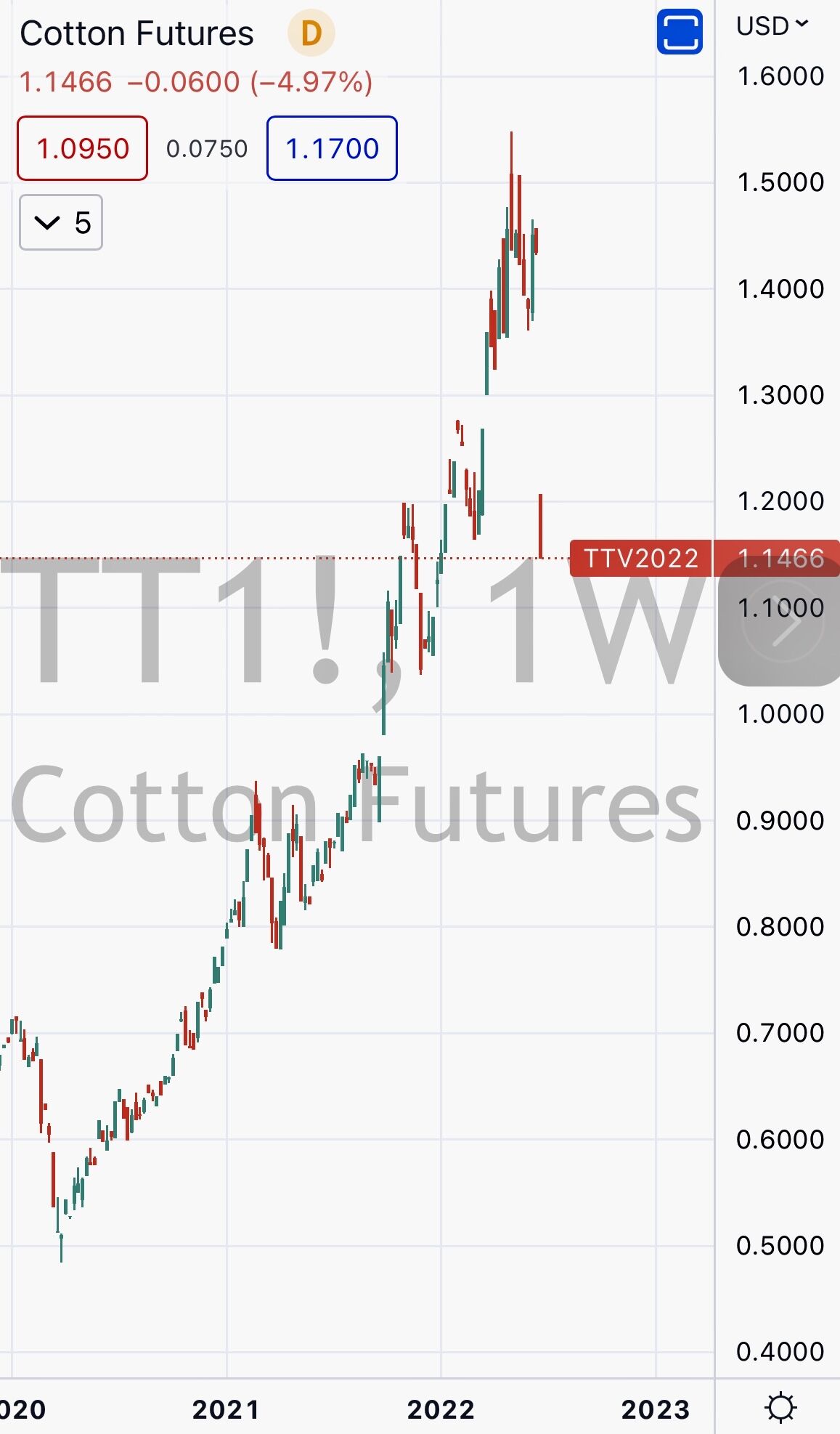
Reading between the nuclear lines

“Russia produces about 35% of the world’s enriched uranium for reactors, about twice as much as the No. 2 provider, and supplies about 20% of the U.S. industry.”

https://www.bloomberg.com/news/articles/2022-03-03/russian-sanctions-pose-risks-to-u-s-nuclear-power-industry?sref=qLOW1ygh

In dollar terms, South Korea, France, China, Sweden and the United Kingdom are amongst the larger importers of U-235 enriched uranium plutonium compounds.

France derives 70% of its electricity via nuclear power.

Can you see why Macron is ‘staying in touch’ with Putin prior and during the Russian/Ukraine war?

March 3, 2022

by Rob Zdravevski

rob@karriasset.com.au

#variables

Once in a black moon

This morning, the price of WTI Crude Oil traded 3 standard deviations above its rolling Weekly mean.

It is the 8th such occurrence in the past 26 years.

March 3, 2022

by Rob Zdravevski

rob@karriasset.com.au
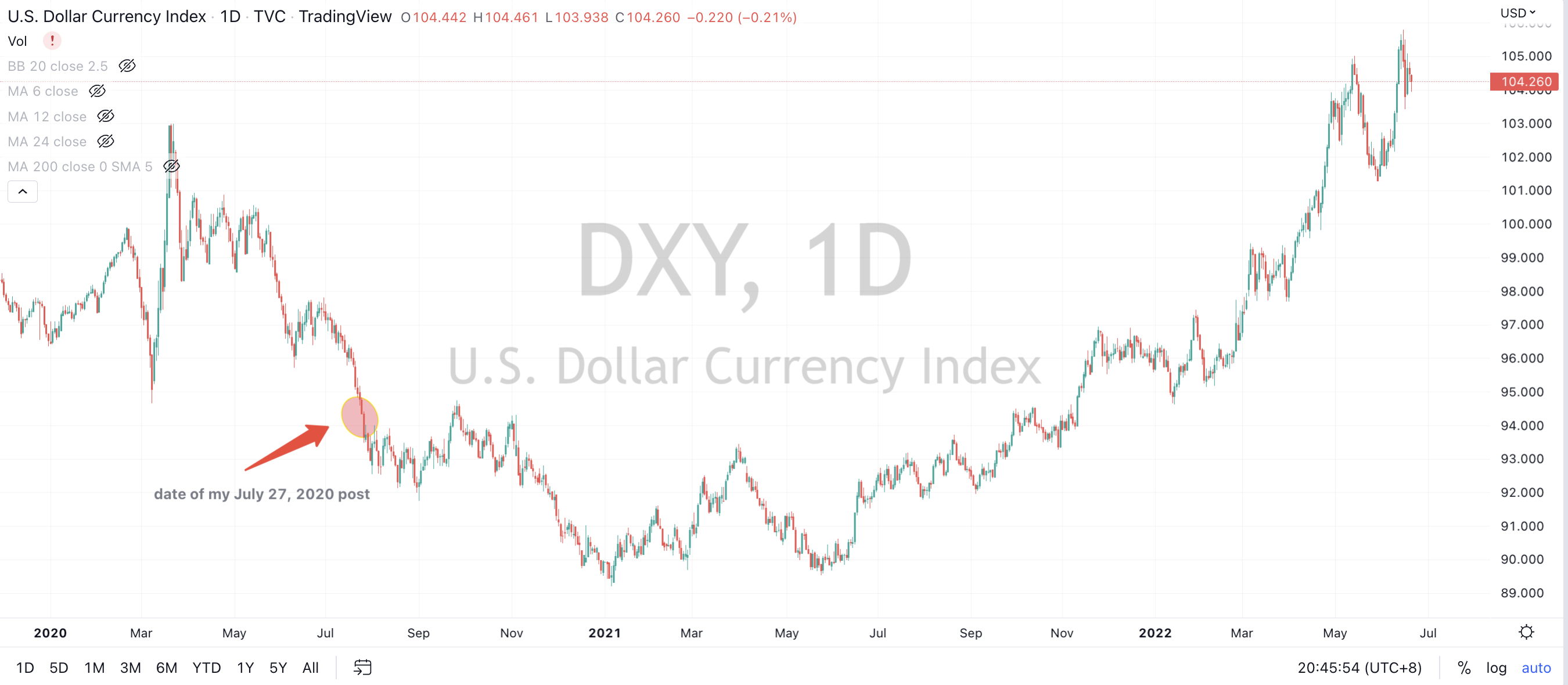
Oh the hypocrisy!

The United States receives 8% of its Crude Oil imports from Russia.

(on another note, 2% of its oil imports come from Iraq and a further 1% from Libya)

The U.S. have announced a release of 30 million barrels from their Strategic Petroleum Reserves.

Various news reports carry the sub-text that the release will assist to ‘end the weaponisation of Russia oil’.

The United States import 30 million barrels of oil from Russia ALONE every 2 months.

In fact, the Biden administration is on a run rate (so far) of importing more Russian than during the Trump years.

Don’t let the headlines and spin mislead you.

#context

March 3, 2022
by Rob Zdravevski
rob@karriasset.com.au
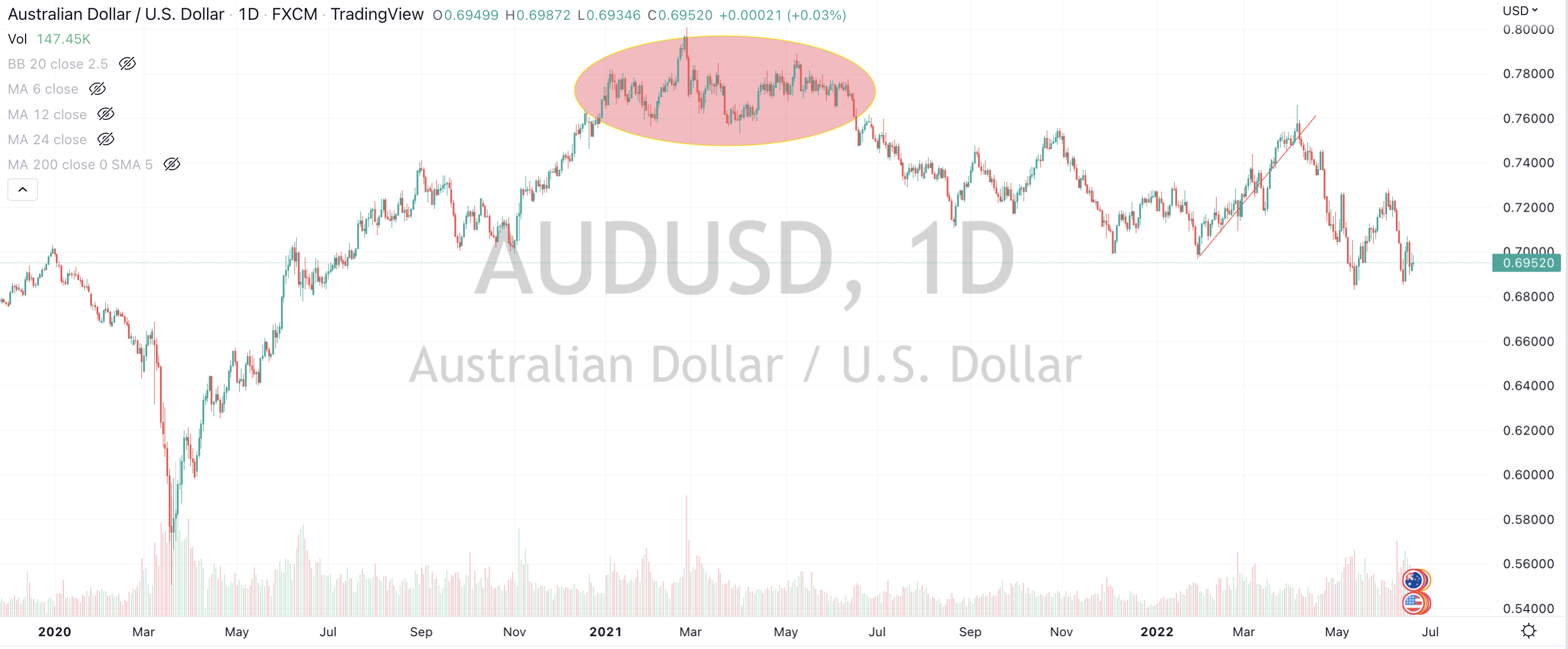
The best option trade I’ve ever seen

The market cap destruction of Russian equities is one of the most amazing things I’ve seen in capital markets.

Gazprom’s market cap 2 months ago was $65 billion.

This a screenshot from my phone last night, while trading was happening in Gazprom’s London listed GDR equities.

Last night’s low was 2 cents per share (from US$9.00).

It’s market cap was $250 million.

Trading was halted more than 15 times in the first couple hours during Wednesday’s trade.

The stock closed at 60 cents.

An asymmetric trade

The mind boggles as to the money lost and the speculators (market makers) who made 20 times return, from the low by the end of the close of the day’s trading.

So, let say $1 million was outlaid (which is just as you’d own 0.5% of all of Gazprom) and the asymmetric bet was…buying at 3 or 5 cents means that this stock EITHER goes to Zero (so you lose $1 million) OR it works its way back to $2 (not $5 nor $9), thus making you $40 million.

Easy to say, if you don’t fathom a 100% loss or if the exchange halts trading or your broker no longer allows you to trade the stock or provide custody. (see sizing your bet appropriately)

But, all in 1 day, You are up 12 times….Hmmmm, so what’s next ?

Halve it, Hold, Cut it or something in between?

#asymmetric

* this is a capital markets post, in no way is any humanitarian insensitivity meant.

March 3, 2022

by Rob Zdravevski

rob@karriasset.com.au

You’ve got your extra 10%

For those reading/watching my selected stock calls, if you’ve ‘squeezed out’ an extra 10% since I wrote this, Woodside Energy is close to the notable $30.85 resistance.

March 2, 2022

Macro Extremes (week ending February 25, 2022)

The following assets (on a weekly timeframe) registered an Overbought reading or traded more than 2.5 standard deviations above its rolling mean.


Extremes “above” the Mean (at least 2.5 standard deviations)

Gold

Lean Hogs

Palladium

Platinum

Corn


Overbought (RSI > 70)

Australian 2, 3 and 5 year government bond yields

U.S 2, 5 & 10 year government bond yields

German 5 year government bond yields

Spanish, French, Greek, Italian, Japanese, Portuguese and New Zealand 10 year government bond yields

CRB Index

Australian Coal

Aluminium

Gasoil

Tin


The Overbought Quinella – Both Overbought and Traded at > 2.5 standard deviations above the weekly mean)

Australian & Russian 10 year government bond yields

Bloomberg Commodity Index

WTI Crude Oil

Brent Crude Oil

Gasoline

Nikkei 225 Index

Assets (securities) which touched the other side of the extreme, being Oversold (where the RSI is < 30) or were at least 2.5 standard deviations below its mean are;


Extremes “below” the Mean (at least 2.5 standard deviations)

Korean Won / USD

AEX, CAC, DAX, DJIA, MIB, IBEX, S&P Midcap 400, Nasdaq 100, Sensex, Copenhagen, Swiss SMI and the S&P 509


Oversold (RSI < 30)

U.S. 10 year minus 2 year government bond yield spread

Hot Rolled Coil Steel (HRC)

Korea’s KOSPI Index


The Oversold Quinella – Both Overbought and Traded at > 2.5 standard deviations above the weekly mean)

Russian Ruble / USD (it weakened 8%)


Notes & Ideas:

This week’s big news was the savage decline (and reversal) in prices due to the initial reaction of Russia attack on Ukraine. 

For example, at their  highest points Heating Oil, Natural Gas, Crude Oil, Soybeans and Corn rose between 10%-11%.

Wheat advanced 19% at one stage, Dutch TTF Gas soared 80%, Gasoline climbed 15% and Gold rose 4% to only close ‘flat’ on the week.

On the flip side, the U.S. KBW Banking, DAX and CAC were down 7% at their lowest ebb during the week.

Such volatility is not only a test of one’s metal and resolve but is a costly lesson for those ‘whipsawed’ through their stop losses.

I illustrated some of the intra-day moves in this post.

Russian 10 year bond yields move from 9.8% to 12.2% and Turkish 10’s went from 20.8% to 23%.

However, there are some misnomers in the Oversold equity indices readings as they breached their 2.5 standard deviation moves ‘intra-week’ before reversing higher.

Incidentally, the Baltic Dry Index rose 11% on the week. This  measure of the cost of shipping dry, bulk goods is up 68% since my ‘bottom’ call on January 24th.

Since they appeared and were cited in this weekly note a few weeks, Coffee and Orange Juice are down 8% and 13% respectively since they registered Overbought Extremes.

And the ‘surprise’ was the U.S. indices finished in the black for the week.

You can read a note written this week which recalled when U.S. equities rose during the 1991 Iraq aerial attack and how equities rose throughout those 32 days.

The larger advancers over the past week comprised of; 

Aluminium 3.1%, Australian Coal 2.4%, Rotterdam Coal 17.9% (was up 32%), Baltic Dry Index 11.4%, WTI Crude 1.5%, Gasoil 3.1%, Heating Oil 2.4%, JKM 15.5%, Lumber 2.2%, LNG 13%, Tin 2.7%, Natural Gas 0.9%, Nikkei 2.1%, Gasoline 7.7%, Silver 0.1%, TTF 26.3%, Brent Crude 5.1%, Urea 19%, Uranium 8.2%, Corn 0.8%, Wheat 6.9%, S&P 500 Midcap 1.2% (was down 5.6%), Nasdaq 1.3%, SOX 2% and S&P 500 0.8%.


The group of decliners included ;

China Coal (7.8%), Iron Ore (3.2%), Gold (0.6%), Hogs (5.2%), Copper (1%), HRC (9.6%), Coffee (3%), Platinum (2.5%), Cotton (2%), Gold in AUD (1%), Oats (10.5%), Soybean (1.2%), AEX (2.3%), CAC (2.6%), DAX (3.2%), DJIA (0.6%), MIB (2.8%), HSCEI (6.4%), Hang Seng (6.4%), MOEX (27.2%) was down 50%, KOSPI (2.5%), Nikkei (2.4%), Sensex (3.4%), Helsinki (3.2%), Stockholm (2.6%), Strait Times (3.9%), TAEIX (3.2%), Istanbul (5.3%) and the ASX 200 (3.1%).


February 27, 2022

by Rob Zdravevski

rob@karriasset.com.au

Those volatile Russians

I needed to make a note of yesterday’s volatility in Russian equities.

Lukoil fell 57% at one stage to close ‘only’ down 22% on the day.

Gazprom’s intraday low was 41% below the previous day’s close.

After all of that, it closed down 29%.

Sberbank was down 57% at one stage yet closed a respectable negative 37% while TCS Group (a financial services firm) tanked 80% and then rallied to close down 59%.

and the whole index (the MOEX) was down 51% at its lowest point and closed down 33% on the day.

It is extraordinary that a whole index halved in value.

It may be an immediate signal that sanctions had an effect.

Rarer still, some of these moves were 4 standard deviations below their weekly mean.

In this morning’s trading session, these stocks are +10%, (4%), (4%) and +33% respectively, while the MOEX has bounced a further 6%, albeit it seems unconvincing.

Phew !

February 25, 2022

by Rob Zdravevski

rob@karriasset.com.au

Watch Pakistan and Kazakhstan

Did anyone notice Imran Khan (the leader of the world’s 6th largest army and 8th largest air force) visiting Putin (who is in charge of the world’s 5th largest army and 2nd largest air force)

….only hours after the commencement of the Russian/Ukraine invasion.

Incidentally, Pakistan has a population of 220 million compared to Russia’s 144 million.

News reports say they are “expected review the entire array of bilateral ties including energy cooperation besides exchanging views on major regional and international issues, along with Mr Khan expecting to push for the construction of a long-delayed, multi-billion-dollar gas pipeline to be built in collaboration with Russian companies”.

This makes for interesting analysis especially since Pakistan still receives millions of dollars in aid from the U.S. (notwithstanding Trump having cut $1.3 billion of that flow) including 33 million does of COVID-19 vaccines.

More so, Pakistan pays $10-$13 billion per annum on external debt servicing.

Other ties to watch are between Russia and Kazakhstan.

Kazakhstan happens to be Central Asia’s largest country and has a GDP similar to Ukraine ($160 billion).

In January 2022, Kazakhstan asked for Russian help to quell protests and riots (227 died in a week of unrest) over the rising cost of fuel. Russia acquiesced with a military presence.

There are Caspian pipelines involved and Kazakhstan produces 40% of the world’s uranium.

See where I’m going?

It’s time to study the maps.

February 25, 2022

by Rob Zdravevski

rob@karriasset.com.au

Some wicked intra-day moves

Yesterday’s trading action was certainly wicked but also a study of keeping your nerve. That all depends on what side of the trade you’re on.

I’ve added some notes to the charts below which show WTI Crude and Silver trading over the past 30 hours in 15 minute intervals.

Incidentally, the S&P 500 fell 2.6% at yesterday’s open to then turnaround and rise 4.2% from its low….

The extract below is from my post yesterday, recounting what the prices did when Coalition Forces commenced the 1991 Iraq bombing campaign.

“That extensive aerial bombing campaign lasted from 17 January 1991 to 23 February 1991.

Ironically, on the day the campaign began, WTI Crude Oil rose 6.4%.

Over the next 32 days, the price of Oil then fell 44%.

and the S&P 500 rose 20%”

February 25, 2022

by Rob Zdravevski

rob@karriasset.com.au