Reading The Tape: Life360 (360:ASX)
October 1, 2026 Leave a comment
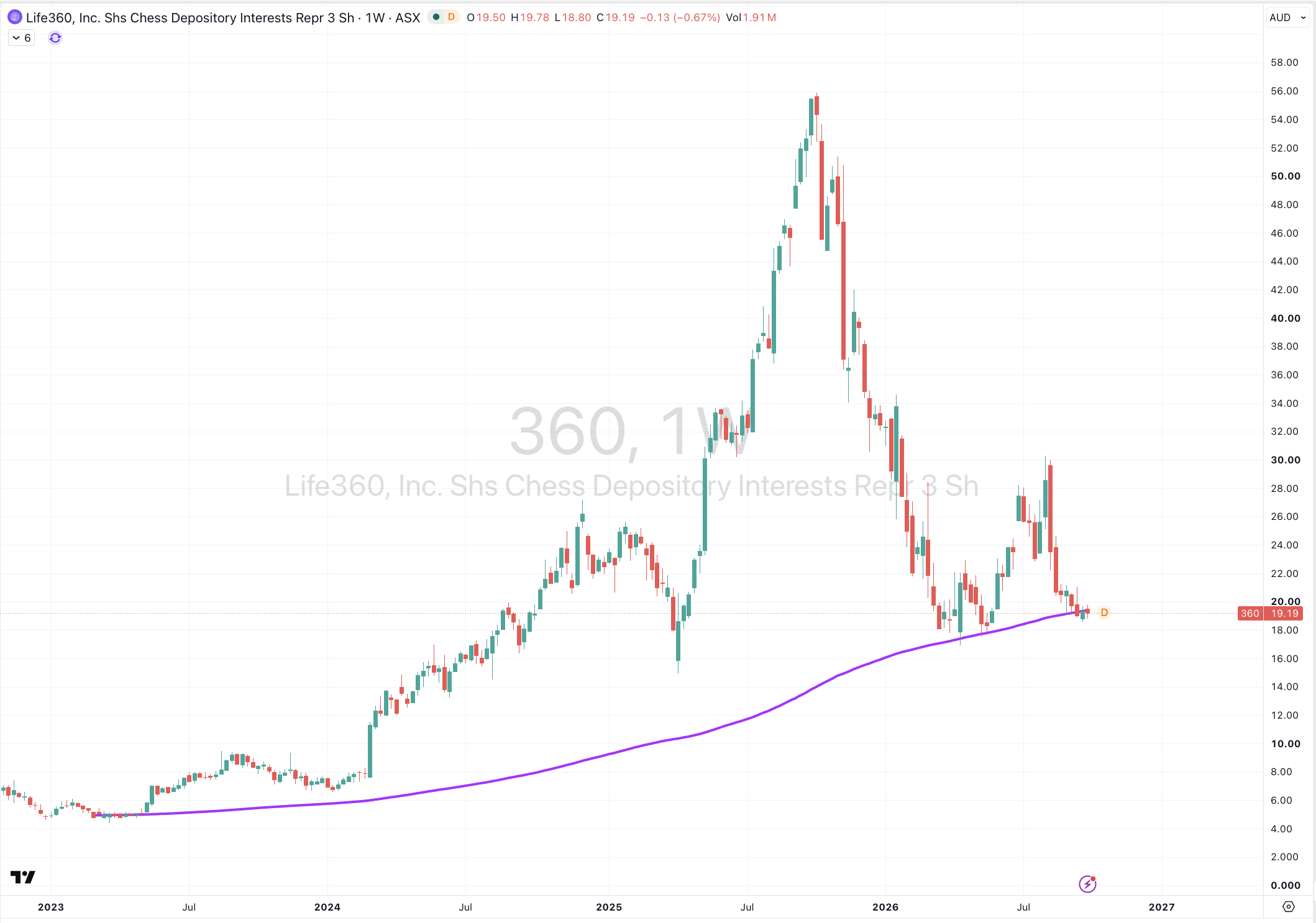
Part 1: Parabola’s honour mean reversion, more than most.
Part 2. In this stocks case, I think it goes much lower.
Currently it’s A$19.19
October 1, 2026
Trying to hear what's not being said
October 1, 2026 Leave a comment
Part 1: Parabola’s honour mean reversion, more than most.
Part 2. In this stocks case, I think it goes much lower.
Currently it’s A$19.19
October 1, 2026
September 30, 2026 Leave a comment
Just remember…..irrespective of the merits on the underlying investment opportunity, you can stop thinking that stockbrokers and investment bankers are your friends.
In late 2024, an Australian data centre operator called DigiCo went public. It was planning on raising A$1.6bn and $362m of those funds garnered from investors would be directed or paid to “offer costs”.
The Australian Financial Review (AFR) article went on to say, “Its 12 brokers – including four underwriters JPMorgan, Goldman Sachs, UBS and Macquarie Capital – will split $107.4 million among themselves. Pretty much everyone who is anyone in stockbroking (and hasn’t pledged allegiance to NEXTDC) has scored a role, including CommSec. That’s 6.5 per cent of the IPO proceeds gone.”
DigiCo’s IPO was priced at $5.00.
In today’s AFR, the headline is “Investment bankers set for $215m fee bonanza in Firmus float”.
So, when you get the ‘hot and heavy’ phone call from your ‘friendly’ investment advisor about the hottest, latest, sexiest IPO……keep this quote from Charlie Munger in mind….
“Show me the incentive and I’ll show you the outcome”
September 29, 2026 Leave a comment
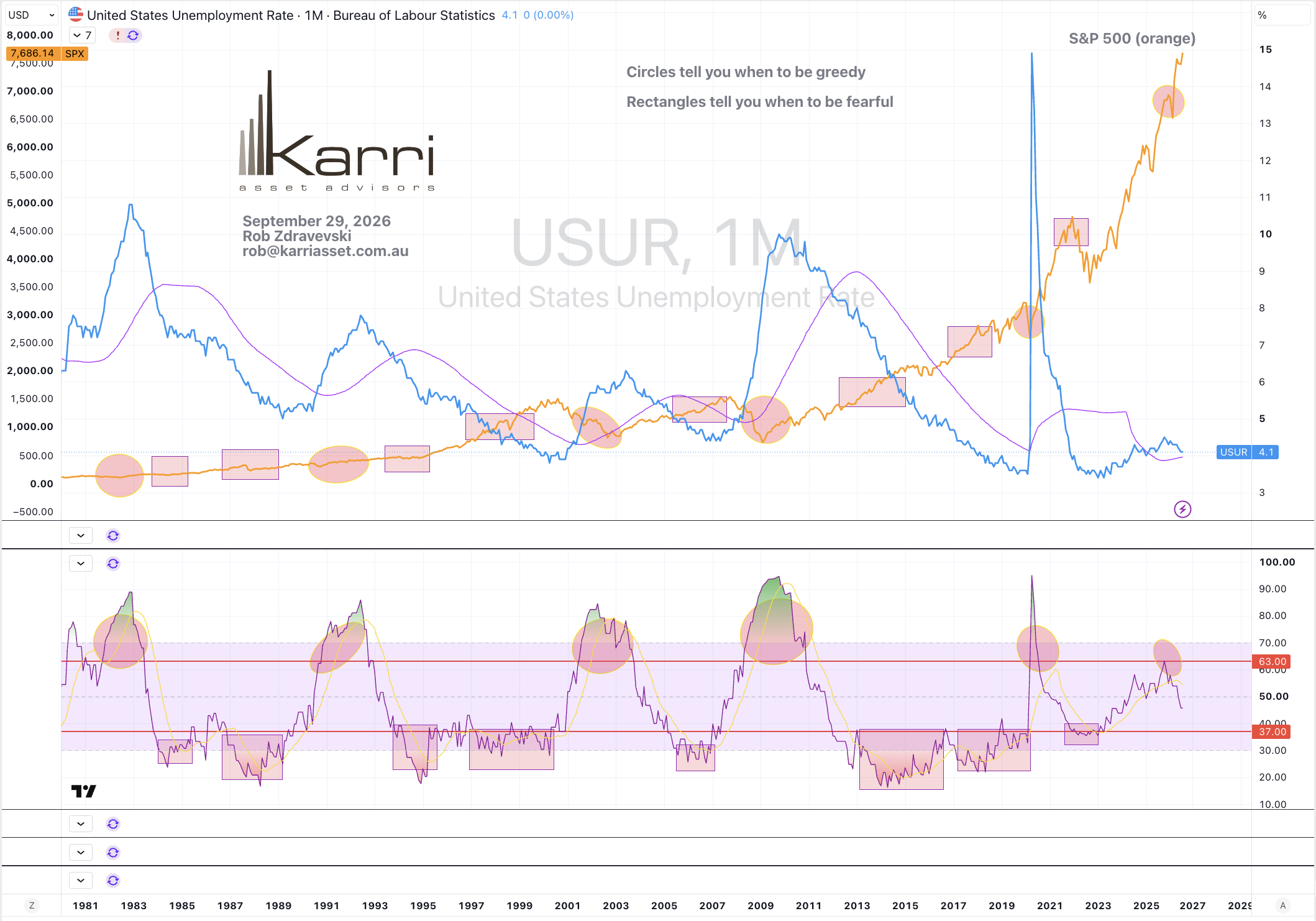
The next U.S. unemployment rate report is scheduled for release this Friday, October 2, 2026.
The attached study features some circles and rectangles.
At this moment, I’m not fearful.
September 29, 2026
September 29, 2026 Leave a comment
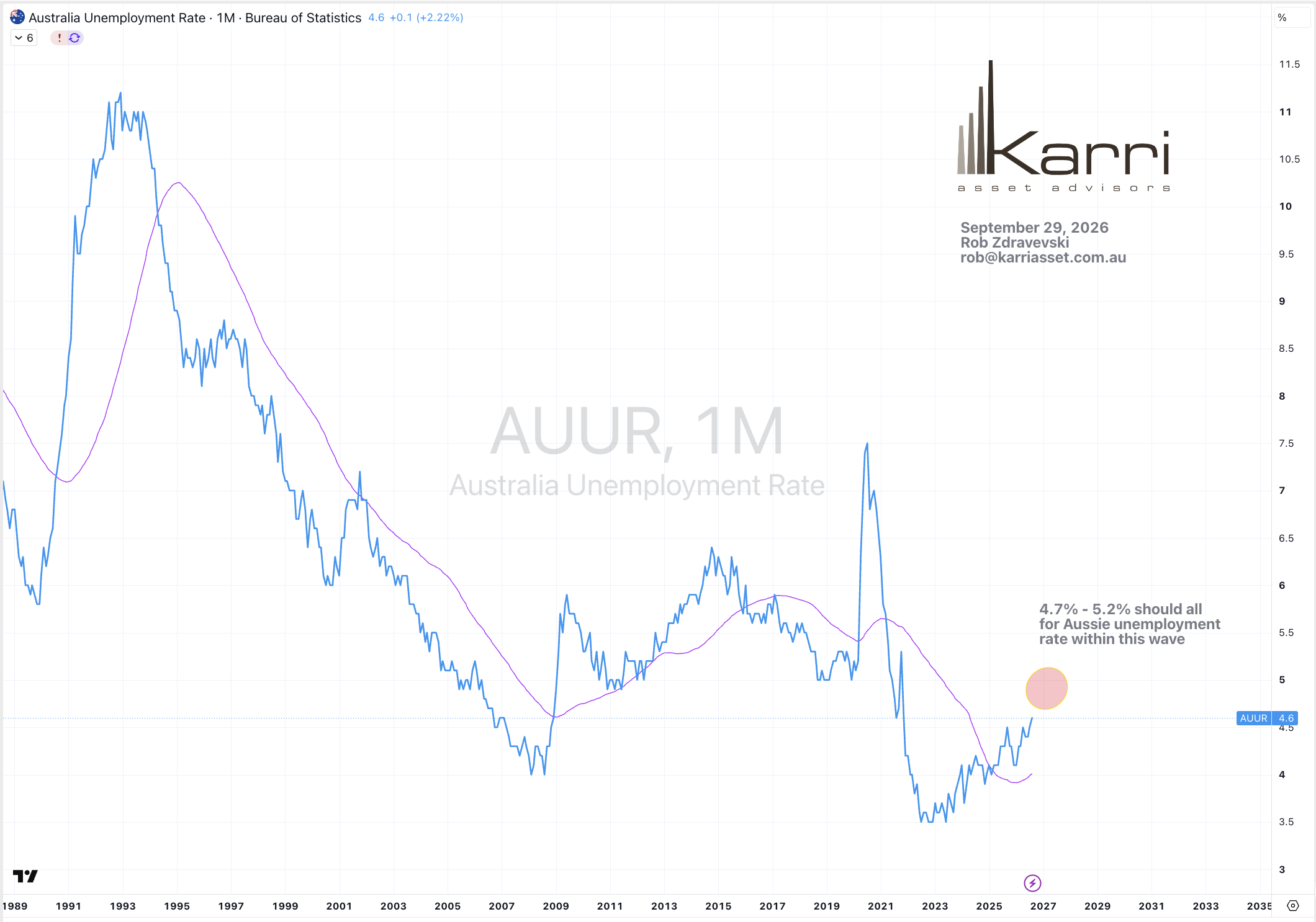
The Aussie unemployment rate should peak (within this wave) between 4.7% – 5.2%.
When they do, don’t let the dramatic news headlines dominate the noise.
September 29, 2026
September 29, 2026 Leave a comment
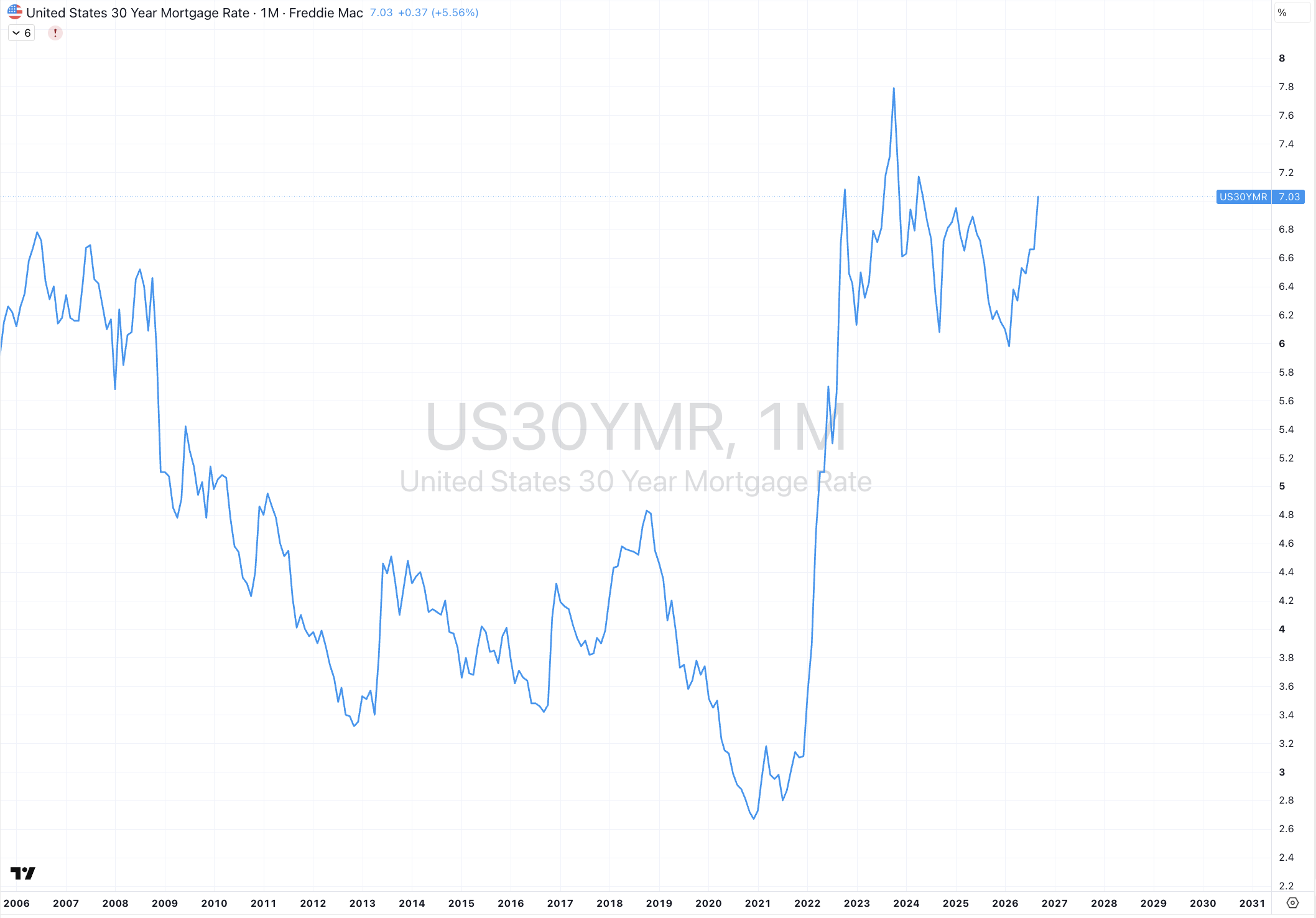
A month ago, I quipped about the 30 year U.S. mortgage rate.
It was 6.66% then. Today, it’s 7.03%.
While that’s not significant, the move higher isn’t exhausted yet.
September 29, 2026
September 29, 2026 Leave a comment
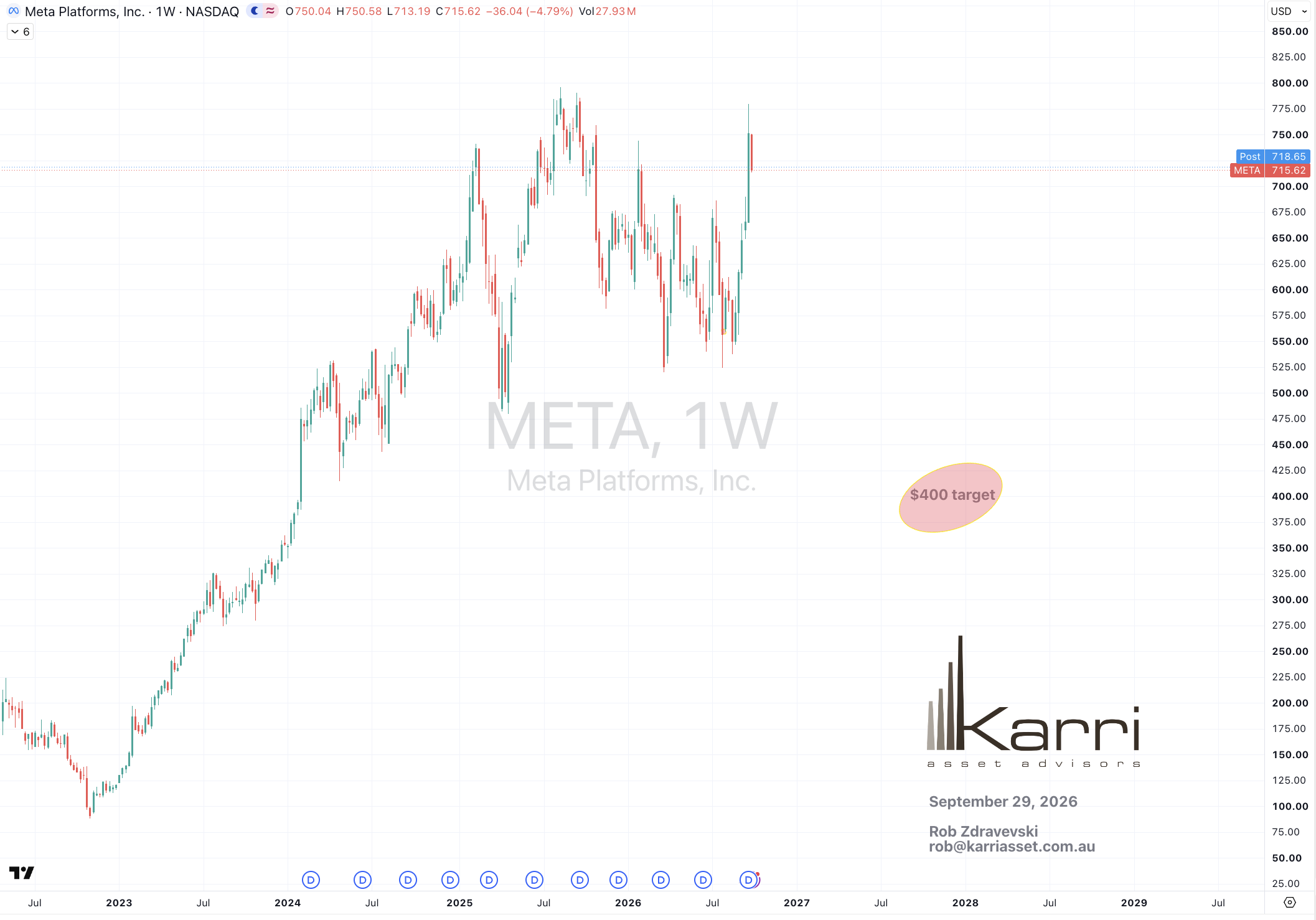
My work says that the META share price eventually sees $400.
It’s $719 today.
September 29, 2026
rob@karriasset.com.au
September 27, 2026 Leave a comment
A weekly Macro, Cross Asset review of prices trading at extremes which may generate future investment ideas and opportunities.
The following assets (on a weekly timeframe) either registered an Overbought or Oversold reading and/or have traded more than 2.5 standard deviations above or below its rolling mean.
n.b. pricing of (commodity) futures contracts is only considering the immediate front month.
* denotes multiple week inclusion
Extremes above the Mean (at least 2.5 standard deviations)
Australian 3-year bond yield
Swiss, Czech and Norwegian 10-year government bond yields *
British 5-year bond yield
Japanese 30-year bond yield
TBT
U.S. 5-year bond yield minus U.S. 3-month bill yield
U.S. 10 year minus Australian 10-year bond yield spread
U.S. 10 year minus Eurozone 10-year bond yield spread
U.S. 10 year divided by Australian 10-year bond yield
Copper
Overbought (RSI > 70)
Japanese 2, 5 and 10-year bond yield *
Austrian and Spanish 10-year government bond yields
U.S. 30-year bond yield
Austria’s ATX equity index
Taiwan’s TAEIX equity index
And Poland’s WIG Index *
The Overbought Quinella (Both Overbought and Traded at > 2.5 standard deviations above the weekly mean)
U.S. 5–7-year corporate bond yields *
Belgian, Chilean, Danish, Finnish, French, Greek, Italian, Dutch and Portuguese 10-year government bond yields *
British 2-year bond yield
The U.S. and EU yield curves (except for the 30’s)
TBX
U.S. 3-month bill, 2, 3, 5, 7, 10 and 20-year bond yields
U.S. 5-year bond yield minus 5-year inflation breakeven rate spread *
U.S. 10-year bond yield minus 10-year inflation breakeven rate spread *
North American Hot Rolled Coiled Steel *
Gasoline *
Gasoil and its crack spread *
Rice *
Extremes below the Mean (at least 2.5 standard deviations)
Australian 10 year minus U.S. 10-year bond yield spread
U.S. 10 year minus U.S. 2-year bond yield spread
Türkiye’s BIST Index *
Oversold (RSI < 30)
TLT
The Oversold Quinella (Both Oversold and Traded at < 2.5 standard deviations below the weekly mean)
IEF & IEI *
SHY *
U.S. 30 year minus U.S. 10-year bond yield spread *
Notes & Ideas:
Government bond yields were the news.
During the week, Australia’s 10 year minus 5-year bond yield spread touched a lower extreme.
Swiss and U.S. 10-year bond yields are in a 4-week winning streak, as is the U.S. 10 year minus U.S. inflation rate spread.
Japanese 5 year and the U.S. 10 year minus 10-year break even inflation rate has climbed for 5 weeks.
The rest of the U.S. yield curve and the U.S. 5 year minus U.S. inflation rate spread are in a 6-week winning streak.
U.S. 5–7-year bond yields have risen for 7 weeks.
Inversely, Brazilian 10-year yields have sunk for 7 weeks.
The German and Italian 2-year yield fell and broke 6 weeks of advance.
Belgian, Czech, Danish, Spanish, Finnish, French, Greek, Italian, Dutch Polish, Portuguese and Swedish 10-year yields have risen for 7 consecutive weeks as are German 5’s and U.S. 7’s.
The last time we saw such a 7-week bond yield winning streak was in August-September 2022.
The U.S. 30 minus 10-year yield spread and the IEI ETF have closed lower for the past 6 weeks.
While U.S. 10 year minus U.S. 5 year rose and bounced out from a negative quinella.
Equities were mixed with a weaker bias.
Saudi Arabia’s Tadawul, the South Africa 40, ASX 200ASX Materials and the ASX Industrials have fallen for the past 4 weeks.
The Dow Jones Transports and S&P Small Cap 600 have declined for 6 weeks.
The CSI 300, Nifty, Sensex and Nasdaq Transports are in 7-week losing streaks.
UAE’s DFM index has advanced for the past 5 weeks.
And Norway’s OBX fell to snap its 10-week winning streak.
Commodities prices have plenty of action.
Distillates, Gases, Copper, Oats, Silver and Gold were the notable gainers.
Coal, Cocoa, Cotton, Coffee, Lithium, Sugar and Rice were amongst the largest decliners.
Lean Hogs moved out of oversold territory.
North American steel prices rose for the 4th straight week.
JKM LNG prices have fallen for 10% for past 2 weeks.
Lithium Carbonate, Palladium & Wheat have fallen for 4 weeks.
Arabica Coffee and Lithium Hydroxide have sunk for 5 weeks.
Naphtha crack spreads have closed lower for the 8th consecutive weeks.
And Urea, Gasoline, Gasoil crack and Heating Oil crack fell and snapped their respective winning streaks.
Currencies were quiet, again.
The Aussie and Loonie were weaker, again.
The Yen was stronger.
NZD/AUD has fallen for 4 weeks.
Kiwi/Dollar is in a 5-week losing streak, as are CHF/USD and CLP/USD.
And the PHP/USD rose to snap a 6-week losing streak.
The larger advancers over the past week comprised of;
Rotterdam Coal 1.3%, Baltic Dry Index 1.7%, Cocoa 5.5%, Cotton 1.9%, Cattle 2.6%, Natural Gas 9.8%, Orange Juice 7.2%, Tin 1.4%, Oats 3.4%, Rice 6%, ATX 2.1%, IBB 2.6%, TAIEX 1.8%, Nasdaq Composite 2.1%, KOSPI 2.7%, Mexico 2.6%, NBI 1.6%, Nasdaq 100 3.3%, Nikkei 2.1%, SET 1.5%, WIG 1.4% and SOX rose 6.3%.
The group of largest decliners for the week included;
Brent Crude (1.5%), WTI Crude (3.8%), Palm Oil (4.6%), Heating Oil (7.9%), JKM LNG (6.2%), JKM LNG in Yen (2.6%), Palladium (3.3%), Platinum (1.6%), S&P GSCI (1.5%), Dutch TTF Gas (9.4%), Gasoil (3.2%), Silver (2.9%), Gold (2.1%), Wheat (1.5%), Heating Oil crack spread (4.2%), Gasoline (1.9%), Naphtha (6.5%), CSI 300 (1.5%), AEX (1.6%), KBW Banks (1.8%), IDX (3.1%), DJ Transports (2.5%), EGX (3.1%), FCATC (1.3%), Tadawul (1.7%0, KRE Regional Banks (1.7%), OBX (1.6%), Copenhagen (1.8%), Nasdaq Transports (1.5%), Vietnam (1.7%), BIST (2.9%) and ASX Small Caps fell 1.7%.
September 27, 2026
By Rob Zdravevski
rob@karriasset.com.au
September 20, 2026 Leave a comment
A weekly Macro, Cross Asset review of prices trading at extremes which may generate future investment ideas and opportunities.
The following assets (on a weekly timeframe) either registered an Overbought or Oversold reading and/or have traded more than 2.5 standard deviations above or below its rolling mean.
n.b. pricing of (commodity) futures contracts is only considering the immediate front month.
* denotes multiple week inclusion
Extremes above the Mean (at least 2.5 standard deviations)
Austrian and Czech 10-year government bond yields *
Chilean 10’s minus 2’s yield spread
U.S. high yield and BB Index *
Heating Oil *
Oats
And Portugal’s PSI Index
Overbought (RSI > 70)
Japanese 2, 5 and 10-year bond yield *
U.S. 5–7-year corporate bond yields *
Australian Coking Coal
North American Hot Rolled Coiled Steel *
JKM LNG in $ *
Rice *
Heating Oil crack spread *
Gasoline *
Dutch TTF Gas *
Gasoil and its crack spread *
AUD/CHF *
CNH/USD *
Hungary’s BUX Index
Norway’s OBX *
Singapore’ Strait Times Index
And Poland’s WIG Index *
The Overbought Quinella (Both Overbought and Traded at > 2.5 standard deviations above the weekly mean)
Belgian, Canadian, Danish, Spanish, Finnish, French, Greek, Italian, Dutch and Portuguese 10-year government bond yields
The U.S. and EU yield curves (except for the 30’s)
TBX
U.S. 5-year bond yield minus 5-year inflation breakeven rate spread *
U.S. 10-year bond yield minus 10-year inflation breakeven rate spread *
Extremes below the Mean (at least 2.5 standard deviations)
NZD/AUD
Türkiye’s BIST Index
Oversold (RSI < 30)
Lean Hogs
The Oversold Quinella (Both Oversold and Traded at < 2.5 standard deviations below the weekly mean)
IEF & IEI
SHY
U.S. 10 year minus U.S. 5-year bond yield spread
U.S. 30 year minus U.S. 10-year bond yield spread
Notes & Ideas:
Government bond yields were mixed but several fell enough to see them drop out from overbought extremes.
British 2 year and Japanese 5-year bond yields are in 4-week winning streaks.
Indian 10 year and U.S. 2- and 3-year bond yields have climb for 5 weeks.
Belgian, Czech, Danish, Spanish, Finnish, French, Greek, Italian, Polish, Portuguese and Swedish 10-year yields have risen for 6 consecutive weeks.
As have the British 3’s, Euro 2’s and 5’s along with the U.S. 5- and 7-year yields and the U.S. 5-year bond minus 3-month bill yield spread.
While the U.S. 10 minus 5-year yield spread and the IEI ETF have closed lower for the past 5 weeks.
Equities were mostly weaker.
Malaysia’s KLSE and Mexico’s IPC have fallen for the past 4 weeks.
The Dow Jones Transports, FCATC, S&P Small Cap 600 and TSX have declined for 5 weeks.
The CSI 300, CAC 40, Nifty, Sensex and Nasdaq Transports are in 6-week losing streaks.
Brazil’s Bovespa has advanced for the past 5 weeks.
And Norway’s OBX is in a 10-week winning streak.
Commodities prices told a mixed story.
Many commodities left the extreme list.
Distillates, Gases, Copper, Oats, Silver and Gold were the notable gainers.
Coal, Cocoa, Cotton, Coffee, Lithium, Sugar and Rice were amongst the largest decliners.
Rice and Gasoline fell and snapped 4 weeks of higher prices.
U.S. Gulf Urea prices have climbed for 5 weeks.
JKM LNG and Dutch TTF fell and broke their 5-week winning streaks.
Gasoline and the Gasoil Oil crack spread are in 6-week winning streaks.
And Tin has fallen for 5 weeks.
Currencies were quiet, again.
The Aussie eeked out small gains except vs. the USD
The Loonie was unchanged to weaker.
Euro was weaker, as did the Yen.
The Yen weakness saw it find relief from its ‘extremes’.
The Kiwi is in a 4-week losing streak against the AUD & USD.
The USD was strong and looking so.
Its advance was enough to see it snap its 4-week losing streak against the Korean Won.
And the PHP/USD has fallen for 6 weeks.
The larger advancers over the past week comprised of;
Australian Coking Coal 2.6%, Copper 2.2%, Heating Oil 1.9%, Natural Gas 2.9%, Gasoline 4.1%, Urea U.S. Gulf 1.9%, Gasoil 2%, Silver 3%, Gold 1,5%, Oats 7.3%, Gasoil crack spread 2.7%, Heating Oil crack spread 3.2%, Gasoline crack spread 14.3%, TAIEX 2.2%, Nikkei 225 1.6%, IGPA 1.4%, TA35 1.6% and the ASX Small Caps rose 1.3%.
The group of largest decliners for the week included;
Richards Bay Coal (2.1%), Rotterdam Coal (1.4%), Baltic Dry Index (3.9%), Cocoa (10.6%), Cotton (5.7%), Hogs (4.2%), JKM LNG (4.2%), Arabica Coffee (1.8%), Lumber (5.6%), Cattle (1.7%), JKM LNG in Yen (4.4%), Lithium Carbonate (1.9%), Lithium Hydroxide (2.2%), Newcastle Coal (3.1%), Orange Juice (3%), Robusta Coffee (3.7%), Sugar (4.4%), Rice (2.4%), Wheat (1.5%), All World Developed ex USA (1.6%), ATX (1.3%), KBW Banks Index (4.9%), CAC (1.4%), IDX (1.5%), DJ Industrials (1.9%), DJ Transports (2.7%), Saudi Tadawal (2.2%), MIB (1.8%), IBEX (1.6%), S&P SmallCap 600 (2.3%), Dublin (1.7%), Russell 2000 (1.7%), KRE (1.6%), S&P MidCap 400 (1.8%), PSE (3.4%), PX (2.3%), SA40 (2.3%), Eurostoxx 50 (1.4%), BIST (8.2%) and Nasdaq Transports fell 3.3%.
September 20, 2026
By Rob Zdravevski
rob@karriasset.com.au
September 18, 2026 Leave a comment
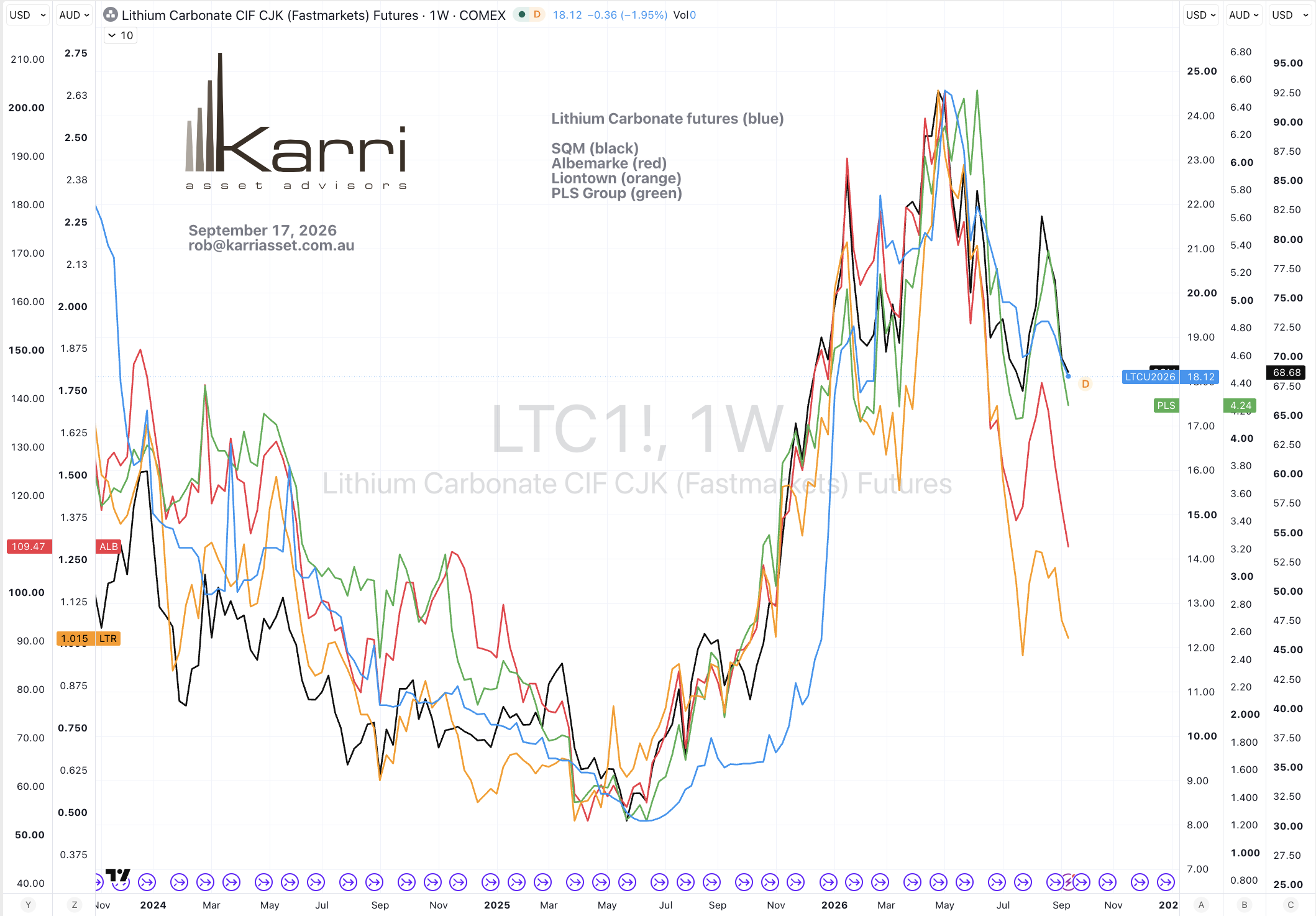
Lithium is retracing a recent pop. There are correlations abound and no is talking about this commodity.
September 18, 2026
#liontown #sqm #albermarle #pls
September 18, 2026 Leave a comment
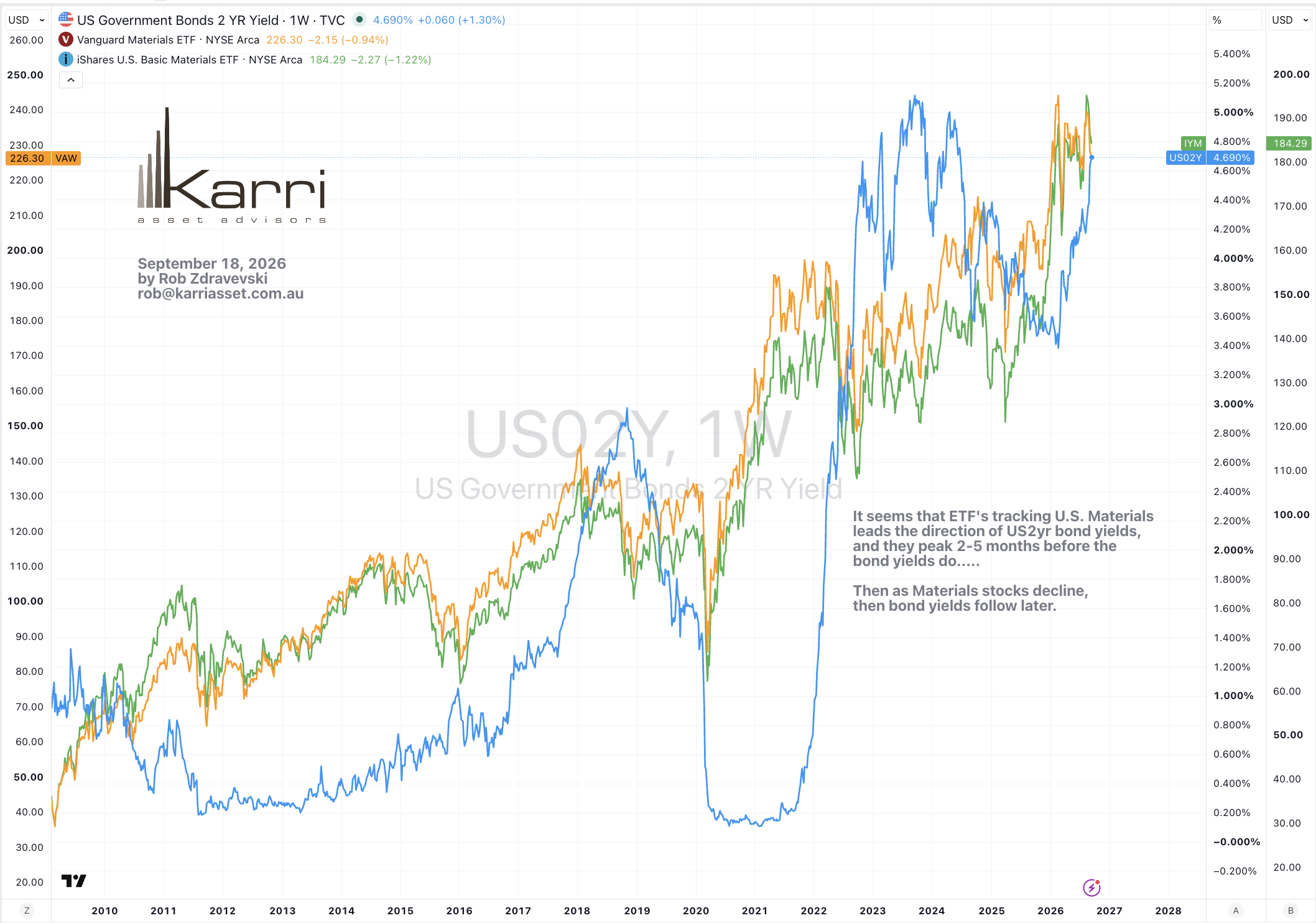
I’m tinkering about being long stocks in the Materials sector…you know, building materials, steel, chemicals, aggregates etc;
but I think the Materials Index peaks first, and then 2-4 months later, bond yields peak.
So, I may wait 4 months to buy “Materials” and perhaps around the same time, advise to also increase fixed income exposure.
Just some thinking at this stage.
September 18, 2026