Cash is expensive

Whether it’s property, equities, bonds, jewellery, art or even rare coins – there is often an opinion forthcoming whether it’s consider to be cheap, fairly valued or expensive..

Cash seems to miss out on falling into these categories. Cash is referred to as “king” in times of worry and “lazy” when everything is booming. You’re can be either “cash rich”, “cash poor”, “cashed-up”, “strapped for cash” or it can be “burning a hole in your pocket”.

The cost of money can be cheap or expensive when you are borrowing it but why can’t cash be expensive or cheap when valuing it as an investment?

Today, I think cash is expensive!

Notwithstanding the ebbs and flows of investment markets in the near-term, when compared to other asset classes, it’s probably very expensive.

The Earnings Yield

When scanning for what I refer to as a “Fertile Investing Habitat”, I take the Earnings Yield of an equity  index (which is the inverse of the Price/Earnings Ratio) and compare it to the government 10 year bond yield and the interest earned on bank cash deposits in that particular country when trying to initially determine whether that “habitat” is potentially cheap.

For example, the P/E ratio estimate for the current fiscal year of the ASX 200 Index is 12, the inverse of this figure and thus its earnings yield is 8.3%. The yield for the Australian government  10 year bond is 4% and a generous at-call bank deposit would earn 5%.

From this I may deduce that the ASX 200 equity index might offer a better return proposition over nest few years versus the return prospects of cash?

To figure out if my investment in cash is actually expensive, simply invert the 5% bank deposit interest and your conclusion is a Price/Earnings (P/E) Ratio of 25. This is twice as expensive as the ASX 200 equity index!

What about the United States?

The S&P 500 has a P/E of 12.5 which equals an earnings yield of 8%. The 10 year govn’t bond’s yield to maturity is 2.1% (P/E of 47) and the Fed Fund rate is 0.25%, giving you a P/E of 400.

What if interest rates double?

Over the past few months I have been asked whether the Reserve Bank of Australia (RBA) will lower interest rates by 25 basis points in the coming months.

My answer: Who cares?

With a RBA cash rate so low, does it matter that much if we see a rate cut of 25 basis points? Oh sorry, it might save borrowers $25 more per month. If your hoping for such a rate cut to save you $300 per year, perhaps you are too leveraged in the first place and didn’t do anything about it over the past three years?

The real damage will be done if rates were to double or triple over the next 8-12 years, of which I am placing a greater probability towards occurring.

The Australian inflation rate was last reported as 3.5% and the RBA’s “Cash Rate” is 4.25%, which equals a real interest rate of 0.75%.

Investors in Australia, today, need to re-educate themselves about the differences between a nominal interest rate and a real interest rate.

Earning 4.8% at-call in the bank, isn’t REALLY maintaining your purchasing power when you include the inflation rate, let alone adjusting for taxes!

What if……due to various global capital forces, the real interest rate rose 1.5%, which would be closer a 30 year average and when combining my view of prolonged energy and food inflation AND the economic effect of expanded money circulation, inflation rates could themselves rise a further 2%.

Hey presto! You would then have an inflation rate of 5.5% plus a real rate of 2.25% for a nominal rate total of 7.75%.

Add the spread that a lending bank would charge and you are suddenly borrowing money at 10.2%!!!

The 1970’s thesis continued – Fashion and Politics

I’m no fashionista but to continue a previous blog where I discussed an analogy covering the 1970’s, I am now seeing bellbottom jeans making a comeback to the stores along with specifically poorly styled shorts, slim tiny skateboards and even tennis-type sun visors.

So, if the current stock market, economic, social and union situation mimics the early 70’s, it won’t be too long before tartan (Bay City Rollers, remember them?) and crocheted bikini’s soon appear. It’s all quite worrying but at least there was Farrah!

Politically, the early 70’s saw an American 2-term President Nixon give way (albeit resigning due to scandal) to a succession of 1-termers in Ford & Carter. “Stability” in policy returned when Reagan took office in 1981.

In the United Kingdom, Harold Wilson’s two-term rule came to an end in 1970 and was followed by single election winners in Edward Heath (conservative) who lost after calling an early election in reaction to striking miners to see Labour’s Wilson return for a shortened term followed James Callaghan’s tenure. Then in 1979, Thatcher took over.

Australia’s government didn’t have any more luck with stability nor scandal.

Liberal PM, John Gorton was deposed mid-term by Billy McMahon who was defeated at election after serving 20 months. In 1972, Whitlam’s (Labor) government was elected with a 9 seat house majority (but didn’t control the senate) and following the ’74 election he lost a further 5 seats in the House of Representatives.

He did also have his share of drama aided by Minerals and Energy minister, Rex Connor who wanted to control the mining industry.

Although installed into office by the Governor-General, Malcolm Fraser’s (Liberal) 7 years as Prime Minister (until 1983) morphed into the relative sensible Hawke/Keating years.

It didn’t seem to matter which political party was in power, the requisite for social and economic happiness was stability in government and a majority in the house.

History does’t seem to bode well for Gillard and Obama!

An “early call” to sell Gold – Aussie Dollar is the key

Extract from my November 16th, 2011 newsletter

The Trade: 

Short Sell Gold on break below ~ $1,760 spot price.

Stop at $1,806 or $1,796 (to be determined/refined)

BUT the key to watch is AUD breaking below 1.0050.

Today’s fall in the EUR below 1.3480 along with declines in Copper, Silver and Platinum are providing early and minor confirmations for the Short Gold trade.

Further confirmation of market weakness, especially in equities would be confirmed if the SPX broke below 1,226.

If (once) gold’s decline commences, we’d look for it to test and break levels such as $1,630, $1,540 and $1,450 onto its way down to $1,340.

At a premium to Platinum..

Gold continues to trade at a premium to its more expensive cousin, Platinum. The spread between the two hasn’t been this wide for at least 30 years.

For past 20 years, the price of platinum has traded at an average of $250 higher than gold while the past 10 years has seen it trade at a mean of $405 above gold.

Today, gold is $145 higher that platinum. This is $550 “off” the 10 year average and a $300 deviation from its 3 year average.

Can this be 1973 again?

S&P 500

Today, the “setup” in financial markets looks a lot like 1973.

Back then, the U.S. had high unemployment (and was rising), it had overspent on war in Vietnam, increasing social uprisings and its monetary base has increased notably. The U.K. has a secondary banking crisis

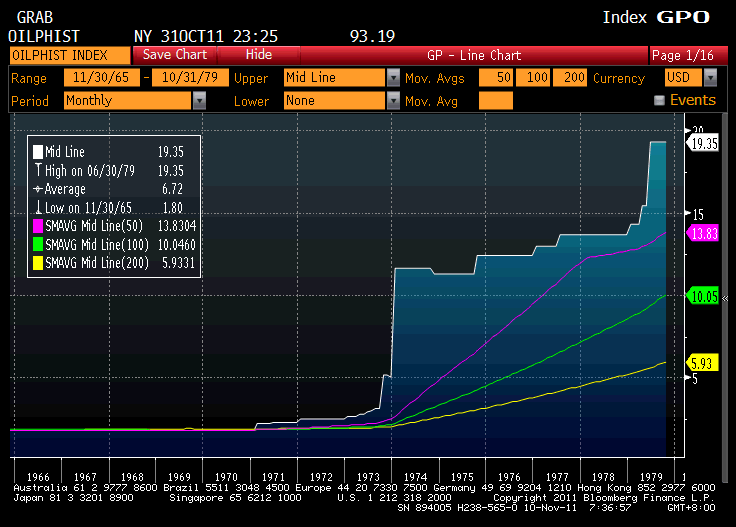
There were tensions in the Middle East which saw Syria and Egypt launch attacks on Israel sparking the Yom Kippur War which lead to the 1973 oil embargo and the oil price doubling.


In August 1971, the U.S. pulled out of Bretton Woods and thus took the US Dollar off the gold standard. This saw the USD fall in value and upset oil producers who were receiving less for the USD denominated oil they were selling.

Between 1971 and November 1973, gold had tripled up to $95 per ounce.

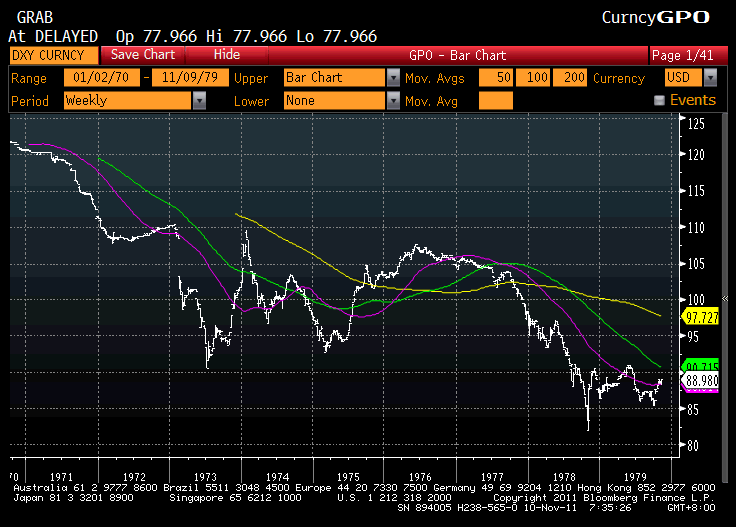
US Dollar Index (DXY)

What then happened in 1973/74?

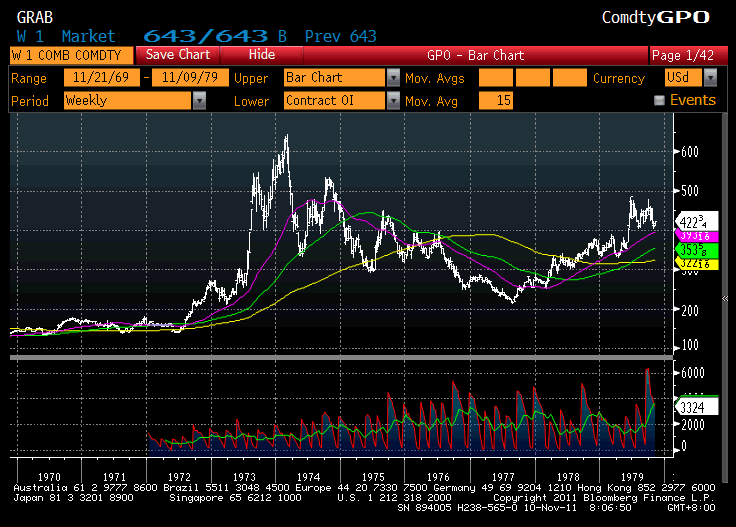
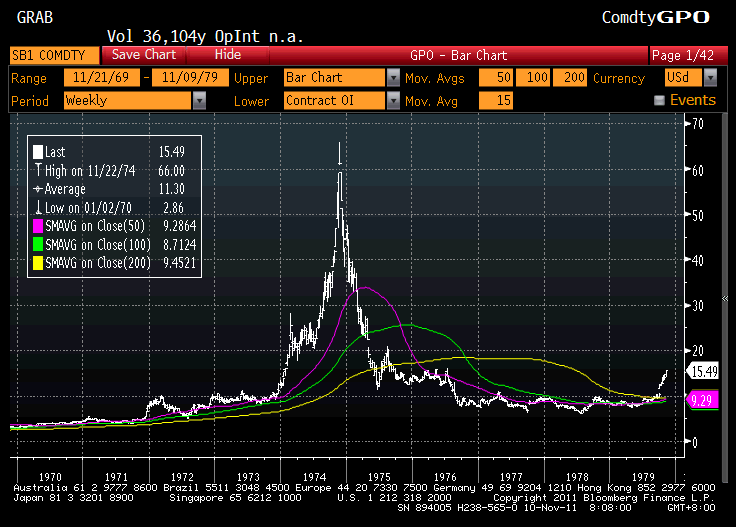
Stocks fell 40%, oil soared as did gold and agricultural (softs) commodities. Food inflation was already accelerating in 1972. By December 1974, gold rose doubled to $180. Inflation skyrocketed which led to the yield on the U.S. 10 year bond rising sharply. They eventually rose from 6% to 13% within 7 years.

Central banks raised interest rates in attempts to stifle hyperinflation.

What if interest rates in Australia rose to 14% by 2017, or if U.S 10yr bonds today rise from 2% to 6%?

In 1973, the US Dollar rallied as did gold, oil and the “softs”. The traditional inverse correlation of the USD and commodity prices decoupled.

Currently, equities are exhibiting weakness, the US Dollar is rising while oil and gold are “hanging tough”.

Are you seeing any similarities?

Today, my current macro thesis is based on a similar outcome – asset deflation and food and energy inflation. Stagflation.

Nevertheless, my intention is not to be dire but rather call it as I see, read or feel it.

The results of this scenario playing out could see natural gas prices rise, softs rise as will gold and oil, transportation business suffer as will retailers, bond prices fall (especially longer dated), AUD weaken as do industrial and base metals. Using the 1970’s playbook, caution would be warranted when it comes to property as inflation later rapidly decelerated in 1974-76 which when coupled with interest rates that remained high led to new stresses.

If we see a repeat of the 1970’s, then the good thing about it is the 1980’s are around the corner again. Better stock up on fluorescent leg warmers!

Finally, I found the attached link (The Age newspaper, 2005) an interesting summary of 1974.

http://www.theage.com.au/news/National/The-year-the-economy-went-bung/2004/12/31/1104344983057.html 

Wheat

Sugar

Gold

The ’70’s Graphs/Data source: Bloomberg.

Crude Oil

US government 10 year bond yield

Listen to the market – China’s inverted yield

The spread between the yield of Chinese Govn’t 2yr and 10yr bonds have inverted. The yield that an investor is receiving buying 2 year maturing debt is higher than the yield from a 10 year bond.

Although the data on the attached graph only starts in 2005, an inverted yield curve signals stress in the credit market and leads to weaker equity markets. It is often a good indicator that precedes recession or a change in economic cycles.

It is notable that United States 2’s/10’s spread inverted in 1978, 1988, 2000 & 2006. Recessions followed within 12-18 months.

The trade to look at, is for a falling Australian Dollar. With this comes a rising US Dollar and falling commodity prices.

An inverted Chinese bond yield could spell trouble for the most crowded of “longs” because not many believe BHP, RIO and the Australian Dollar can fall – for China will apparently keep saving them all.

It is highly likely that China will still buy their products, but there is such a thing as cycles and although China has seemed to have avoided one in the past 15 years, the optimism in this post is to be ready to buy some bargains in Australia, China along with some commodities.

In the meantime, selling AUD and buying USD is hardly the worst trade to consider.

source - Bloomberg

Investment Themes – Obesity

Two mice; the mouse on the left has more fat s...

Image via Wikipedia

A 2009 U.S. Department of Defense study found that 75% of Americans aged between 17 – 24 years old are unable to join their military for one or more of the following reasons.

Either they are too heavy, haven’t graduated from high school, have criminal records or abuse drugs.

Although there are also other disqualifiers such as asthma, my initial response was – Wow!

Being overweight is the leading reason for being medically rejected, which I’ll focus on for this post.

The investment ideas that flow from this statistic can range from kidney dialysis providers, pharmaceutical companies, sweetener alternatives such as Stevia, bariatric “lap-banding” surgery, dietary supplements and fads, orthopaedic knee replacements, shorter life expectancy, funeral services or junk food manufacturers.

Investment Themes – Automation, Self Service & Mobile Payments

I’d like to start a series of blogs that I wish to share focusing on investment themes. I’ll try to keep the topics and paragraphs brief but hopefully it’ll give you an idea of how where I start my pondering from the “top down”, following periods of time reading and “staring at the ceiling”.

iPhone Mobile Payment 100 Euro

Maybe this theme could be re-written as ‘Self-Service”. We are happily self servicing and processing our own tasks, requests and business. Some examples include how I withdraw and deposit my own money from and into my bank account or happily swipe groceries at the check-out and pay bills myself rather than having the bank or post office help me. I am equally excited when I get to press buttons at airport check-ins and I am captive to listening to automated telephone call centre prompts.

Beneficiaries of this trend include companies that adopt automation and self-service technology allowing them to save costs and companies who produce technology ranging from car park payments machines to supermarket scanners.

A trend that is still gaining traction is Mobile Payments. The initial trend has started with payment processors (MasterCard and Visa) promoting the use of debit cards. Many cards now have embedded chips and some allow me to “flash” the card at a terminal without breaking stride whilst exiting a store. Paypal and other companies provide services of having a “mobile wallet”. SMS payments are becoming popular and Mobile Web Payments has wide ranging possibilities. The real growth will be in how we use our mobile phones.

Who is creditworthy?

The word “credit” has it sources ranging back to Latin’s credo, creditus & credere. Translations can be read as “to believe, trust or confide”.

Once again, there is complacency in risk taking, but this time it has a better twist.

In 2008, the saving mantra was that government’s were the “lenders of last resort”. Governments “back-stopped” failing organisations. They were deemed to be the most creditworthy of all.

I think most of us are more creditworthy than many governments. If that is the case, who do you “believe”?

If I borrowed $10 from you, I am “good for it”. In other words, you would “believe” that I can borrow the money, pay an interest for this service and that I’d return the funds within an agreed or understood timeframe.

In a real commercial sense, the lender would ask to secure the debt by taking a “charge” or “lien” over an asset that I own, which is sufficient in value that covers their loan. If I can’t return the borrowed monies, the lender or I, sell an asset to clear the debt, sometimes at a loss.

Governments today aren’t selling assets. They are solving debt problems with more debt.

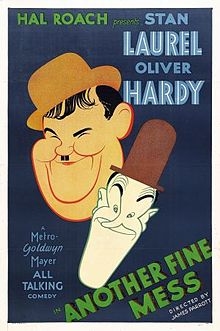
Laurel & Hardy should attend all government crisis meetings from hereon, at least to remind them “of another fine mess you have got us into”.

The pay cheque matters more than your brand

A news tidbit from the Australian labour front appeared in The Australian newspaper on Oct 7, 2011, raised my interest.

The story said…..

“Kevin Reynolds, the head of Western Australia’s Construction Forestry Mining Energy Union, yesterday described large resource-sector companies in the state as “bottom-feeding freeloaders who suck up labour trained by other people without contributing a cent”.  Mr Reynold’s call for the major resource firms to contribute to the state’s construction industry training fund was backed by home builder ABN Group’s Dale Alcock.”

I haven’t formed a distinct view on this statement or topic yet, however the one thing I have noticed increasingly, whether its the mining industry or financial services, employees over the past 10-15 years are working simply for the pay cheque more than ever!

Company or even career loyalty is not as common as I once remember. All you need to do is look at the employment history of people on LinkedIn. It is difficult to find tenures lasting longer than 18 months in some profiles. An employee’s clear intent on using your company and knowledge as a “step-ladder” towards something else is possibly putting employers offside.

Whether companies need to increase investment in “human capital” more than equipment or projects is probably a complicated question to answer.

When I started in the stockbroking business nearly 20 years ago, all I wanted to do was work as a stockbroker. I wanted to work for one of the big Wall Street firms.

Once upon a time, employees worked for what the company believed in, rather than solely for the pay cheque and puffing up their resumes.