Market Views – December 2015
December 6, 2015 Leave a comment
It’s been a while since I’ve written a note, mainly because markets have been so boring that there hasn’t been much of anything to say. Since this August, my time has been occupied with reading and thinking rather than making any notable changes to client portfolios, for there are times when doing “nothing” is the correct thing to do.
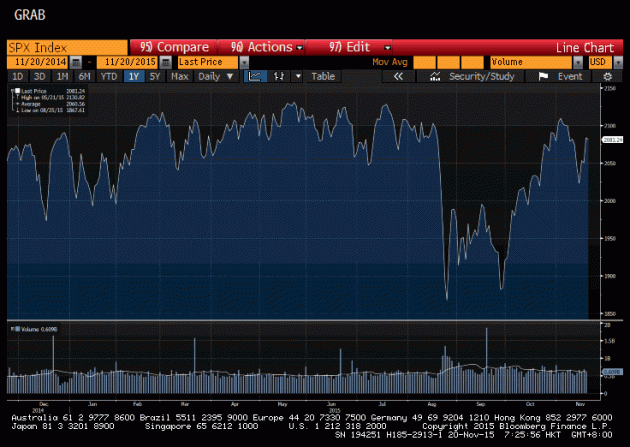
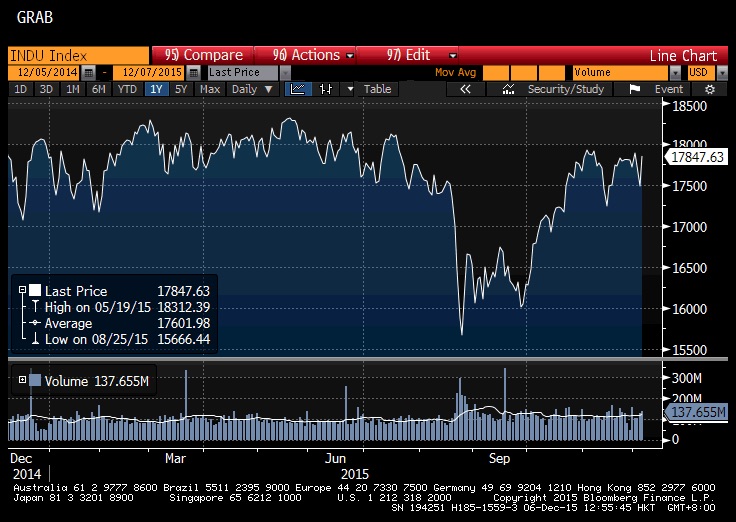
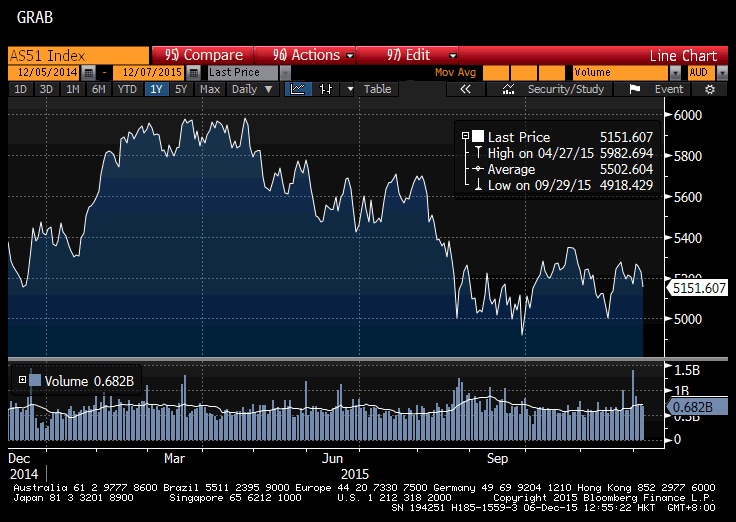
If you’re wondering what a boring, directionless equities market looks like, observe any of the major indices over the past year and you’ll get a quick idea. Such trendless markets do play a role in each cycle where markets literally pass time before its next trending move.
Sideways markets can also frustrate investors who don’t accept the concept of allowing your investment to “work and mature”, not to mention adding the element of time.
To highlight such uninspiring activity, the total return of following indices (in their local currency) over the past 12 months have been;
ASX 200 1.1%
Hang Seng (4.1%)
Dow Jones 1.8%
FTSE 100 (3.7%)
It seems as if the equity markets urge to rise has been nullified by various global concerns.
It’s not 2007 and I’m bullish:
Many signals, whether they are qualitative (such as geo-political tensions or central bank policy) or quantitative (negative sovereign interest rates and foreign exchange volatility) may suggest danger for global equities. Keep in mind that these observations are looking at the past and present and they disregard what will occur in the next economic cycle or more importantly, the next movement of capital.
Logically, the action and look of todays global equities market does remind me a little of how I observed them in 2007 however, markets and asset prices tend to move where they can do the most damage and presently that calls for higher prices.
I am still bullish on equities.
Although this stance remains measured for it is accompanied by a heightened awareness of when to adjust and shift our asset allocation and the amount of money being exposed.
In other words, I think equities will provide an adequate return on one’s money when compared to the risk being taken when compared to other assets, whilst it’s not the time for the old “set & forget” attitude.
And we are not suggesting that we are going to “trade” the markets as this is not our investing style.
Today I see;
Multi-Year lows in various commodities such as Gold, Oil, Wheat, Coffee, Copper, Shipping Rates & Natural Gas,
Out-of-favour Emerging Markets,
Increased volatility in the FX market,
Negative 2 year debt amongst some European governments,
Rising defaults in U.S. corporate debt and,
Investors who are acutely focused on the short-term.
I think;
Commodity prices will stay low for a further 18 months, albeit they are nearing the end of their longer term trend,
The USD continues to strengthen,
Over the long term, the AUD falls further to test the 0.65 region,
In the interim, probability is rising for the AUD to move higher to 0.7850 but needs to break 0.7630 first,
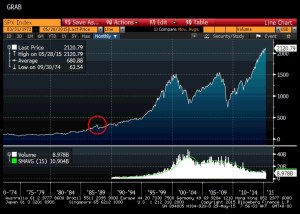
The long term upward trend in the U.S. equity market is still intact,
Look for U.S. bond yields to rise and,
Gold continues to fall, pick a number….$900, then $750…..
But the “macro” only matters when you are actually trading the macro.
In our case, we focus on specific stock selection but unfortunately the macro tends to dominate and it weighs on many investing conversation and future strategy.
Watching Credit:
I have said many times, that if you watch and learn the credit markets, it will help you with your equities investing.
Today, my analysis of the bond markets tell me that equities will go higher.
I believe that the U.S. bond market is at the beginning of a divergent shift as I look for yields to rise and with that comes the selling of bonds and that extra cash results in major capital flows into the stock market.
There is no reason to own government bonds.
Capital Flow:
It’s quite amazing that the advance in global equity indices since 2010 has been on low and waning volume. In general, investors have been underweight equities and haven’t generally liked them and which has resulted in little capital has flowed into equities when compared to other asset classes.
Part of my thesis for calling higher equity prices is that I expect a greater flow of capital into equities over the coming year with European markets being a beneficiary, although this doesn’t necessarily mean that the Euro will rise.
Furthermore, bullish sentiment surveys remain at low levels, corporations have bought back huge amounts of stock thus reducing the amount of shares on issue and Mutual Funds cash balances are high.
Other things:
The US Dollar remains the king of the currencies and should continue to trend higher.
I think there is little reason for global capital to flow into Australian assets and or its dollar.
In fact, the ASX 200 is one a few major indices to be in an intermediate bear trend and on the verge of it becoming stronger.
A bit about us;
In the past year, we have been correct to lighten or exit positions in Australian banks and giant mining conglomerates whilst we initiated holdings in various industrial and cyclical stocks.
The “oil trade” has hurt our client portfolios, however our view is that the decline in the oil price is closer to finding a floor rather than commencing a new, longer, larger downtrend.
Finally, we are quite pleased with the performance our International Portfolios, simply cause those markets have offered better opportunities.
Oh and here is the disclaimer, in case somebody acts on these words, becomes upset and tries to sue me,
Disclaimer
All information, terms and pricing set out in this document is indicative, based on, among other things, market conditions at the time of this writing and is subject to change without notice. This document is for informational purposes only and is neither an offer to sell securities, or other financial products nor a solicitation of an offer to buy securities, or other financial products. Mayfield Green Pty Ltd (trading as Karri Asset Advisors) “Karri”, its related entities and each of their respective directors, officers and agents (together the Disclosers) have prepared the information contained in these materials in good faith. However, no warranty (express or implied) is made as to the accuracy, completeness or reliability of any statements, estimates or opinions or other information contained in these materials (any of which may change without notice) and to the maximum extent permitted by law, the Disclosers disclaim all liability and responsibility (including, without limitation, any liability arising from fault or negligence on the part of any or all of the Disclosers) for any direct or indirect loss or damage which may be suffered by any recipient through relying on anything contained in or omitted from these materials. Any reader is strongly advised to make their own enquiries and seek independent professional advice regarding information contained in these materials. In no way shall Karri and its related entities be deemed to be holding itself out as a fiduciary of the recipient hereof. The recipient must independently evaluate any investment include the tax, legal, accounting and credit aspects of any transaction. Financial products and trading strategies of the type described herein may involve a high degree of risk, and the value of such financial products may be highly volatile and may be adversely affected by the absence of a market to provide liquidity. To the extent that this document includes any financial product advice, the advice is of a general nature only and does not take into account any individual’s objectives, financial situation or particular needs. Before making an investment decision an individual should assess whether it meets their own needs and consult a financial advisor, the product disclosure statement, prospectus and/or available research in respect of the financial product. Karri does not make markets in the financial securities referred to in this document. Karri and its directors and employees may hold such financial securities and may, as principal or agent, buy or sell such financial securities. © Copyright 2015 Mayfield Green Pty Ltd. All rights reserved. This material is proprietary to Karri and may not be disclosed to third parties. Any unauthorised use, duplication or disclosure of this document is prohibited. The content has been approved for distribution by Mayfield Green Pty Ltd AFSL 406083.