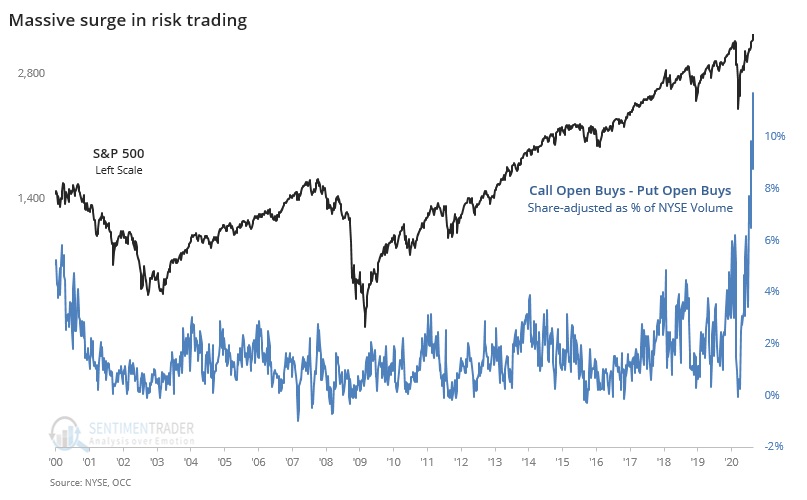
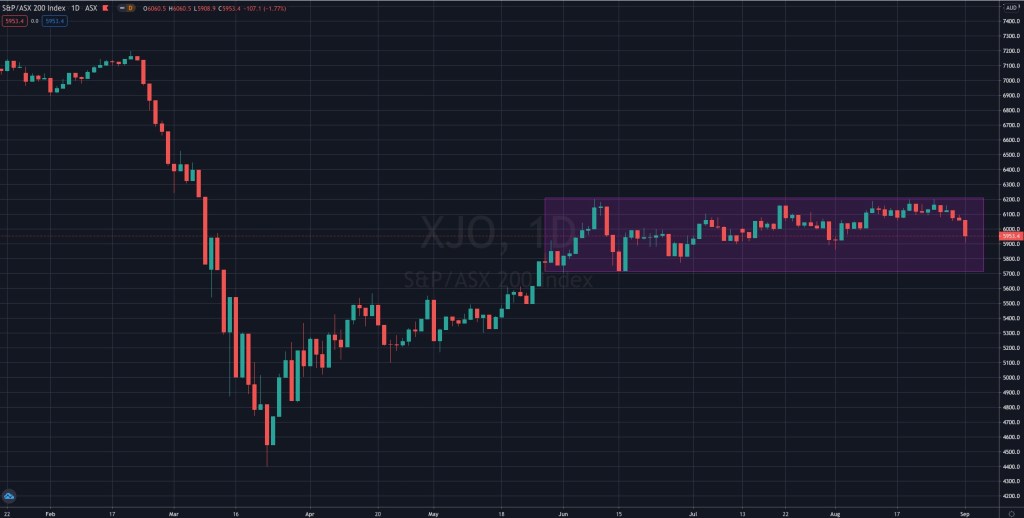
Can’t Help It – It’s Looks Bullish

I’m not writing this to convince or prove a case to readers, but experience and instinct tells me equity markets are still going to higher.

That’s not such a bold prediction in light of the fact that the general price of listed equities have risen for over a century, but in the window of the past and next 5 years, my view is that we haven’t seen the  end of the advance which commenced in March 2009.

We are seeing lower capital inflows to equities, lower overall volume and low retail investor participation. Media commentators are screaming “crash” louder and cite many “problems” which includes trying to identify “bubbles”.

and yet many market indices are hitting new highs.

Position Your Portfolio – My latest newsletter

Click the link below to see our latest investing musings


Position Your Portfolio.

Your Noise Is My Noise

I’ve been advising and managing the equity portfolios for individuals for 20 years. My business is to analyse investment opportunities and the various probabilities of certain things occurring in the future so to position my clients and their money can benefit from my views.

Those views are formulated by me, the investment advisor, using a host of information and sources so it can be dispensed specifically to fit an investors situation.

One problem that I face and I’m sure for many investment professionals who deal directly with their clients do, is to continually diffuse and deflect the opinions and influence that media commentators and “experts” create.

There is often little merit or evidence to their claims that they predicted an event or “saw it coming”. It is equally concerning when the “noise” created about a recent occurrence is structured to suggest that the recent past or the present is now destined to look like the future.

Which brings me to the current flux of the Crude Oil price.

I find it difficult to believe that so many people have suddenly predicted the 50% fall in the oil price. I don’t recall reading or hearing such predictions, yet now these media prophets are receiving adequate air-time for their supposed foresight.

What happens next is that private client investors takes this information as gospel and call their financial professional panting about the analytical revelation they have just heard or read.

Four messages to financial media personalities:

1) Your statements do not help anybody, other than trick people into thinking you are an authority on a subject.

2) Telling me what has happened is useless. It has already happened.

3) The markets have already reacted to the facts.

4)Prices have discounted this news.

My advice to investors is to dismiss this stuff because often the “expert” isn’t a financial professional, nor are they an investor or a participant in the market, let alone licensed or regulated to provide such advice. I’d be interested to ask anyone of them if they have ever put any of their own money at risk behind any of their comments.

It is important to analyse what has occurred in order to educate yourself so to understand history and circumstances which led to an event, but from there on, especially when investing, ice hockey legend, Wayne Gretsky’s quote seems quite relevant, “I skate to where the puck is going to be, not where it has been”.


If you choose to listen or absorb the news and comments about the capital markets, be discerning about who the person is, what their background is, what are their motivations are and whether they have any “skin in the game”.

I think that there is too much energy spent talking about historical facts and masking them as if the preacher had predicted it. Just observe the recent events involving earthquakes, rising property prices, shark attacks, plane crashes and terrorist rampages. Everybody is an expert after the fact and they love telling me how they “told me so”.

The next time that you choose to act on an investment idea or comment that you’ve heard on TV, then I suggest that you periodically and continually call that journalist or “guest expert” and continue to ask them for advice about how the investment is working out and have them explain why its not looking so wonderful at any point in time.

Don’t let other people’s “noise” become part of your investing process.

Iron Ore Gravy Trains

Once upon a time mining companies were making a lot of money by extracting ore from Australia’s crust.

Soon after, the government needed some money to pay for the debts they incurred as a result of the spending promises they made to the Australian public, in their attempt to remain elected to power.

They thought that they could invent a tax which charged mining companies for how much resources that they dig up and sell.

The tax was created. Some were happy and others weren’t. They was lobbying, protests, crying and demanding. The tax had a short life. The new government had mates in the mining sector. The tax was no longer alive.

It was OK ’cause the government still earned some sort of money from whatever businesses the large mining companies conducted, providing that they didn’t cleverly use their offshore subsidiaries to move around and book profits into.

The price of coal had already fallen, but nobody likes them anyway ’cause their industry is a visibly polluting one.

But oh oh – recently the price of Iron Ore has fallen.

This is how I see it,

Government let off the iron ore miners off the hook with the mining tax, less money for the government, then global demand slowed, the giants continued to increase supply, the price of iron ore fell, the companies made less profit but them increasing supply (coupled with falling commodity prices) also pressured the smaller miners, thus the giants are growing their market share, but government still needs more cash, there is no capital gains tax being paid of share profits because the stock prices of the major iron ore companies are the same as 5 years ago, thus shareholder return is poor, but hundreds of employees are making more than $400,000 per year.

It’s important to keep the gravy train going by any means you can, whether you manage to dupe government, the economy or shareholders.

Yet they still are on the look out for federal government help to assist them with their plight of iron ore prices being below their cost of production.

WTF?

My year-end investing newsletter

My latest (December 2014) newsletter is now available

2 videos to watch for the value investor

The first link points you to a video of Howard Marks speaking at the CFA Institute about his memo titled, Dare To Be Great II

http://new.livestream.com/livecfa/marks2014


This next link to a lecture that Seth Klarman gave at Columbia University in 2010.

https://www.youtube.com/watchv=DUvOPD_8icg&index=12&list=FLeTsH9e9cEV8Nv82H8SowVA

And people still give banks their money

UBS, Citigroup, JPMorgan, HSBC and Barclays have been fined a collective $3.3 billion for rigging the FX market.

This is not the first of such reprimands.

After nearly a decade of impropriety, investors still employ various banks to look after their money.

Help you to help yourself. Godspeed!

Being bearish seems wrong

I’m not going to write too much trying to convince or prove things in this post, but just summarise what I think.

With all the bad news around ISIS, Ukraine/Russia and assumptions about the Fed reversing its interest rate stance, to how oil, gold and currencies are reacting, equity markets should be tanking, but they are not. Instead, it looks very bullish.

Ebola and any other reason was behind markets falling 10-12% recently but alas they rebounded soon after, and to new highs. Geez, it looks bullish.

Bears were recently rejoicing again with many still calling for bubbles and crashes but got caught being short again. Yep, it still looks bullish.

But, don’t back up the truck as any rise in these equity markets won’t be rooted from a base of cheap valuations but it’ll be based on capital flows, momentum and on those who have missed out and need to catch up.

This market could rise sharply for a couple more years and the S&P 500 may not get close to testing 1,800 in that period.

So there!

My Current Take On The Market

I am often asked, “Whaddya think of the market?”

It’s a question that irks me somewhat, because its an short & easy question for someone to ask, but the answer can be long and complicated. “The market” is a large beast and answering this question can be challenging.

But here I go;

What I think of the market is……

The party started at 7pm (at 2009’s index low). Many of us (including myself) didn’t arrive until 8.30pm, as we didn’t want to get there too early, not knowing whether others would arrive, so until then we kept our cash in the bank.

Into the evening, more people turned up to the party and we’re having fun, as the wine is tasting good (we’re making some from our investments) and we are starting to see a few more of our friends show up.

Currently, the clock is near midnight. Many of the desirable girls & boys have already been asked for a dance (the cheap stocks have been bought) but we’re still feeling more confident about our chances and abilities (as we reflect on having a couple years of good returns) and we’re getting a little tipsy.

The party hasn’t finished but we are not sure if it’s going to last until 1am, 3am or 4am.

At this stage, due to overconfidence (feeling drunk), desperation (to get involved in the festivities) or a desire to simply show-off, is when crazy things can happen.

Displaying some of these traits may involve doing cartwheels or handstands, ambitious dance moves, courting the wrong person or inappropriate behaviour.

We think equities remains the best asset class to invest in, when comparing them to real estate, bonds & cash.

But from here on, the actions of markets, securities and many people, is less likely to be based on fundamental sensibility and logic.

It can become euphoric, so just be careful how much you expose yourself.

A Dozen Things I’ve Learned from Peter Thiel

A great post from Tren Griffin, who writes one of my favourite blogs

trengriffin's avatar25iq

1. “Great companies do three things. First, they create value. Second, they are lasting or permanent in a meaningful way. Finally, they capture at least some of the value they create.”   “More important than being the first mover is the last mover. You have to be durable.”  “The most critical thing for every startup is to be doing one thing uniquely well, better than anybody else in the world.” This set of statements in my view is about what Michael Porter calls “sustainable competitive advantage” (AKA, moats). Yes, you must create new value to be a great company. But unless you capture some of that value as producer surplus in a sustainable way, the only beneficiary is the customer. One of the best explanations of this value capture point is in Charlie Munger’s fantastic Worldly Wisdom essay:  “there are all kinds of wonderful new inventions that…

View original post 1,435 more words