American buildings are ageing

I read somewhere that the average age of U.S. commercial buildings are approximately over 50 years old.

and according to Joint Center of Housing Studies of Harvard University;

in 2021, that the median American home age was 43 years. It has never been older.

That average was 27 years old in 1991.

#construction #remodelling

Doing numbers on real estate

I was recently asked my view about real estate valuations.
My response was wasn’t brief and it had many variables.

Today, I walked past a house in South Yarra (which is a really nice inner-city suburb in Melbourne, Australia) which caught my eye.

Then I looked up the specific property’s transaction history.

Over 30 years, the gross annual compounded return for this property has been 9% (without any considerations made for any financing, maintenance or carrying costs) that the various owners may have incurred.

And this gross 9% p.a. capital return is from a property in a seriously fancy street, in a sought after suburb within one of the world’s most hottest real estate markets over that time.

My scribbles below are showing the gross annual compounded return achieved from each transaction to the other.

There is nothing like doing the numbers….

Macro Extremes (week ending September 13, 2024)

A weekly Macro, Cross Asset review of prices trading at extremes which may generate future investment ideas and opportunities.

The following assets (on a weekly timeframe) either registered an Overbought or Oversold reading and/or have traded more than 2.5 standard deviations above or below its rolling mean.

denotes multiple week inclusion

Extremes above the Mean (at least 2.5 standard deviations)

Palladium 

Thailand’s SET Index *

Singapore’s Strait Times

Overbought (RSI > 70)

SHY *

U.S. 10 year minus U.S. 2 year government yield

MYR/USD *

Arabica & Robusta Coffee * 

Gold as priced in AUD, CAD and USD

NIFTY
SENSEX

ASX Financials Index *

And the ASX Industrials Index

The Overbought Quinella (Both Overbought and Traded at > 2.5 standard deviations above the weekly mean)

Gold in EUR

Extremes below the Mean (at least 2.5 standard deviations)

WTI Crude Oil

Gasoline

S&P GSCI Index

Brent Crude Oil

Gasoil 

KOSPI

Oversold (RSI < 30)

U.S. and German 2 year government bond yield

Australian Coking Coal *

U.S. Midwest Hot Rolled Coil Steel *

Lumber

Lithium Carbonate *

Lithium Hydroxide *

CFR China Iron Ore *

AUD/THB *
USD/THB

USD/SGD

Shanghai Composite

CSI 300 

MOEX

The Oversold Quinella (Both Oversold and Traded at < 2.5 standard deviations below the weekly mean)

U.S. 3 month t-bill yield *

Swiss and Chilean 10 year government bond yield

North European Hot Rolled Coil Steel *

Heating Oil *

Notes & Ideas:

Global government bond yields fell, again, adding to the previous weeks decline.

Belgian, Brazilian and Finnish yields did the opposite.

The yield for the U.S. 10 year yields are at their lowest since May 2023.

While the U.S. yield curve is overbought.

U.S. 5 year minus 5 year breakeven inflation rate is nearing an oversold extreme.

And Chile’s and Switzerland’s 10 year bond yield are oversold.

Equities had a tremendous week, recovering last week’s declines.

For example, the Nasdaq Composite recovered all of last weeks loss.

The Shanghai Composite and CSI 300 are in 4 week losing streaks.

South Korea’s KOSPI is unloved.

Russia’s MOEX broke its 7 week losing streak.

The SOX soared 10% to nearly offset last weeks 12% tanking.

Singapore’s Strait Times is in a 5 week winning streak.

And some Indian and Aussie indices are overbought.

Commodities mostly rose.

Gold returns to overbought territory.

Silver rose 10% while Palladium double that performance for the week.

The latter appears in this weeks list.

Other notable advancers included Cocoa, Oats, Wheat, Aluminium and Coffee.

Coffee is overbought again.

Wheat has risen 12% over the past 3 weeks.

Inversely, selected energy contracts are oversold.

Gasoline declines to complete a mean reversion.

U.S.Midwest Hot Rolled Coil Steel has spent 16 weeks being oversold.

And Lithium Hydroxide has now spent 61 consecutive weeks in weekly oversold territory.

Currencies set the mood for risk.

The Aussie rose while the Canadian Loonie fell.

The decline in the CAD juxtaposed the risk-on feeling for the week.

Adding to the mixed signals, we saw the Yen advance while risk assets prospered.

MXN/USD rallied 4% for the week and isn’t oversold anymore.

The USD is oversold agains the roaring Baht, Ringgit and Singapore Dollar.

And the Indonesian Rupiah broke its 6 weeks rising streak against the USD.

The larger advancers over the past week comprised of;

Australian Coking Coal 3.4%, Aluminium 5.4%, Bloomberg Commodity Index 2.6%, Cocoa 8.7%, WTI Crude Oil 1.5%, Cotton 2.9%, Copper 4%, Arabica Coffee 9.9%, Tin 3%, Palladium 19.2%, Gasoline 1.6%, Robusta Coffee 10.4%, Sugar 1.8%, S&P GSCI 1.6%, CRB Index 2.6%, Silver in AUD 9.4%, Silver in USD 10%, Gold in AUD 2.7%, Gold in CAD 3.3%, Gold in CHF 4%, Gold in GBP 3.3%, Gold in EUR 3.4%, Gold in USD 3.2%, Gold in ZAR 2.7%, Corn 1.7%, Oats 7%, Wheat 4.9%, AEX 2.3%, CAC 1.5%, DAX 2.2%, DJ Industrials 2.6%, DJ Transports 2%, IBEX 3.3%, IDX 1.7%, S&P SmallCap 600 3.5%, Russell 2000 4.3%, TAEIX 1.5%, Nasdaq Composite 6%, KRE Regional Banks 1.8%, FTSE 250 2%, S&P MidCap 400 3.3%, Mexico 1.8%, Nasdaq Biotechs 4.2%, Nasdaq 100 5.9%, Nifty 2%, Oslo 1.6%, Copenhagen 4.3%, Stockholm 1.8%, Sensex 2.1%, SOX 10%, S&P 500 4%, Chile 1.7%, STI 3.1%, TSX 3.5%, ASX 200 1.1%, ASX Materials 4.2% and ASX Small Caps rose 3.1%  

The group of largest decliners from the week included;

Baltic Dry Index (2.6%), European Hot Rolled Coil Steel (2.1%), Lumber (2.2%), Newcastle Coal (4.5%), Dutch TTF Gas (2.3%), Urea Middle East (1.9%), CSI 300 and Shanghai Composite (2.2%), China A50 (1.8%), Egypt (1.7%) and Vietnam fell 1.8%

September 15, 2024

by Rob Zdravevski

rob@karriasset.com.au

Unloved energy prices

RBOB Gasoline prices have converged to its 200 week moving average.
It’s been a while since it has danced around there.

It is also closing in registering a weekly oversold reading.
That was last seen 4 years ago.


September 14, 2024

Screenshot

September 2024 newsletter

My monthly newsletter has been published.

The link below is to enjoy, read, share and subscribe

https://mailchi.mp/karriasset/changing-shapes-9669099

Macro Extremes (week ending September 6, 2024)

A weekly Macro, Cross Asset review of prices trading at extremes which may generate future investment ideas and opportunities.

The following assets (on a weekly timeframe) either registered an Overbought or Oversold reading and/or have traded more than 2.5 standard deviations above or below its rolling mean.

denotes multiple week inclusion

Extremes above the Mean (at least 2.5 standard deviations)

PHP/USD *

KLSE *

And Thailand’ SET Index

Overbought (RSI > 70)

SHY *

IEI

Robusta Coffee *

MYR/USD *

Egypt 30 Index

And the ASX Financials Index *

The Overbought Quinella (Both Overbought and Traded at > 2.5 standard deviations above the weekly mean)

THB/USD *

Extremes below the Mean (at least 2.5 standard deviations)

1 year Australian government bond yields

Chilean 10 year government bond yields 

U.S. 5 year bond yield minus the U.S. inflation rate (YoY) 

WTI Crude Oil

Heating Oil

Brent Crude Oil

Gasoil 

Oversold (RSI < 30)

U.S. 2 year government bond yield

North European Hot Rolled Coil Steel *

U.S. Midwest Hot Rolled Coil Steel *

Lithium Carbonate *

Lithium Hydroxide *

Shanghai Rebar

CFR China Iron Ore

The Oversold Quinella (Both Oversold and Traded at < 2.5 standard deviations below the weekly mean)

U.S. 3 month t-bill yield *

Australian Coking Coal

Notes & Ideas:

Global government bond yields fell, resuming the recently seen weakness.

Swiss, Danish and Finnish did the opposite.

It’s worthy to note that many yields remain in downtrends although they aren’t exhibiting any strength.

The big news is that U.S. yield curve un-inverted.

Australia’s 1 year bond yield is at its lowest close since May 2023, while the strength of the Aussie yield curve upward trend is waning.

The U.S. 5-7 year corporate bond yield is at a 2 year low, while the U.S. government 10’s are at a 16 month low (May ’23)

The U.S. 5 and 10 year breakeven inflation rate is the lowest seen since December 2020.

Chile’s 2’s broke its 11 week rising streak. 

Chile’s 10 year yield, mean reverted. The first of the world’s 10’s to do so.

While Chile’s yield curve is on its way to inverting.

Equities had a terrible week.

All of the 4 week winning streaks published last week have been broken. 

Most indices have given up the past 3 weeks of gains.

The few exceptions which rose appear in the gainers list below.

Russia’s MOEX is in a 7 week losing streak.

The DAX was one of the indices which posted a bearish outside reversal week. 

Malaysia’s KLSE and Thailand’s SET are overbought and mimicking the strength of their currency. 

While Australia’s Financial indices is overbought.

Commodities were weak as the commodity indices near their own oversold readings.

Agricultural’s bucked the losing trend.

Various oil contracts also appear as an extreme in this week’s edition as Gasoline completes a mean reversion.

Aluminium has fallen 7% in the past 2 weeks.

Lithium, Coking Coal, Tin and Iron Ore were amongst the notable losers.

Arabica Coffee notably left the overbought list.

Corn isn’t oversold anymore.

The Baltic Dry Index has risen 16% over the past 4 weeks.

And Lithium Hydroxide has now spent 60 consecutive weeks in weekly oversold territory.

Currencies set the mood for risk.

The Aussie was weaker as the AUD/THB is near a oversold quinella.

The Thai Baht strength has been impressive.

The Loonie was also weaker.

Inversely, the Swiss and Yen both rose.

Many currencies have dropped out of this weeks ‘extremes’ list.

MXN/USD is oversold

The Indonesian Rupiah has risen for 6 weeks against the USD.

AUD/EUR broke it 4 weeks rising streak and the NZD/USD broke its 5 week winning run.

The DXY fell and gave up half of last weeks gain.

And the USD/JPY had a bearish outside several week.

The larger advancers over the past week comprised of;

Baltic Dry Index 7%, Natural Gas 7%, Orange Juice 4.3%, Rubber 2.9%, Urea U.S. Gulf 1.9%, Urea Middle East 1.8%, Corn 1.3%, Oats 4.2%, Rice 2.1%, Wheat 2.8%, Egypt 0.8%, IDX 0.4%, SET 5.1% and ASX Financials Index 2.6%.

The group of largest decliners from the week included;

Aluminium (3.6%), Australian Coking Coal (12.4%), Rotterdam Coal (4.8%), Bloomberg Commodity Index (2.5%), Cocoa (7.7%), China Coking Coal (12.7%), WTI Crude (8%), Cotton (3%), Iron Ore (9%), Lean Hogs (3.3%), Copper (3.3%), Heating Oil (7.2%), HRC (2%), JKM LNG (2.1%), Arabica Coffee (3.3%), Cattle (1.9%), JKM in Yen (8.8%), Lithium Carbonate (11.2%), Lithium (9.4%), Tin (6.1%), Newcastle Coal (2.9%), Nickel (5.6%), Palladium (6.7%), Gasoline (9.4%), Robusta Coffee (3.6%), Sugar (2.4%), S&P GSCI (4.8%), CFR China Iron Ore (8.9%), CRB Index (3.7%), Dutch TTF Gas (8.4%), Brent Crude (7.2%), Gasoil (6.6%), Silver in AUD (1.8%), Silver in USD (3.2%), Shanghai Composite (2.7%), CSI 300 (2.7%), All World Developed ex USA (2.8%), AEX (4.3%), ATX (4%), KBW Banks (5.5%), CAC (3.7%), China A50 (2.9%), DAX (3.2%), DJ Industrials (2.8%), DJ Transports (3.8%), MIB (3.2%), HSCEI (3.6%), Hang Seng (3%), IBEX (2%), S&P Small Cap 600 (5.2%), Russell 2000 (5.5%), TAEIX (3.9%), Nasdaq Composite (5.8%), KRE Regional Banks (5.2%), KOSPI (4.9%), FTSE 250 (2.8%), S&P MidCap 400 (4.8%), Mexico (3.5%), Nasdaq Biotechs (3.8%), Nasdaq 100 (5.4%), Nikkei 225 (5.8%),  Oslo (3.7%), Helsinki (3.7%), Stockholm (4.4%), South Africa (3.2%), SMI (4.3%), SOX (12.2%), Chile (3.1%), S&P 500 (4.3%), Nasdaq Transports (2.9%), TSX 300 (2.4%), FTSE 100 (2.3%), WIG (3.7%), ASX 200 (1%), ASX Materials (5.8%) and ASX Small Caps fell 3.2%.

September 8, 2024

by Rob Zdravevski

rob@karriasset.com.au

pondering ‘what if’ lower oil prices

A call that I’m not hearing much about it for lower #oil prices.

My historical posts have called for WTI Crude to around an initial visit to $64, and failing that $46-$48.

I think the probability for the latter is gaining.

Today, WTI Crude is $69.40.

A $46 price in WTI #Crude correlate with lower Nat Gas prices and the share prices of related petro/hydro chemical companies.

As an example, that may translate to seeing the trading of stock prices in companies such as #Woodside (WDS.AX) at A$19, #BP at 333p and #Occidental (OXY.N) <US$38.

September 5, 2024

by Rob Zdravevski

rob@karriasset.com.au
Darkest before the dawn

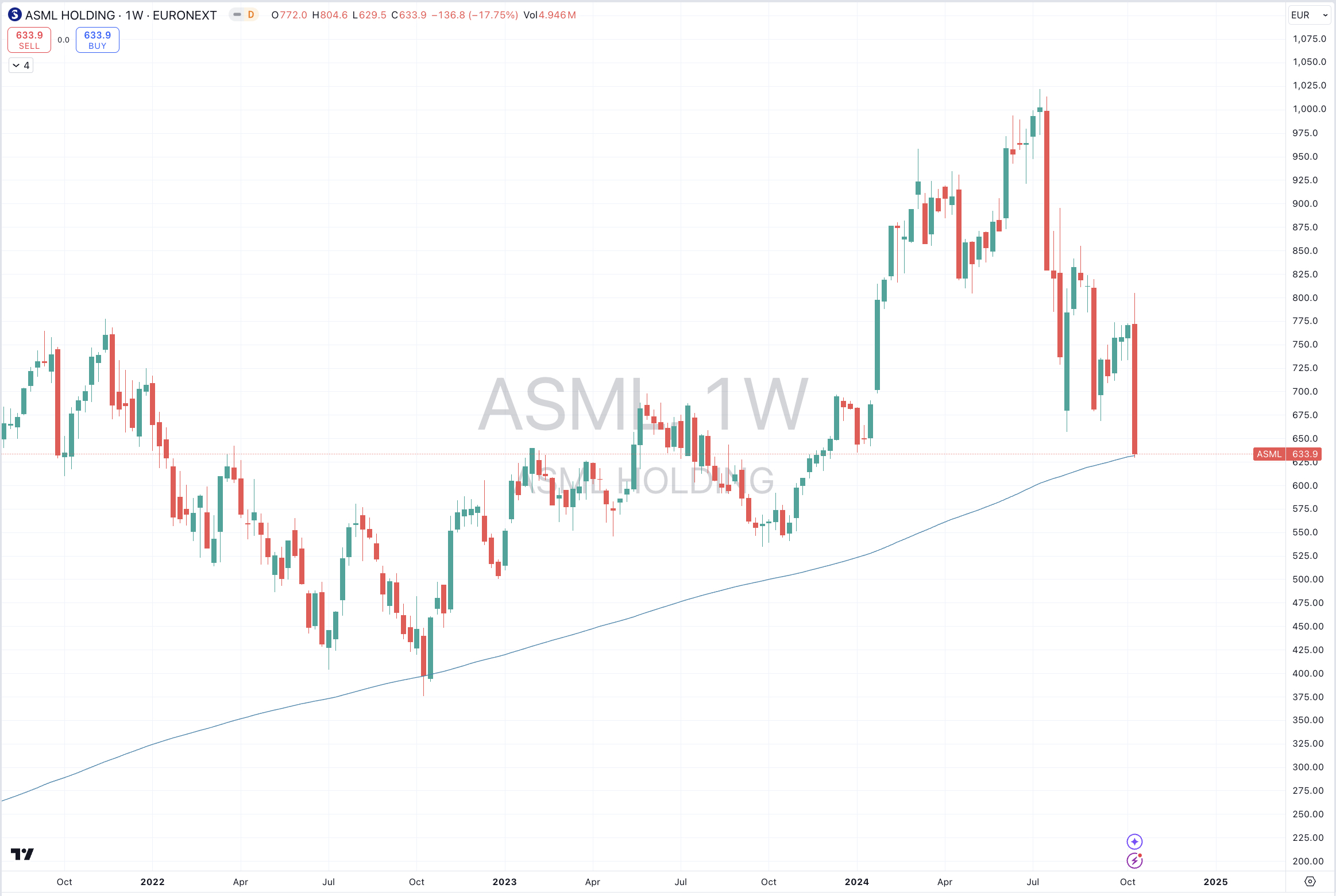
It’s nearly 10 years since Australian Iron Ore and Lithium mining company, Mineral Resources (MIN.AX) last traded this many percentage points below its 200 week moving average.

September 4, 2024

by Rob Zdravevski

rob@karriasset.com.au

Screenshot

Patient on UxC, HG and FE entry prices

I’ll still waiting for lower uranium, copper and iron ore prices.

Equally, I’m not interested in oil or gold unless they are 20% lower than today’s price.

It all may sound odd as I’ve been warming towards commodities for the past few months…….it’s just not these ones, yet!

September 3, 2024

by Rob Zdravevski

rob@karriasset.com.au

Unloved CHF = buy equities

When the CAD/CHF is declining, ‘they’ are selling the Loonie and huddling into the safety of the Swissie.

This happens when ‘we’ don’t fancy a risky environment. That also means risker assets such as equities are also being aggressively disposed.

While not to be used in isolation, the study below shows 16 moments (over the past 40 years) when the CAD/CHF registered a Monthly RSI reading of less than 33.

When it does, perhaps ponder increasing your asset allocation towards equities.

The nuance is which equities (market) to buy.

Currently, it’s close but not there yet.

And remember, currencies don’t lie or tell stories.

September 2, 2024

by Rob Zdravevski

rob@karriasset.com.au

Screenshot