Buy a container of coffee beans

The price of arabica coffee has fallen to 4 year lows. (Are you paying less for your coffee lately?)

While the demand for coffee has remained steady for the past decade, only recently has supply increase, thus explaining the fall in the price of the commodity.

Compare this to the 1,000 cups that each Norwegian or Finn drinks, each year, which is equivalent to about 10 kilograms (kgs) of coffee.

Although Scandinavians love their coffee, the largest coffee market in the world is the United States of America, where it’s averaged that each person consumes 4 kgs per person, each year.

Roasted coffee beans Español: Granos de café t...So where is the upside?

The tea-loving Chinese only drink an average of four cups of coffee, per person, per year.
Just imagine if the Chinese taste buds change as Starbucks and Espresso bars start popping up around the place?

Or perhaps a wider group of Americans increase their coffee intake.
If that story doesn’t pan out, recent studies suggest that drinking coffee can halve the risk of suicide. As mental illness becomes prevalent and should the economy deteriorate again, it’s plausible that drinking more coffee could be added to a doctors prescriptions.

Although that advice won’t help the growing insomniac population, which is a future blog post topic.

So, with prices being low, it’s not a bad idea to go and buy a shipping container full of raw, green Arabica Coffee and keep them for a while.

“Green” coffee beans that are stored in a dry environment can last for up to 10 years.
Furthermore, stored beans are then considered “aged beans”, which over time lower their acidity and increase their body.

Just An Idea!

A Suez Crisis and higher Natural Gas

In Egypt….

two Presidents have been removed from power,
human rights are being violated,
christians are being suppressed and
people are being killed whilst protesting

What if the Muslim Brotherhood (an Iranian proxy) takes power in the world’s most populous Arab nation which borders Israel and straddles the Suez Canal?

Will this make the world nervous?

It’s possible that we see Western intervention to correct matters and protect their billions of dollars spent on military aid over the decades.

Oil prices will probably rise further but I’ll speculate that Natural Gas prices will rise more so.

The price of Natural Gas have been falling for years but I think this will reverse.

When oil becomes more expensive, I think demand for cheaper alternatives such as Natural Gas will be sought and oil won’t be the only fuel source that buyers will settle for.

Furthermore, I expect gas projects (including American shale) will not come on-stream as quickly as expected, due to the rising cost of capital and overall cost overruns.

It is rare that when a commodity is in high demand that it stays cheap for too long.

Michael Price speaks at London Value Investor Conference 2013

The numbers say it all

Heard a radio story yesterday that was interviewing a knitwear manufacturer in Melbourne, Australia.
At his factories peak production several year ago, it employed 70 workers and now he employs 20 people.
Why?
To knit and assemble a jumper (sweater for North American readers) in his Australian factory, excluding the cost of the raw material, the cost is between $30 & $35.
In China, the cost of manufacturing the same garment is between $7 and $8, while it’ll cost you a $1 in Cambodia or Bangladesh.
In a globalised world of free trade, it’s difficult to argue against the numbers.
Import Tariffs anyone?

Western Australia – don’t become California

Coat of arms of Western Australia

Coat of arms of Western Australia

How do I put this…..Western Australia, your hubris will kill you.

Not only is government at fault but business is as well.

West Australians seem to enjoy bragging how expensive things are in their state as if it is a badge of success. Their trade off is the nice weather, surf and beaches. Luckily, you can be broke and still be able to enjoy them.

Landlords in Karratha are charging extraordinary rent for ordinary homes in a town that is 1,500 km from Perth. In fact some small houses, cost over $5,000 per month to rent which is the same as renting a 2 bedroom apartment in Lower Manhattan or a 4 bedroom 150 sq. metre fully furnished condo in Singapore.

The cost of living in Western Australia remains much higher than in other parts of Australia, especially when it comes to food & fuel.

Beyond our state border, a recent Deutsche Bank survey has found that Australia, as a whole is one of the most expensive countries to live in.

Yes, I know that there are benefits to living in Australia, but the rising costs of the basic necessities is a concern. Don’t get me started on paying $10.50 for a pint of beer in a pub!

There shouldn’t be a “premium” to pay for almost everything, simply for living in Western Australia.

I’ll let you in, on a small secret, not everybody in W.A. earns $190,000 per year to operate an oil rig.

The risk that Western Australia has is that people can start to leave the state just as easily as they came here.

Not paying for advice will cost you more

An article that appeared in The Australian newspaper, dated June 8-9, 2013, mentioned the findings of a survey conducted by research group, CoreData which illustrates their respondents investment position.

Their survey found the group of “mass-affluent” participants are holding almost twice the amount of cash than those catergorised as high net worth.

Commonly, “mass affluent” investors are considered to have a minimum of $50,000 to invest, up to $500,000, while a net worth investor is one who has more than $500,000 of investible assets.

The reasons for the “mass affluents” higher cash allocation were cited that they “don’t like volatility, they’e not sure what to do and” and generally, they are self-directed investors.

The article and survey surmised that these investors have remained paralysed in cash whilst asset prices have risen over the past 3 years.

In other words, they don’t seek or haven’t sought professional investment advice.

Has the advent of the “do-it-yourself” online investor been positive?

Why do so many unsophisticated and often financially illiterate investors choose to not pay for advice when they try to manage and investing their money?

I’m not sure if they’re saving money by not paying for advice?

Perhaps their reluctance to engage professional help is that have are being sold products (see “solutions”) rather than receiving advice.

Inversely, corporations, governments and experienced, wealthy investors often seek and pay for advice from various professionals (be it structural, strategic, financial or legal) prior to making investing decisions?

This group wouldn’t accept the notion of being “sold to”.

It’s time for smaller investors to demand that they receive advice for their money and not “solutions” and “products”.


UnafFORDable cars

Ford Motor Company of Australia stamping plant...

The Ford Australia boss announce the closure of its Australian assembly plants by 2016 citing reasons that included high costs and a strong Australian dollar.

He also said that the cost of producing a car in Australia is twice that of Europe’s and four times more than vehicles produced in Asia.

There lies the real problem and answer. Whether its wages, parts or taxes, Australia is not competitive at building cars, so why is government so insistent on subsidising such a loss making industry?

I see little reason to buy an Australian built vehicle which provides that same utility as any other, yet costs more.

Countries such as Singapore & Finland function perfectly well without a car manufacturing sector while we are anchored to historic biases that don’t make financial sense.

But I need to ask…….if vehicles in Asia cost four times less to produce than a local car, why aren’t Toyota’s, Nissan’s, Hyundai’s & Honda’s sold in Australia priced at a quarter the price of an equivalently Aussie vehicle in its respective class?

Perhaps Ford Australia should “thank” the Australian Government for imposing such high import duties against these competitors which has allowed them to stay in business for the past couple decades.

This is an example of how protectionism in a free market capitalism economy does not work, over the long run.

We’ll talk about socialism another time.

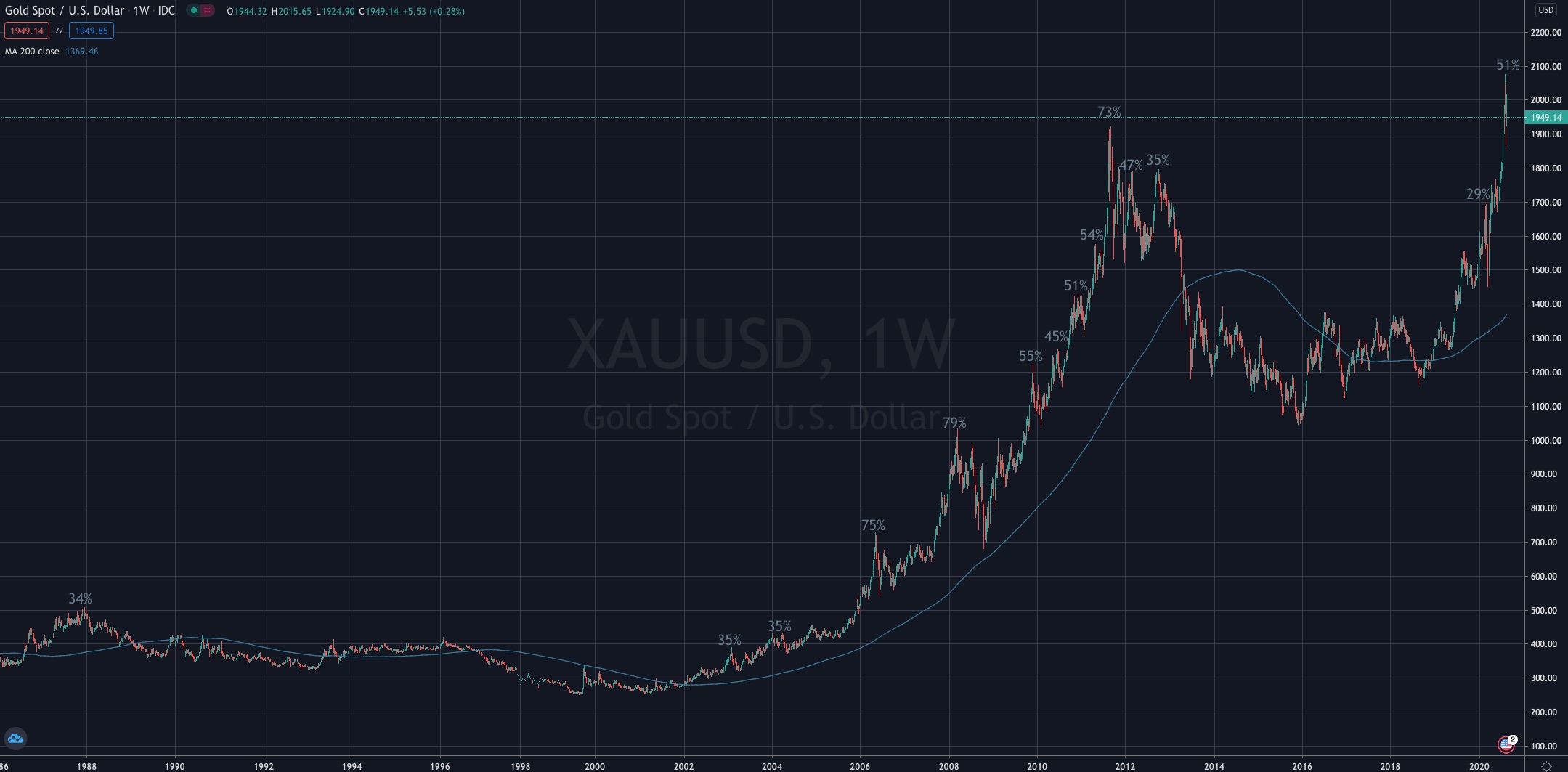
Gold exploration declines by 55%

English: Pouring molten gold into ingot mold a...

The volume of drilling activity in the global gold industry has fallen by 55 per cent in the past 12 months, new data from research group IntierraRMG has found.

Less exploration means supply.

Less gold supply should mean a higher gold price, ONLY if gold demand stays steady or rises.

Such a scenario will benefit gold companies who have a proven resource.

Often, the best thing such a company can do, is to leave the gold in the ground rather than spending hundreds of millions of dollars trying to extract it.

Management who think that success is measured by how much gold they “pour” can prove to be a handicap for its company’s share price, especially when capital is scarce.

Why did the RBA cut rates?

Today, Australia’s Reserve Bank (RBA) cut interest rates by 25 basis points down to a new record low of 2.75%.

I believe that central banks always take their interest rate policy too far in either direction

Do you wonder why they make such moves, especially as they near these extremes?

Did the RBA cut rates to…..

  • lower the value of the Australian Dollar (trying to make it competitive versus other currencies)
  • stimulate growth in the economy (if so, how bad is the economy?)
  • to provide relief to borrowers and credit card abusers
  • to help government (funnily as it’s one week before the federal budget)
  • to force “savers” to invest (because now, after inflation, they are really earning negative interest rates)

I’m simply wondering what was their reason beyond their official statement.

Putting China in context – Part 1

Today, China’s Shanghai Stock Exchange Composite Index (SHCOMP) is trading at 2,200 which is the same level seen in 2011, 2008 and 2006,

You can buy the Chinese stock market today for the same price that it was 7 years ago.

Furthermore, it’s trading at one-third of its 6,124 point high seen in October 2007 with a Price/Earnings Ratio of 11 and Dividend Yield of 2.3%.

Economists are suggesting that for China to move it’s into next phase of expansion and prosperity, the economy would need to move from bing dominated by manufacturing  into one that is driven by domestic consumption. I think this argument is irrelevant.

Sometimes too much analysis can be counter-productive.

I don’t think pundits were wondering when America was going to morph from its industrial manufacturing roots into a consumer society back in 1910. As The Roaring ’20’s came around, it just happened.

Interestingly, many developed economies now yearn for a return of their manufacturing economy.

Recently, the SHCOMP fell 2% because China only reported GDP growth of 7.7% rather than the consensus expectations of 8%. Analysts then expressed their “disappointment” and promptly wrote reports re-iterating their case for a decline in China’s economics.

Many countries could only wish for the growth that China has.