Reports of the U.S. Dollar’s death are largely exaggerated


July 27, 2020

by Rob Zdravevski

Probability is increasing that the AUD (versus the USD) is reaching a peak.

Although its not an all in bet, my strategy has been to Sell AUD / Buy USD at 0.68, 0.71 and then 0.75 (if it touches that level) will bode well for investors.

Structurally, I am a US Dollar Bull.

Equally I was prompted to write the following comments in reply to an email received last week asking for my view about this article recently published in the Australian Financial Review.

http://www.afr.com/opinion/columns/why-the-covid-currency-shock-will-be-made-in-america-20200712-p55bgu?btis

to which I wrote,

I disagree with Stephen Roach’s argument and more so with his case being mainly based on a declining savings rate.

There are larger forces at play than personal savings rates.

The US Dollar provides the whole world with an insurance policy,

as the largest denomination involved in cross bank lending and int’l debt securities, there will be a perpetual need to buy USD to either acquire debt and/or service interest payments.

The “printing of money” is not just a USD phenomenon but rather it has been a relative exercise of increasing M2 money supply amongst many central banks.

and as Foreign Exchange is relative trade and asset, if you sell USD what is the other currency will you Buy ? The Euro ?

C’mon, why give up the safety and might of the US Dollar for Euro, Yen or Pound ?

The expansion of USD (M2) Money Supply has been omnipresent for 10 years yet the currency remains strong and well bid.

As has the expanding money supply amongst the aforementioned currencies.

At this stage, I want to paraphrase HSBC FX Strategist, David Bloom.

The predicted demise of the U.S. Dollar and reports of its death are largely exaggerated.

The Dollar has no other challengers on the world stage;

The United States just saved the world with its cross currency swaps and people think this will be its undoing.

The Dollar will remain the centrepiece of our financial architecture within our lifetime.

I’ll conclude by saying, that inversely, a falling USD will tend to correlate with rising commodity prices. It’s difficult to believe there will such rampant demand across the commodity complex over the next 2-3 years (in line with Mr Roach’s timeframe) especially within a COVID-19 world of delayed capital expenditures and frugality.

As far as the Renmimbi is concerned, its time may come in 20 or 30 years but not now.

by Rob Zdravevski

Rob Zdravevski

rob@karriasset.com.au

Global Investment Advisor at Karri Asset Advisors

Timber !

The 3 best commodities trades since the March 2020 lows have been Long Oil, Silver and Lumber.


Yes…..Lumber. (see chart below)

All have doubled over the past 4 months.

Where to next….
Oil’s bullish trend is still intact,

Silver is overbought, at extremes and warrants caution if you are long (susceptible to a pullback to $18),

and Lumber is a Sell. With its 3 standard deviation above its ‘weekly’ mean and an outside reversal week, it’s time to cash in the (wood) chips.

by Rob Zdravevski
July 27, 2020
rob@karriasset.com.au

Debunking Gold

Let’s debunk the theory behind Gold rising as a store of value and an outright beneficiary of “money printing”.

Over the past 5 weeks, (since June 15th, which was an interim low across many commodity prices) Gold has only risen 8%.

Over the same period, Silver has surged 30%, Platinum & Copper advanced 16% and Brent Crude has climbed 15.7%.

You just don’t find the same zealots and blinded fanaticism in the other assets, unlike Gold.

Heck, the price of Coffee and Wheat rose the same amount as Gold.

July 22, 2020
by Rob Zdravevski
rob@karriasset.com.au
Moving to the country ?

I saw this headline the The Australian newspaper today….

“Hundreds of thousands of Australians could abandon the office in the wake of COVID-19, in a potential boon to small businesses and regional towns…

Rather than such news stories being a passing fad, COVID-19 is a real opportunity to encourage regional living.

It would allow government to re-distribute monies towards “the regions” and ease the pressures which metropolitan living places on transportation along with other infrastructure and services.

In my industry alone (finance), COVID-19 has already forced many stockbrokers to work from home.

This was never a possibility in the past.

Why ?

Because we were required to work within centralised offices in order to monitor us from a compliance basis.

Over the past few months, I haven’t heard this proximity pre-requisite being a concern amongst industry friends.

Why not let it continue ?

And similarly for other industries (whether or not employees need to be overseen), COVID-19 should give them the opportunity to move to less congested and perhaps safer communities.

If employees needn’t work in a close-knit team, remote work indeed should be a boon for regional towns and an option for the employee.

Looking for a 15% decline in ASX 200

Today, the ASX 200 closed at 6002.

I am watching if the index will trade lower to “fill” the following “gap-ups”,

5918, 5803, 5604, 5394, 5055 & 4701.

Those are declines of 1.4%, 3.3%, 6.6%, 10.1%, 15.8% & 21.7% respectively.

I’m betting on it trading closer to the 5,055 level.

20 July, 2020
by Rob Zdravevski
rob@karriasset.com.au

Acquisitions with no premium

Some months ago, I wrote about a M&A theme of where the “big become bigger”. I also continued to say that “quality will buy quality”.

In Chevron’s case of buying Nobel Energy, I’m not quite sure if they are buying quality, although as the FT article link summarises, at least Chevron didn’t rack up huge debt trying to buy Anadarko last year, while the winning bidder, Occidental, now struggles with that liability.

The other part of my M&A theme musings was also a prediction that forthcoming acquisitions won’t be necessarily require paying a premium and that “take-unders” may be more common that a “take-over”.

Chevron was close in this regard. It is buying Noble’s stock for $10.38 per share, which is only a 7.5% premium to its previous days closing price but quite a discount to its $35 price it was trading at 2 years ago.

https://on.ft.com/3fOlKKT

Equities – The Fertile Habitat

by Rob Zdravevski

July 15, 2020

Hello everyone,

Many think that the stockmarket is overpriced or even expensive !

Today, the forecast consensus Price to Earnings (P/E) ratio for the S&P 500 is 22.

The average P/E for the S&P 500 over the past 140 years has been approximately 15.

Yet I think that equities may be the only game in town.

I’d like to introduce you to the Earnings Yield.

https://www.investopedia.com/articles/investing/120513/comparing-pe-eps-and-earnings-yield.asp

The Earnings Yield is the reciprocal of the P/E Ratio

And so, the Earnings Yield of the S&P 500 Index is 4.5%.

In comparison, the yield for the 10 Year Treasury Bond or the “risk free rate” is currently 0.63%.

This means the S&P 500 is offering a return of 7 times more than the return for doing “nothing”.

Such a multiple hasn’t been seen since World War 2.

I’m trying to highlight a fertile habitat for investing.

For some recent context, in September 2011 (once the market cratered and then stabilised following the 2008-2009 Financial Crisis), the forecast P/E for the S&P 500 was 10.5 and so its Earnings Yield was 9.5%.

Comparatively, the 10 year bond was yielding 1.9%

At that historic nadir in stock prices, the market was offering a return of 5 times above the risk free rate.

Then the S&P 500 more than doubled in the next 7 years.

And more recently, in December 2018 (somewhat before a further 31% spurt in the S&P 500 Index over the next 14 months), the Earnings Yield of 6% (because the P/E was 16.8) was only twice that of the 3.1% 10 year Treasury Bond Yield.

Incidentally, that 3.1% 10 Year Bond Yield was the highest interest rate seen since June 2011.

The current “spread” which I mention in the opening paragraph coincides with my blog post about the real bull market may yet to be seen.

https://robzdravevski.com/2020/05/20/bull-markets-you-aint-seen-nothing-yet/

p.s. the forecast for the S&P 500 in 2022 is lower than 22, which mean a higher Earnings Yield.

rob@karriasset.com.au

Copper is the only extreme I can find

The only “extreme” I am finding amongst the macro cross-asset world is in the rising price of Copper.

Accordingly to my analysis, the price of Copper ($2.86) remains at extended and extreme levels and start to decline.

The traders amongst us may choose to take a “short” position, while others may ponder who will be the beneficiaries of lower Copper prices.

Although not at an extremes, a new trend is developing suggesting lower yields for the U.S. 10 Year Government Bond.

And so, I want to bring to your attention the wonderful correlation the Copper to Gold Ratio has compared to the U.S. 10 Year Treasury Yield.

In the past 2 weeks, the metals ratio is diverging and moving in the opposite direction. I believe this ratio will mimic the bond markets pattern soon and with a new trend suggesting lower yields in the 10 Year, this means either Gold falls at either a proportionate rate or greater than my predicted decline in the Copper price.

10 July 2020
by Rob Zdravevski
rob@karriasset.com.au

ASX 200 not breaking highs

One month ago (on June 9th, 2020) I wrote the post below.
The ASX 200 has not traded higher than that June 9th high of 6,198. Today it’s 4% lower, however many market watchers seem to think we have been barrelling into new highs each day.

Although I’d like to note that the stocks I was selling as listed in the original post have all declined between 10% and 20%.

I am not advocating a trading mentality but rather, when you have conviction in your opinion, there are times when you need to protect your capital.

July 10, 20202
by Rob Zdravevski
rob@karriasset.com.au
**************************************
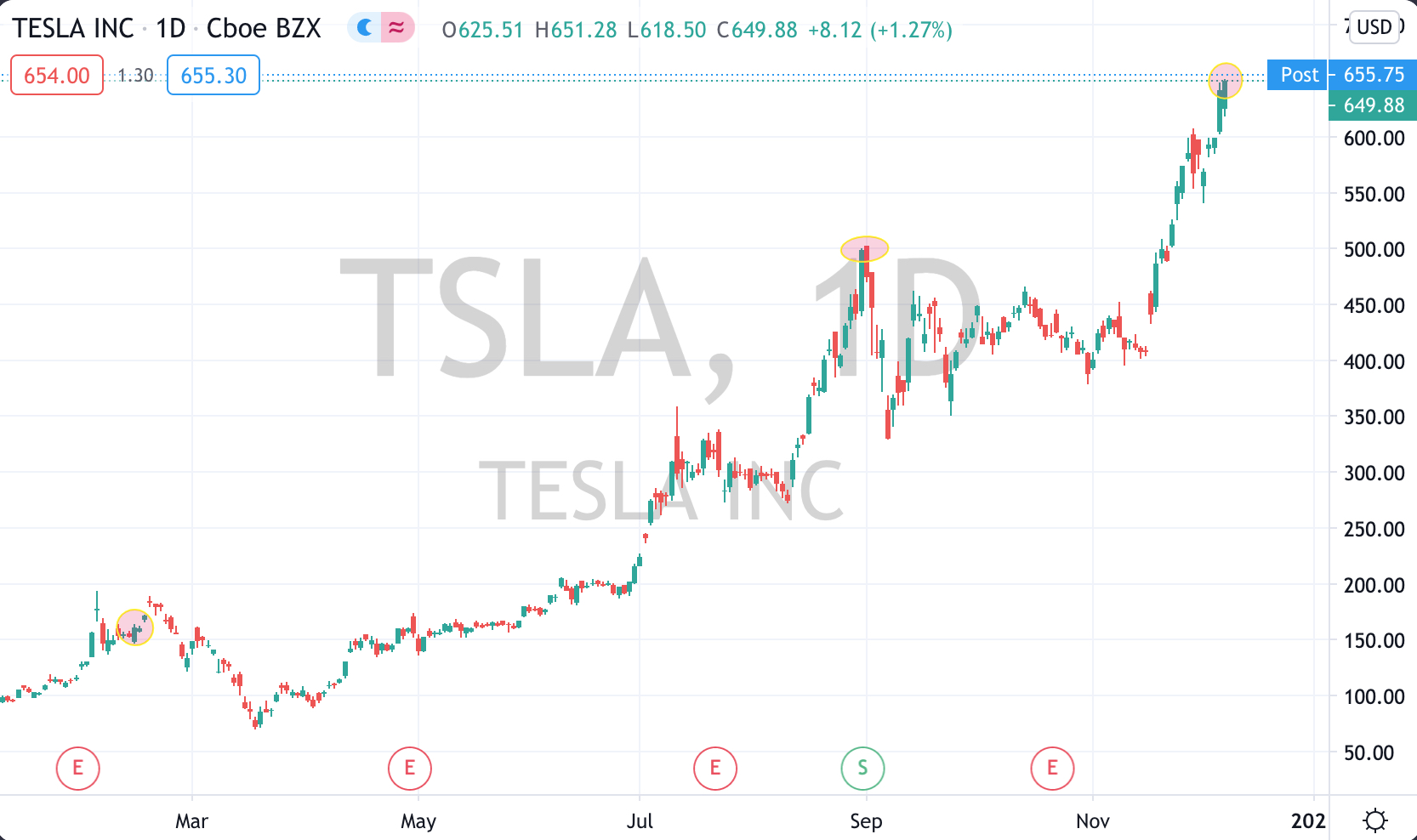
To be on the record for followers of my posts, today, with the ASX 200 reaching a 62% retracement of the recent peak-to-trough move, I’ve been a seller of the following Australian shares.

BSL $12.88; CWN $10.77; DOW $5.30; EVT $9.85; ILU $9.21; ORG $6.45 and WBC at $19.80.

I also lightened up some positions on Friday June 5th and around May 27th, which is where the vertical dotted line on the attached chart marks the 50% retracement of this rally.

Today, my view is that the index’s advance over the past 8 trading days (since my May 27th “market top” call) constitutes an “overshoot” or lurch amongst low volume and driven (dangerously for many an investor) by momentum rather valuation coupled with fund managers playing “catch-up” due to relative underperformance concerns.

How are you going to explain the next mean reversion to your Mum based on that reasoning?

I’m wondering where are the prevailing tailwinds ?

But on a more actual note, my cross-asset technical readings suggest prices are at extremes and others signal a “topping” process.

Some stock prices are back to their March 6th-9th levels while the better “gift” is that some are back at their Feb 25th prices.

This looks like quite a nice “get out of jail free” card all within 3 months.

June 9, 2020
by Rob Zdravevski

No alternative text description for this image

Activate link to view larger image.

Assets revert to the Natural Owner

There is such a thing as a natural and unnatural owner.

Throughout the business cycle it seems inevitable that assets change hands between a “natural” to the “unnatural” owner and revert again to the “natural” owner.

What do I mean by this?

When doctors and lawyers buy vineyards, sure and soon enough they end up selling them back to the seasoned wine operator.

Sometimes people are romanced by starting, owning or buying a business which they have no business being involved in.

This can also include people who shouldn’t be in the stockmarket or own multiple residential dwellings in order to become high-flying landlords or starting a restaurant.

I’d love to hear some of your examples.

A recent conversation which started up while drinking beer with friends was relating to the housing grant stimulus being offered and a coming “boom” in new home starts.

One of the pre-requisites to receiving or qualifying for the grant, was that a slab (concrete foundations) needed to be laid by the end of December 2020.

So, my buddies start talking about getting into the concreting business.

I interrupted and asked “what the hell do you blokes know about concreting?”

Their reply was along the lines of, “what’s to know?” and “its easy”.

I needed to chime in and remind them that the guys which you see in the business today, actually belong there.

They are the “natural” owners of those businesses.

They’ve been talking concreting with their “old man” over the dinner table for years.

They know the costings, pricing and margins better than any of us.

I’m not raining on anyone’s entrepreneurial parade but it seems obvious that certain businesses should be run and owned by those with a pedigree in that industry.

Pedigree trumps competence, finances and passion.

If your friend ever decides to invest in Alpaca Farming or a Forestry Schemes, start a Nail Salon or an online bikini company…….and they have no business being there, perhaps you should say something.

7 July 2020

by Rob Zdravevski

rob@karriasset.com.au