Does WTI Crude make a ‘lower low’
April 11, 2022 Leave a comment
I’m watching this week if WTI Crude Oil (front month) breaks below or holds $93.53.
The Brent equivalent is $96.97
April 11, 2022
Trying to hear what's not being said
April 11, 2022 Leave a comment
I’m watching this week if WTI Crude Oil (front month) breaks below or holds $93.53.
The Brent equivalent is $96.97
April 11, 2022
April 10, 2022 Leave a comment
The following assets (on a weekly timeframe) registered an Overbought reading or traded more than 2.5 standard deviations above its rolling mean.
Extremes “above” the Mean (at least 2.5 standard deviations)
U.S. 10 year minus German 10 year bond yield spread
Natural Gas
Orange Juice
AUDUSD
CADUSD
AUDSGD
TBT
Overbought (RSI > 70)
Australian 2, 3,5 & 10 year government bond yields
Greek, Spanish, French, Italian, Portuguese, New Zealand, Swiss, French, Canadian & Korean 10 year government bond yields
German 5 and 10 year yields
U.S. 2, 5 & 10 year yields
Bloomberg Commodity & CRB Index
Uranium
Corn
The Overbought Quinella – Both Overbought and Traded at > 2.5 standard deviations above the weekly mean)
Swedish 10’s
TBX
AUDGBP
AUDJPY
Assets (securities) which touched the other side of the extreme, being Oversold (where the RSI is < 30) or were at least 2.5 standard deviations below its mean are;
Extremes “below” the Mean (at least 2.5 standard deviations)
Gold Volatility Index
Bond ETF’s TLT & IEF
Oversold (RSI < 30)
HKD/USD
Russia’s MOEX Index
The Oversold Quinella – Both Overbought and Traded at > 2.5 standard deviations above the weekly mean)
JPY/USD
U.S. 10 year minus 5 year government bond yield spread (which has now inverting and at lowest since September 2000.
Notes & Ideas:
The big news for the week was in the bond market (as 10 year yields touch and tickle overbought extremes.
The U.S. yield curve inverted for a couple days and now it isn’t. Much noise (once again) for not much substance. Curves needs to invert more than a few days before probability stacks up for a future recession call.
In fact, we saw a bullish outside reversal week for the US10-02 spread and the US10-05 spread, along with the Swiss 10’s and Rotterdam delivered coal price.
The other big news is in the currency market, especially the divergence being seen in the currencies of the commodity sensitive economies of Australia and Canada.
The AUD and CAD are hitting highs against many currencies whilst the USD is also marking its own highs. These two moments seldom occur at the same time.
We’re also seeing multi-year weakness in the Yen and the Euro is getting a drubbing.
It was a mild week amongst the major global equity indices as the ASX 200 only fell 0.2% and the S&P 500 declined 1.3%, while some sub U.S. indices did see outlier weakness such as the SOX, the Russell 2000 and MidCap 400.
In expected news, the AUDEUR, the DXY and Oslo bourse are nearing overbought extremes.
Meanwhile, Bitcoin and Ethereum fell 8% for the week, meanwhile Cardano remains 67% below its September 2021 high.
Speaking of 67%, Istanbul’s BIST 100 has risen 67% since September 2021.
The larger advancers over the past week comprised of;
Rotterda, Coal 11.2%, Bloomberg Commodity Index 2%, Cocoa 2.9%, Natural Gas 9.8%, Orange Juice 6.4%, Palladium 6.7%, Sugar 5.4%, CRB Index 1.7%, Urea 2.5%, Uranium 9%, Corn 4.6%, Oats 7.4%, Soybean 6.7%, Wheat 6.8%, Swiss SMI 2.7%, FTSE 100 rose 1.8%, Istanbul surged 5.3% (up 20% in past 5 weeks) and Australia’s ASX 200 advanced 1.2%.
The group of decliners included;
Aluminium (3.6%), Australian Coal (12.6%, now down 37% in past 3 weeks), Baltic Dry Index (12.8%), China Coal (2.7%), Gasoil (6.9%), Gold Volatility Index (3.7%), Lean Hogs (2.3%), Heating Oil (3.1%), Hot Rolled Coil Steel (3.3%), JKM (3.1%), LNH (12.6%), Rubber (3.1%), Dutch TTF Gas (7.4%), Brent Crude (2%), KBW Banking Index (2.3%), CAC (2%), Dow Jones Transports (6.7%), Bovespa (2.7%), MOEX (6.1%), Nasdaq 100 fell 3.6%, Nikkei 225 (2.5%), TAIEX (1.9%), Russell 2000 (4.6%), Philadelphia Semiconductor Index “SOX” (7.3%), S&P Midcap 400 3.4%0 and S&P 500 declined 1.3%.
April 10, 2022
by Rob Zdravevski
rob@karriasset.com.au
April 8, 2022 Leave a comment
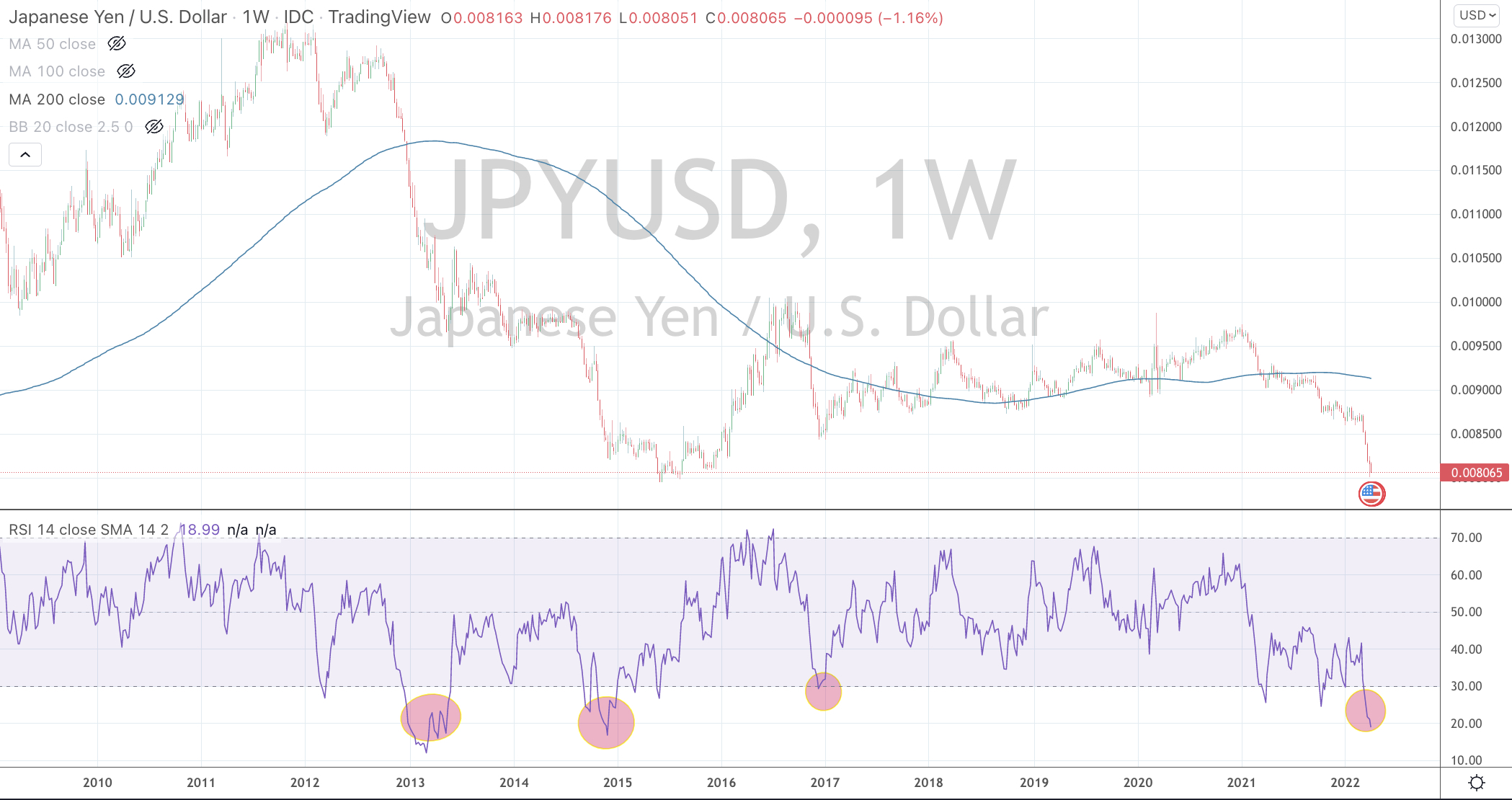
The Japanese Yen is at its weakest in 6 years against the Aussie and the U.S. Dollar.
In the chart below, I’ve circled 4 moments since 2009 when it was decidedly Oversold, trading at extended percentages below its 200 week moving average and at 2.5 standard deviations below its rolling weekly mean.
Buying some Yen is the first step,
nibbling away at some cheap Japanese equities is the next.
April 8, 2022
by Rob Zdravevski
rob@karriasset.com.au
April 8, 2022 Leave a comment
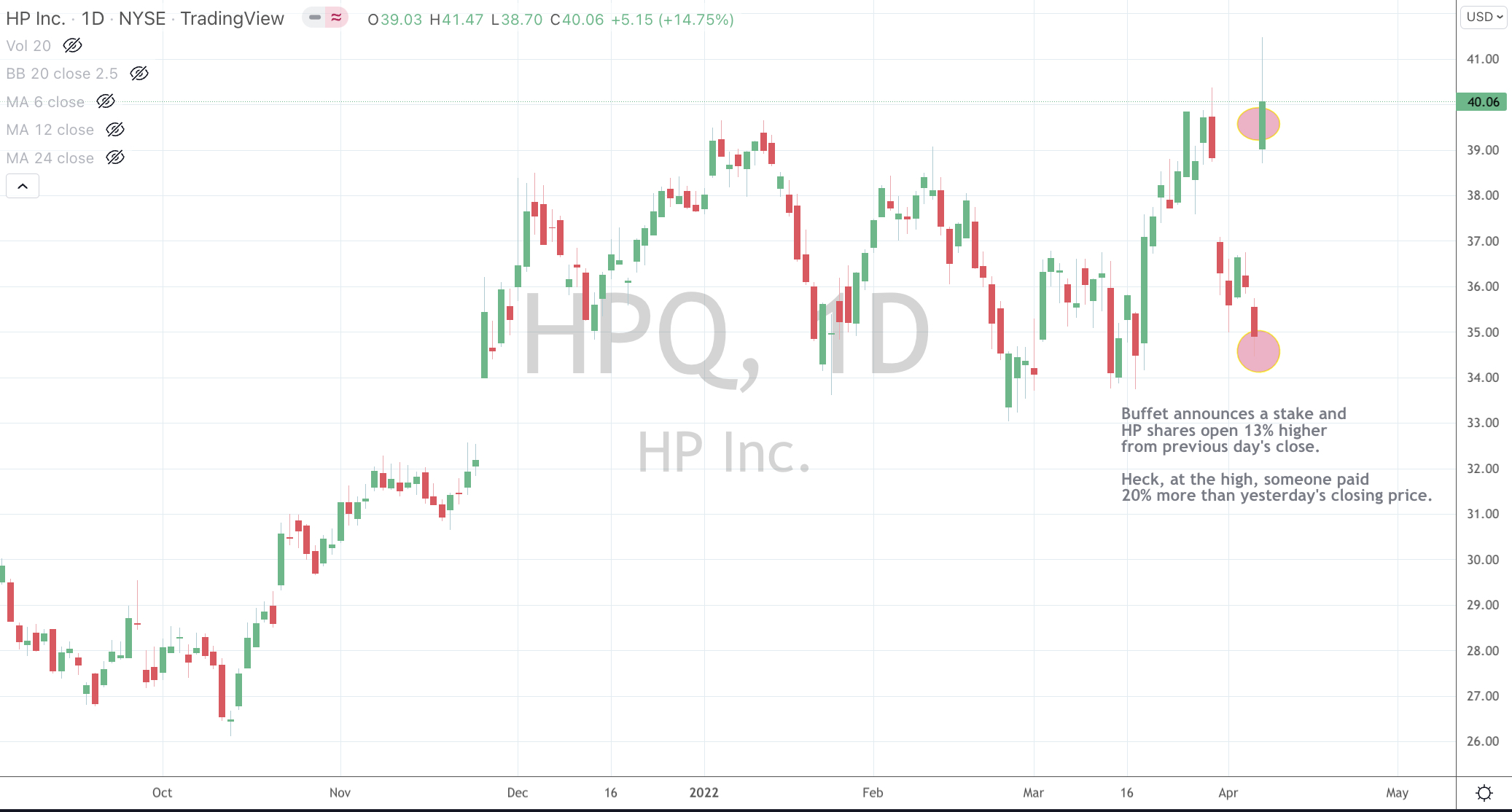
Would you like to see what a herd of sheep looks like?
It’s when you pay 20%-30% more for a stock, the day after when a ‘celebrity’ investor has taken a substantial holding.
Isn’t astonishing that those buyers didn’t perceive Twitter or HP to be worthy of their investment dollars only a day earlier?
It’s code for nobody did their research.
All you can do is wish them well.
We can never tell how long the new buyers will hold their stock for, but I’ll check back on this in 6 months or so.
April 8, 2022
by Rob Zdravevski
rob@karriasset.com.au

April 8, 2022 Leave a comment
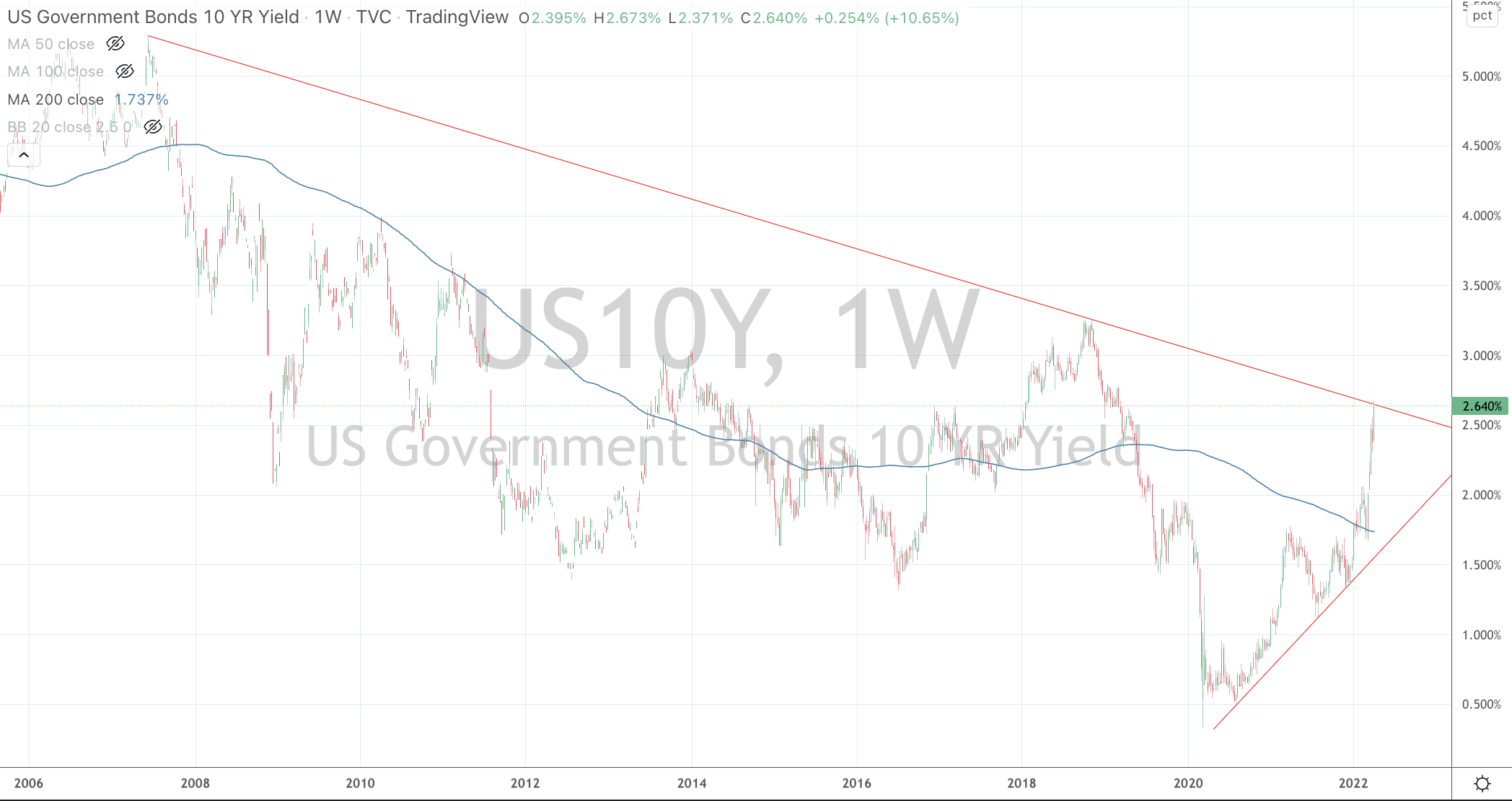
Sure, I think we see higher interest rates. My view is that U.S. 10 year bonds yield 3% – 3.2% into 2023.
For now, yields are a bit full and I look for the 10’s to come back to the 1.9% range into September – October 2022 timeframe.
Should that occur, I’d expect inflation readings to abate and GDP to decline.
With that comes a bunch correlated reactions such as the oil price declines, cyclicals come off the boil, rising stock inventories due to higher ‘produced’ prices not being paid for or accepted, while boding well for deflation producing technology companies.
April 8, 2022
by Rob Zdravevski
rob@karriasset.com.au
April 8, 2022 Leave a comment
Copper and Oil haven’t quite made a new, recent lower low than seen 7-20 days ago and watching if AUDUSD trades below 0.7456 on Friday. If it does, it’ll be a bearish outside reversal week.
and I’m warming towards Platinum.
April 8, 2022
by Rob Zdravevski
rob@karriasset.com.au
April 7, 2022 Leave a comment
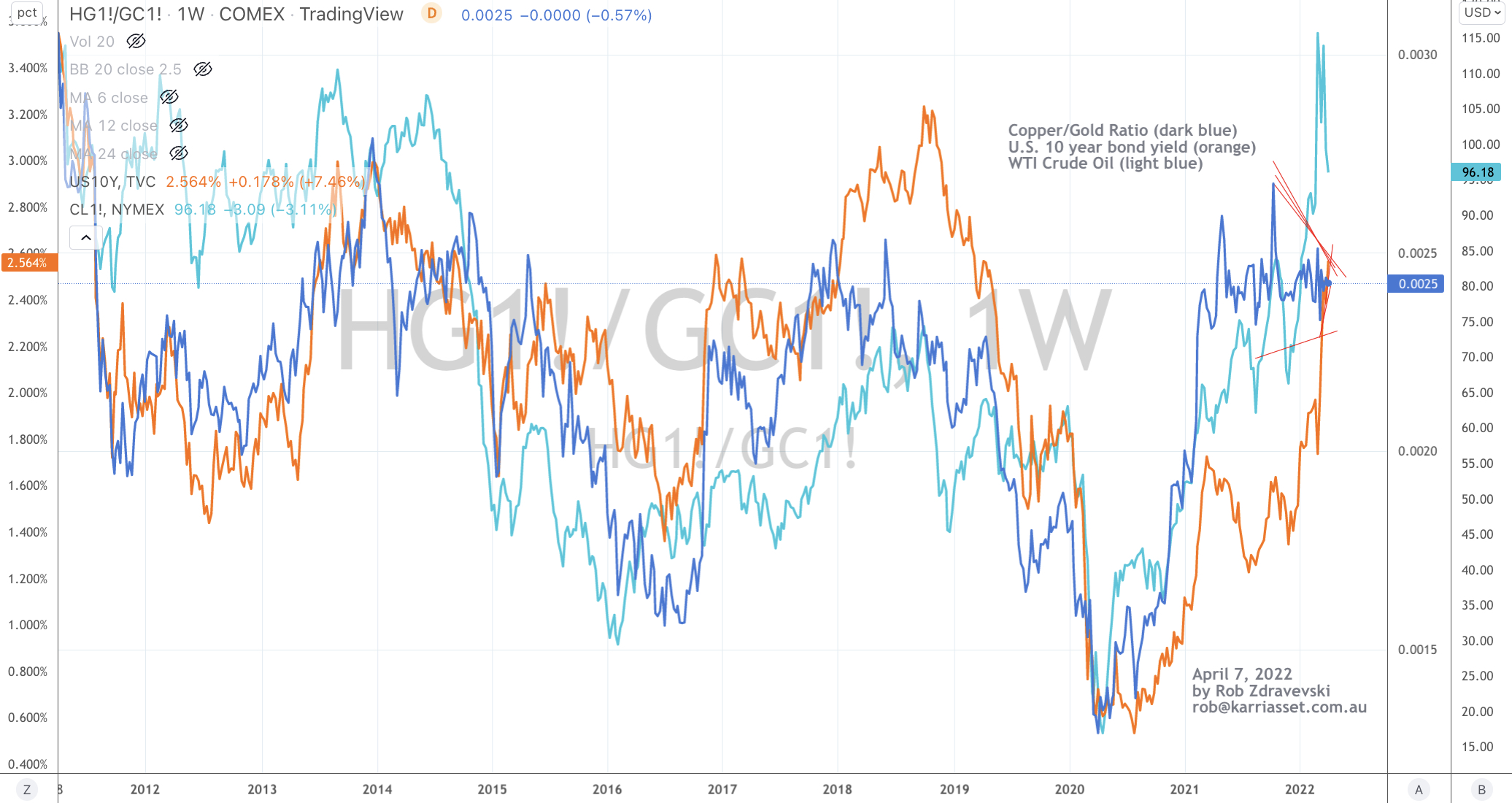
I’m queuing off the price of Copper at the moment, as it’s approaching a support line, whether it makes a recent ‘lower low’ and changes the direction of its trend (on a daily basis).
Here is a chart overlaying the Copper/Gold Ratio, the price of WTI Crude Oil and the U.S. 10 year bond yield.
If you throw in some currencies, the CRB Index, the S&P 500 or Gold and these pictures become quite informative.
April 7, 2022
by Rob Zdravevski
rob@karriasset.com.au
April 6, 2022 Leave a comment
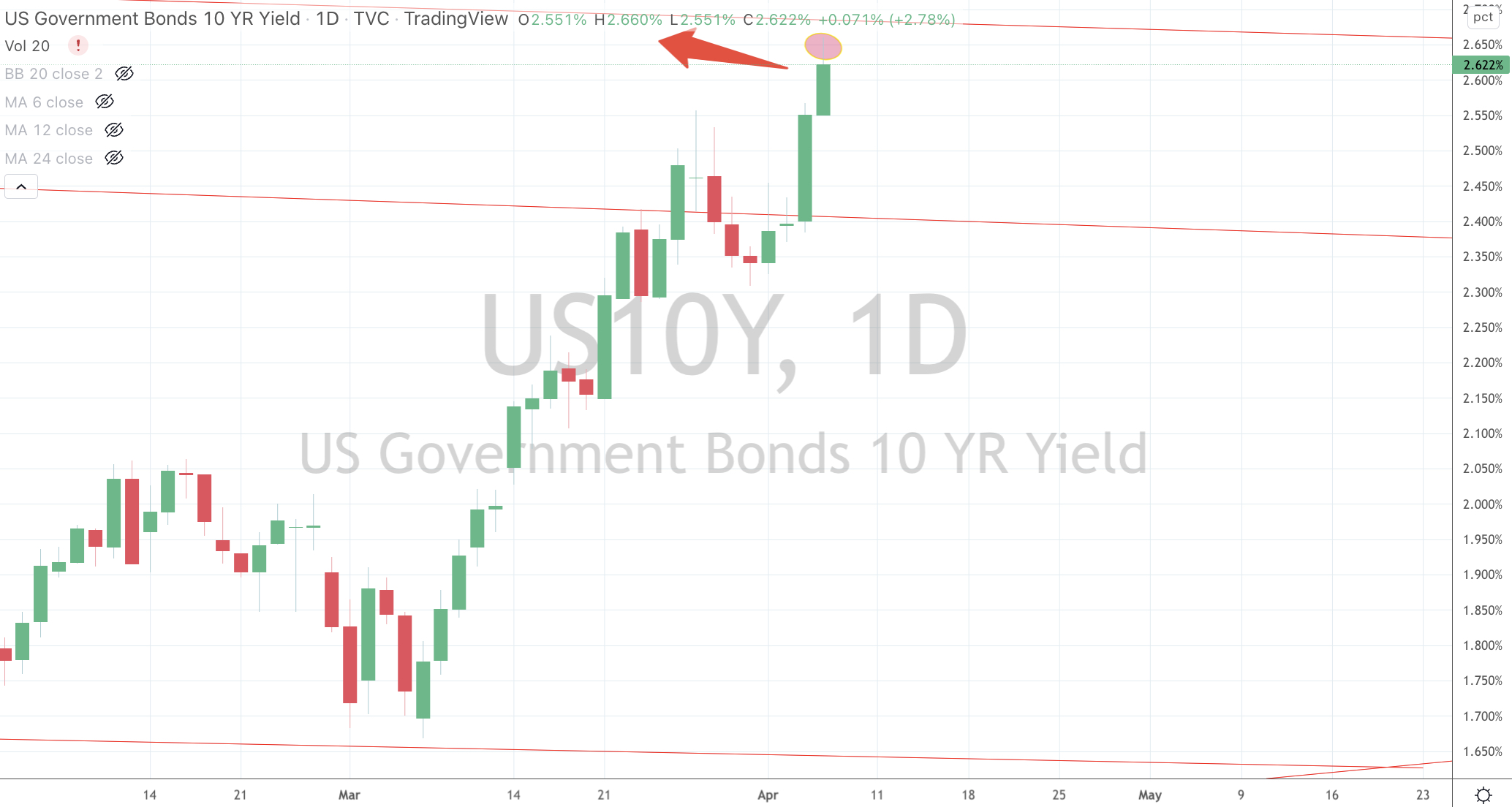
And the 2.66% 10’s target (seen on April 6, 2022) coincides with the 10-2 spread playing in the 0.03% – 0.08% range I have depicting in recent posts.

April 6, 2022 Leave a comment
There’s my 2.66% mark I was looking for in U.S. 10’s, as mentioned in previous writing.
Now I look for the 10 year rate to abate, back to the 1.9% mark.
#techstocks
April 6, 2022
by Rob Zdravevski
rob@karriasset.com.au
April 3, 2022 Leave a comment
The following assets (on a weekly timeframe) registered an Overbought reading or traded more than 2.5 standard deviations above its rolling mean.
Extremes “above” the Mean (at least 2.5 standard deviations)
German 2 year government bond yields
China Coal
CAD/USD
Oslo equity index
Overbought (RSI > 70)
Australian 2, 5 & 10 year government bond yields
Greek, Spanish, French, Italian, Portuguese, New Zealand, Swiss & Korean 10 year government bond yields
U.S. 2 and 5 year yields
CRB Index
Cotton
Uranium
AUD/GBP
The Overbought Quinella – Both Overbought and Traded at > 2.5 standard deviations above the weekly mean)
U.S. 10’s (10 year government bond yields)
German 5’s
Australian 3’s
Canadian and Swedish 10’s
AUD/JPY
USD/JPY
Assets (securities) which touched the other side of the extreme, being Oversold (where the RSI is < 30) or were at least 2.5 standard deviations below its mean are;
Extremes “below” the Mean (at least 2.5 standard deviations)
None
Oversold (RSI < 30)
U.S. 10 year minus 2 year government bond yield spread (lowest since February 2007)
HKD/USD
Russia’s MOEX Index
The Oversold Quinella – Both Overbought and Traded at > 2.5 standard deviations above the weekly mean)
JPY/USD
U.S. 10 year minus 5 year government bond yield spread (which has now inverting and at lowest since September 2000.
Notes & Ideas:
The big news in this week’s edition is the reaction to last week’s extreme highs in government bond yields.
The U.S. 10’s in particular peaked at 2.56%, I was allowing up to 2.66%. They closed at 2.38%.
Last week I wrote that the TBT & TBX (U.S. listed “Short” bond ETF’s) were confirming the inverse reading of the overbought U.S. government bond yields.
Now, they are no longer Overbought.
While yield curves flattened and the US 10-2 spread went negative.
I’ve written many notes on this topic for the past year which are searchable on my blog.
In other bond news, Brazilian 10’s fell from 11.88% to 11.40%
Russian bonds started trading again and closed the week at 11.3%, which is lower than the 19.9% yield when last halted on Feb 28th.
Germany 10’s are no longer overbought. In the past 3 weeks, those yields moved from 0.59% to 0.74% and back to 0.56%.
I’ll also look the U.S. 10 minus German 10’s spread. A break of a major support suggests a flatter curve. Note to come later in the week.
The second largest piece of news was a the decline in prices amongst the energy and agricultural complex.
In fact, news of Crude and Wheat falling 13% and 11% respectively didn’t seem to hit the headlines. Perhaps we are desensitised to such moves in light of the volatility (and gains) seen recently.
For a little context, other than the negative oil price stoush in March 2020, the price of Crude hasn’t seen a 13% weekly decline since 2007.
Are prices falling due to reversion following parabolic moves or is just springtime in the Northern Hemisphere?
As the list of ‘extremes’ continues to shrink we are seeing many assets meander back to the means and work their way into new trends.
Also, the VIX index eased a little lower to 19.6
The AUD and USD remain at 6 year highs against the Japanese Yen;
The Nasdaq rode 0.8% this past week adding to the bullish outside reversal which has now seen it rise 11.4% since that occurrence, 3 weeks ago.
The movement in the Gold Volatility Index is garnering my interest. Look for an upcoming note on this.
The AUD/SGD is nearly overly Overbought, while the DXY is not overbought this week.
And the S&P 500 closed unchanged but touched my interim high target mentioned in last week’s ‘extreme’ edition.
The larger advancers over the past week comprised of;
China Coal 9%, Hot Rolled Coil Steel 37%, Coffee 3%, Natural Gas 2.7%, Orange Juice 4.4%, Rubber 5.4%, Dutch TTF Gas 10.7%, Shanghai Composite 2.2%, CAC 2%, CSI 300 2.4%, MIB 2.5%, HSCEI 3.5%, Hang Seng 3%, IBEX 2.1%, MOEX 11.1%, Copenhagen 4.5%, Helsinki 2.5%, Sensex 3.3%, BOVESPA 2.2%, Istanbul 4.6% and Australia’s ASX 200 rose 1.2%.
The group of decliners included;
Aluminium (3.4%), Australian Coal (19.3%), Rotterdam Coal (-2.6%) now 30% in past 3 weeks, Bloomberg Commodity Index (4.6%), Baltic Dry Index (7.4%), WTI Crude (12.8%), Gasoil (8.8%), GVX (22.7%), Lean Hogs (5.8%), Heating Oil (16.9%), Lumber (4.3%), LNG (2.3%), Nickel (8.7%), Palladium (5.3%), Platinum (2%), Gasoline (9.1%), Silver (3.8%), CRB Index (4.6%), Brent Crude Oil (11.4%), Gold in USD (1.7%), Corn (2.7%), Soybean (7.4%), Wheat (10.7%), KBW Bank Index (6.7%), Dow Jones Transports (5.3%), Nikkei 225 (1.7%) and the SOX Index fell (4.5%)
April 3, 2022
by Rob Zdravevski
rob@karriasset.com.au

