When your current assets aren’t current

I am defining the coming decade in investment markets as an ‘accountant’s decade’.

It’ll be about the real numbers rather than wondrous customer growth prospects in the absence of profit.

S.E.B. (the Paris listed owner of household and professional kitchen brands such as Krups, Lagostina, Moulinex, Rowenta, and Tefal) currently holds $1.85 billion held in inventories.

This equals nearly half of the company’s market capitalisation

or 25% of its annual revenues.It has a further $1 billion on the books as receivables.Gosh, I hope their customers start paying them soon and hopefully 100% of what is owed.
See where I am heading with this?
A month I started to highlight a similar situation at Danish wind turbine manufacturer who carries 

inventory equal to 35% of it market capitalisation or 45% of its annual revenue.

Although all of these stock prices have been slaughtered in the proceeding months and companies in this predicament will still need to work off their inventories and/or recover most of the receivables owed.

As highlighted in other past posts about inventories build up and price discounting, it’s a reminder to do your work, slash some assumptions and make adjustments.

December 15, 2022

by Rob Zdravevski

rob@karriasset.com.au

Oil – Buy signal approaching

Under the guise of getting the bigger calls right and continuing from the previous post…….

and for something acutely related to the Gold/Oil ratio…..

when we find the Gold/Oil ratio at overbought levels on a weekly basis, this suggests that the price of WTI Crude Oil is in buying territory.

We are potentially approaching the 14th time (over the past 30 years) that this buying signal will occur.

Keep in mind, I’m talking about the price of Oil.

Logically, oil related equities should also prosper and have the ability to deliver operational leverage, however you’d need to do the research on any specific companies numbers such as their debt, interest expenses, free cash flows, contracted or forward delivery prices etc etc.

December 15, 2022

by Rob Zdravevski

rob@karriasset.com.au
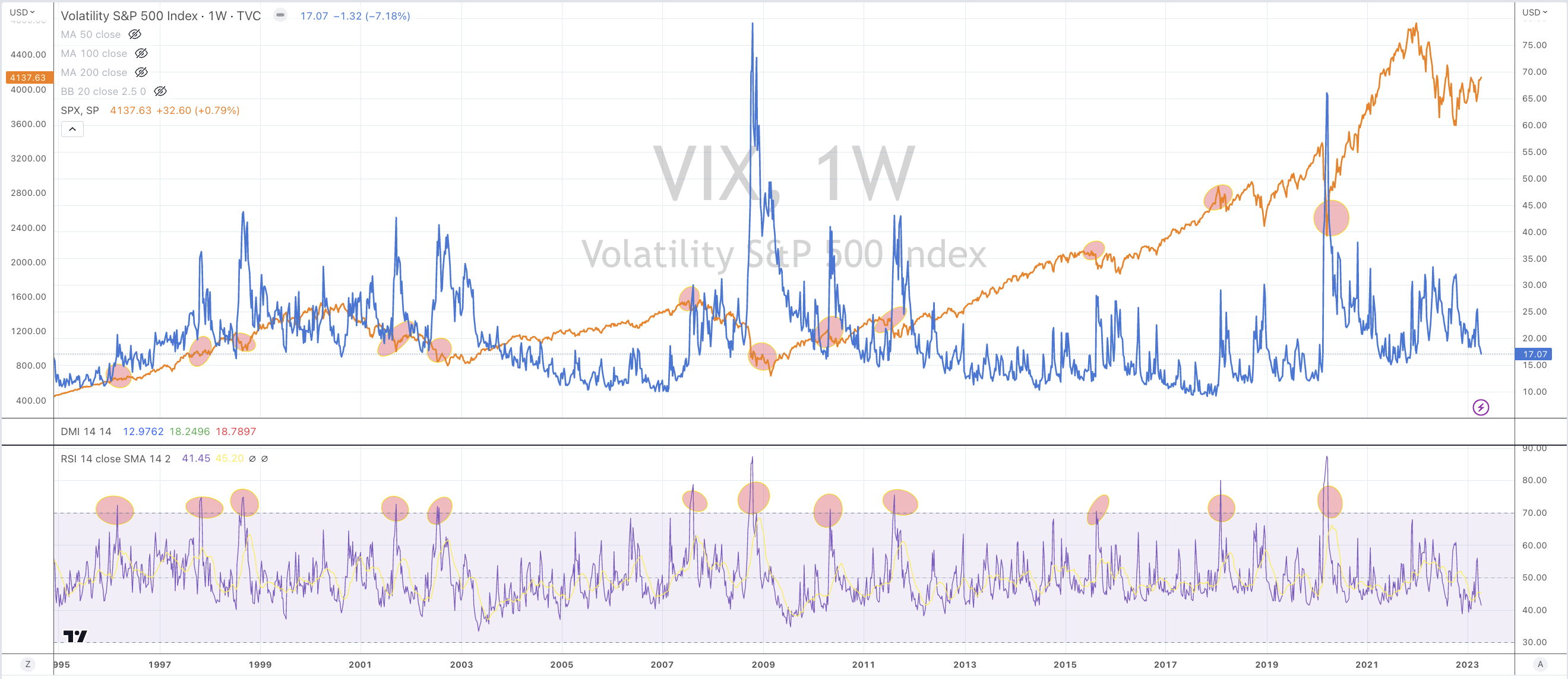
Go long S&P 500 when Gold/Oil is overbought

An overbought weekly reading in the Gold/Oil Ratio translates into a reliable ‘Buy’ signal for the S&P 500 Index.

But I’ll use a few more other studies to refine the timing of each entry.

Keep in mind that this signal doesn’t assist in the extrapolation of confirming the length of an advance nor the continuation of an exiting bullish trend. 

This ratio is now approaching such an overbought reading for the 11th time over the past 25 years.

This is an extract from my upcoming ‘Book of Correlations’……

December 15, 2022

by Rob Zdravevski

rob@karriasset.com.au
Downside in Tesla’s isn’t done

For 2 years I have written a series of posts about Tesla’s expensive share price and mostly predicting its decline. 

More importantly, it has been about knowing when to stay away but the sub title is how such stocks skew the performance of equity indices.

The headlines of my posts continually featured the words, ‘more downside’. 

In this post, I suggested that $519 would be a ‘good shakeout’.

That was in the pre 3 for 1 stock spilt money, which means $519 would equal $173 in today’s pricing.The stock price today is $157.

But I think there is ’still more downside’.
How about $82?And if so, then think of the 2nd and 3rd derivative reactions and consequences ranging from how it affects the S&P 500’s price to the potential for margin calls.

Don’t worry, if the stock price halved again, its market capitalisation will be $240 billion.

Overnight, we saw 2 Wall Street firms lower estimates and cite warnings about lower demand for Tesla’s products.
Such revisions are fine as they are part of changing one’s view and opinion but I always wonder, where were the downgrades when the stock was 60% higher?

At the $82 mark, I’ll watch for Wall Street to start placing Sell recommendations on Tesla stock.

December 15, 2022

by Rob Zdravevski

rob@karriasset.com.au
Apple’s stock price is your capitulation signal

For those looking for that sign of capitulation and a significant low in equity markets, perhaps watching the stock price of Apple.

A price somewhere between $115 – $122 in the coming months would likely do it.

Apple is the last standout of the FAANGM stocks to mean revert back to its 200 week moving average. Last week, even honorary FAANGM stock, Tesla traded down to this mean.

A 20% drop in Apple may shakeout those using the stock as a safe place to hide.

Feel free to search through my blog about this 200 week moving average mean reversion, which I have been writing about for the past 18 months.

December 15, 2022

by Rob Zdravevski

rob@karriasset.com.au

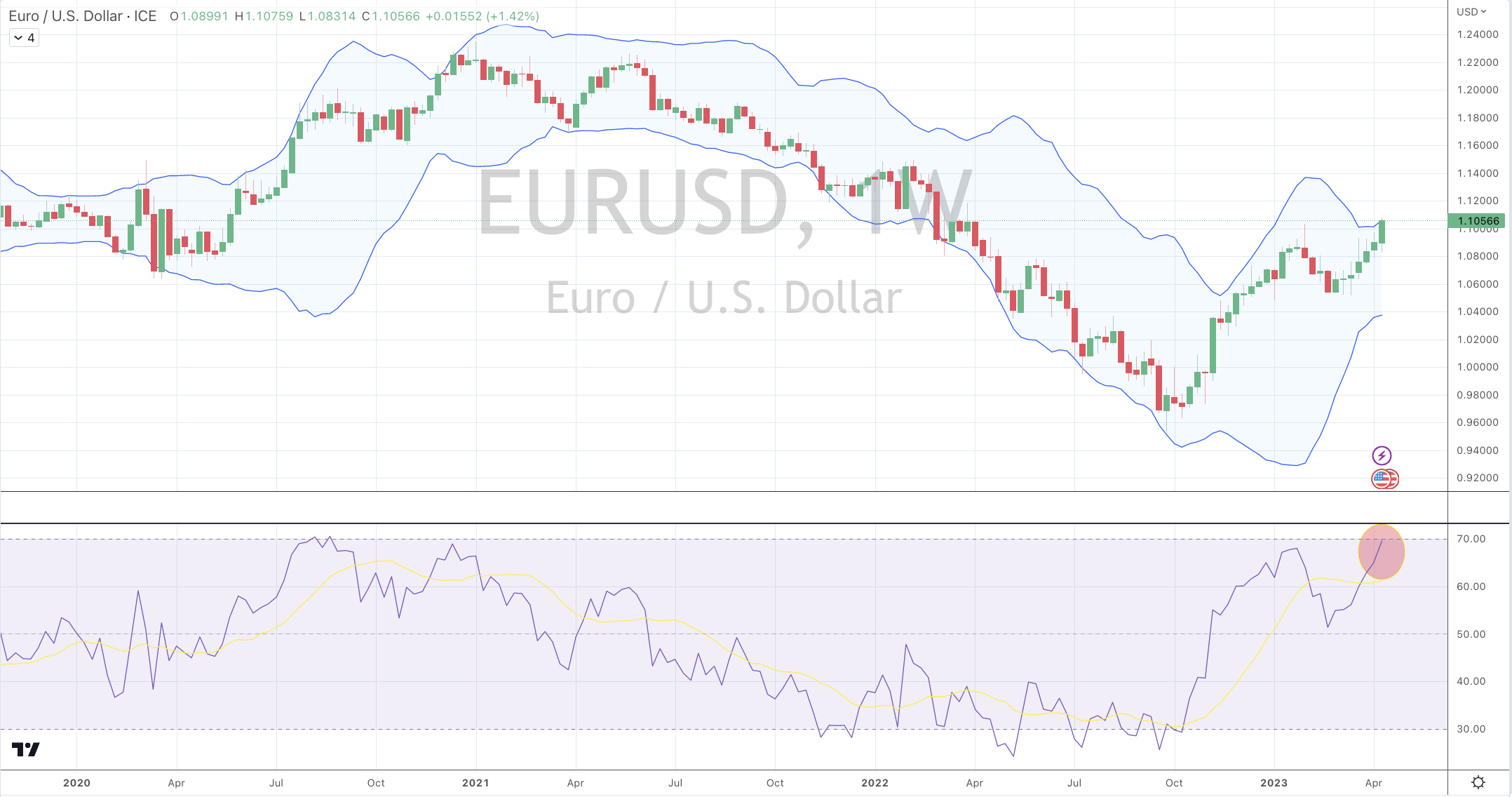
When the Euro rallies 9% in 3 months

When the EUR/USD was at 0.96, 0.97 and 0.98, market pundits acted as if the (euro) world was ending.

Now it has risen 9% within 3 months, which is a similar return to the S&P 500 over the same time and its much better than many bond ETF’s.

It proves to once again tune in to moments of intense pessimism coupled with extreme moves in the pendulum.

What is different in that recent trough was the percentage is stretched below its 200 week moving average……

and the price action in the following weeks is that it continued to make ‘higher highs’.

1.0790 is the next upcoming resistance.

December 13, 2022

by Rob Zdravevski

rob@karriasset.com.au
The numbers won’t lie

I think the balance of the decade of investing will be an ‘accounting’ decade.

If you can scrutinise numbers with a basis of pragmatism, the investing opportunities that may present themselves should be in your ‘wheelhouse’, ’sweet spot’ etc etc 

It’ll be important to adjust how you read a company’s current assets, such as discounting the amount they’ll receive for their inventories and receivables.

Hint: It won’t be 100% of their reported amounts.

In turn, should revenues recede, it will affect their EBIT

Rising net interest expense will also cut into EBIT.

Better make sure their net interest expense isn’t too much share of their EBIT.

Or that their total or net debt isn’t too stressful compared to their EBITDA

Is their capital expenditure going to be the same as last year or similar to the company’s guidance?

Because this could affect their free cash flow……..and their dividends.

Oh, and I don’t want to pay too much for their intangible assets (see goodwill).

I’ve seen these figures slashed under the guise of ‘impairments’.

After all of this, you may want to start musing about growth, eyeballs, clicks etc etc

December 13, 2022

by Rob Zdravevski

rob@karriasset.com.au
Macro Extremes (week ending December 9, 2022)

A weekly Macro, Cross Asset review of prices trading at extremes which may generate future investment ideas and opportunities  

The following assets (on a weekly timeframe) registered an Overbought or Oversold reading and/or have traded more than 2.5 standard deviations above or below its rolling mean.

Extremes “above” the Mean (at least 2.5 standard deviations)

Chinese 10 year government bond yields

Silver

Platinum

Gold (in CAD)

NZD/AUD

Overbought (RSI > 70)

German 2 year government bond yields

Cattle

Istanbul BIST Index

The Overbought Quinella – Both Overbought and Traded at > 2.5 standard deviations above the weekly mean)

HKD/USD

Nickel

Extremes “below” the Mean (at least 2.5 standard deviations)

None

Oversold (RSI < 30)

Hot Rolled Coil Steel (HRC)

U.S. 5 year yield minus U.S. 3 month bill yield spread

The Oversold Quinella – Both Overbought and Traded at > 2.5 standard deviations above the weekly mean)

None

Notes & Ideas:

The big news for the week was the continued, sustained and notable drop in energy prices.

Oil, Gasoline, Heating Oil and Diesel (Gasoil) fell 10%….imagine that, all amongst a Northern Hemisphere winter.

Seeing energy prices fall (and mean revert) surely adds to my case for deflationary pressures which add weight to the abatement in inflation statistics and government bond yields. 

WTI Crude has declined 40% from their $120 high seen in June 2022. It’s now trading at $71.

Base metals rose with Nickel having a starring role.

Coffee remains Oversold as does Hot Rolled Coiled Steel. Both are on my radar.

There is good news. The S&P 500 didn’t make a lower low than the previous week and the TAIEX had an inside week…….it didn’t trade below nor above the previous week’s low and respective high.

However in last weeks edition I highlighted the concern over the lack of participation in the financials and transports in the recent rally, which still warrants monitoring.

Over the past week we saw bonds being sold, thus yields rose and I’ll be looking at their trend indicators to analyse continuation and strength. For now, many government bond yield ranging from German, British, Spanish, U.S. to French have reverted to their rolling weekly means. 

Inversely, this is currently confirmed with bond TEF’s such as the IEI and IEF equally rallying up to their respective rolling weekly mean.

Gasoline is nearly oversold and at a1 year low, it must be good for trucking companies.

Wheat closed at its lowest since October 11, 2021 which is months prior to the Russian invasion of Ukraine.

And I must look at the correlations associated with AUD/CAD as it’s nearing an extreme level.

The larger advancers over the past week comprised of;

Baltic Dry Index 4.7%, JKM LNG 5.1%, Lumber 4.2%, Tin 8.2%, Nickel 15.3%, Orange Juice 5.7%, Palladium 3.6%, Silver 2%, Dutch TTF Gas 2.6%, Soybeans 3.2%, Istanbul 2.2%, CSI 300 3.3%, HSCEI 7.3% and the Hang Seng rose 6.6%.

The group of decliners included;

Aluminium (2.8%), Rotterdam Coal (2.3%), Bloomberg Commodity Index (2.4%), China Coal (2.3%), WTI Crude Oil (11.2%), Gasoil (10.7%), Heating Oil (11.8%), Coffee (2.7%), Gasoline (9.8%), CRB Index (3.8%), Cotton (2.7%), Brent Crude (10.8%), Oats (6.6%), Rice (5.2%), Wheat (3.5%), S&P GSCI (6.4%), KBW Bank Index (5.5%), DJ Industrials (2.7%), DJ Transports 5.2%, Bovespa (3.9%), Nasdaq Composite (4%), KOSPI (1.9%), S&P MidCap 400 (4%), Nasdaq Biotech Index (3.9%), Nasdaq 100 (3.6%), Russell 2000 (5%), S&P SmallCap 600 (4.8%), SOX (1.8%), S&P 500 (3.4%), TAIEX (1.8%), Toronto’s TSX (2.6%), Australia’s ASX 200 fell 1.2% while the ASX Small Capo index declined 2.7% and had an outside bearish week.

December 10, 2022

by Rob Zdravevski

rob@karriasset.com.au 

Oil heading towards that target

The Russian invasion Ukraine has proved to be the peak in WTI Crude Oil prices.

Fairly, I’ll say for now or at least for 2022.

The long mean reversion story (being the 200 week moving average) remains valid and intact.

Oil prices remain in a downtrend from their more recent high of $122 and continued to make lower highs and lower lows.

Somewhere close to $65 is where it should take a rest and I’ll watch if the tide takes it to $52-$54.

December 6, 2022

by Rob Zdravevski

rob@karriasset.com.au

A case for a 30% decline in the S&P 500

“For 2023, the bottom-up EPS estimate for the S&P 500 is $232.53…….
industry analysts on average have overestimated the final EPS number by 7.0% one year in advance.”

This article talks about the overconfidence of analysts estimates and the chart within shows the record setting levels the annual EPS have reached.

I have been wanting to write about how EPS have been assisted by declining interest rate expenses and lower corporate tax rates.

Instead, I’ll reference this paper written by Smolyansky, Michael (2022). “The coming long-run slowdown in corporate profit growth and stock returns”

https://www.doi.org/10.17016/2380-7172.3167

He cites, “Both these items accounted for 33% of all profit growth for S&P 500 non-financial firms over the prior two-decade period”.

The Tax Cuts and Jobs Act of 2017 reduced the statutory corporate tax rate from 35% to 21%,
Interest Rates and therefore the cost of capital has been at its lowest in history,
While, corporate leverage grew by 40% over the past 10 years,
And globalisation provided lower input costs.

It was the perfect recipe to juice up the profits.

But the ingredients of that recipe has changed.

Now, when the cost of capital has doubled and nearly tripled,
debt leverage hasn’t been reined in by any notable measure,
local on-shoring is being favoured over the political football of globalisation
and government may potentially look at higher taxation to increase revenues…..

There is no way that the S&P 500 will earn $232 per share in Calendar Year 2023 or even an average adjusted figure of 7% lower.

Going into 2022/2023, U.S. corporations have had it as best as it has been.

Today, with a S&P 500 Index trading at 4,000 and using a $232 per share forward earnings estimate means that the P/E Ratio is 17.2.


This doesn’t seem like an economic environment which neither inspires record earnings (let alone 12% higher than recorded 18 months ago) and a market which I want to pay 17 times earnings for.

Perhaps I want to pay 14.6 times earnings for companies within a mid-cycle slowdown (or a GDP recession) and maybe I think the S&P 500 will earn $192 per share.


Then the S&P 500 touches 2,810

I’ll play around with a few other guesses but my suggestion is to watch how corporate EBIT changes when the (I) interest and (T) taxes start rising.

December 6, 2022
by Rob Zdravevski
rob@karriasset.com.au