Macro Extremes (week ending August 5, 2022)

The following assets (on a weekly timeframe) registered an Overbought or Oversold reading and/or have traded more than 2.5 standard deviations above or below its rolling mean.

Extremes “above” the Mean (at least 2.5 standard deviations)

None

Overbought (RSI > 70)

Dutch TTF Gas

The Overbought Quinella – Both Overbought and Traded at > 2.5 standard deviations above the weekly mean)

None


Extremes “below” the Mean (at least 2.5 standard deviations)

Japanese 10 year government bond yields

Oversold (RSI < 30)

U.S. 10 year minus U.S. 5 year government bond yield

Hot Rolled Coiled Steel

Tin

Oats

The Oversold Quinella – Both Overbought and Traded at > 2.5 standard deviations above the weekly mean)

The U.S. 10 year minus 2 year government bond yield spread.

Notes & Ideas:

This big news over the past week was continued weakness in energy prices and shipping rates. We also experienced the mildest and quietest week in global equities for more than 2 months. It certainly felt that way too.

It was a week to not chase the momentum higher, not initiate any meaningful positions and to trim and sell those assets that have given you a fortuitous return or allowed you to a second chance to recoup some capital.

There was plenty of warning about the pending decline in energy prices.

I was cognisant of Oil’s ‘high’ price as expressed in these posts.

And earlier this week I mused what if Oil fell to $66

I have also hinted at lower diesel prices in this post.

Now that Gasoil and Crude prices have fallen 30% from their recent highs, Crude Oil specifically near an interim low and due for a ‘bounce’.

I’ll look for WTI Crude and Brent to trade down to $85.50 and $92.00 respectively.

Incidentally, Gasoil (diesel) has fallen from $1400 to $990 (a metric ton) over the past 7 weeks. Over the same time WTI Crude has declined from $123 to $89. It’s interest to ‘hear’ the silence in the financial media, as opposed to the noise heard when prices were barreling skywards only a few months earlier. 

There is merit to identifying the ‘mean’ are and cancelling out the noise.

The U.S. yield curve remains inverted for the 5th week in a row and Oversold for 3 consecutive weeks.

Keep in mind that when the yield inverted 6 weeks ago, I had earlier written a note citing that such an occurrence is beneficial for the longer term accumulation of the S&P 500.

And this article was written on the day the S&P 500 ‘bottomed’ hinted the same attractive prospects for the S&P 500

Since then, the S&P 500 has rallied 14%.

Over a similar timeframe, the KOSPI and ASX200 have risen 9.4%, the Russell 2000 has advanced 17% while the Nasdaq Biotechnology Index has soared 25.4%.

Today, I think the S&P 500 is closer to a ‘trading sell’ and while the longer term accumulation position remains my stance, tactically I think we’ll see lower prices again, a double dip testing recent lows and a safer opportunity to buy or add to positions.

The next 12 months should prove a notable moment to build an equities portfolio of world class businesses at much more reasonable and palatable valuations.

The larger advancers over the past week comprised of; 

Australian Coking Coal 8.1%, Iron Ore 2.4%, JKM LNG 5.8%, Orange Juice 6.3%, Platinum 3.9%, Sugar 2.3%, Dutch TTF Gas 2.8%, Uranium 1.9%, Rice 2.7%, BOVESPA 3.2%, KOSPI 1.6%, Nasdaq 100 2%, Russell 2000 1.9%, SOX 2.9%, STI 2.2%, Istanbul 6.3%, Nasdaq Composite 3.3% and the Nasdaq Biotechnology Index soared 6.8%.

The group of decliners included;

Aluminium (2.7%), Rotterdam Coal (2.3%), Bloomberg Commodity Index (3.3%), Baltic Dry Index (17.7%), China Coal (5.7%), WTI Crude Oil (9.7%), Gasoil (10.5%), Heating Oil (11.3%), Hot Rolled Coil Steel (4.3%), Coffee (3.6%), Lumber (9.1%), LNG (6.6%), Natural Gas (2%), Gasoline (8.3%), Silver USD (2.2%), CRB Index (3.8%), Brent Crude (9%), Urea M/E (3.7%), Oats (8.4%), Soybeans (4.1%), Wheat (4%), MOEX (7.2%) and Copenhagen’s OMX 25 Index fell 2.2%. 

August 7, 2022

by Rob Zdravevski

rob@karriasset.com.au  

Getting ready for the ‘safer’ buying lows

If you are in the business of accumulating equities over a longer period of time, for the longer term…….

then the vertical lines show the significance when the Japanese 10 year government bond yield (JGB) is (on a weekly chart) simultaneously OVERSOLD and trading 2.5 standard deviations BELOW its rolling weekly mean……

because the S&P 500 also then registers a notable LOW.

There have been 9 such moments over the past 15 years when probability was on your side to initiate, nibble or add to your holdings.

This is the antithesis note to the immediate previous post.

Today, the JGB’s are trading below 2.5 standard deviations but they are NOT simultaneously oversold.

I am getting ready for the monumental accumulating opportunity over the coming 12 months.

August 6, 2022

by Rob Zdravevski

rob@karriasset.com.au
Looking for peaks in equity markets

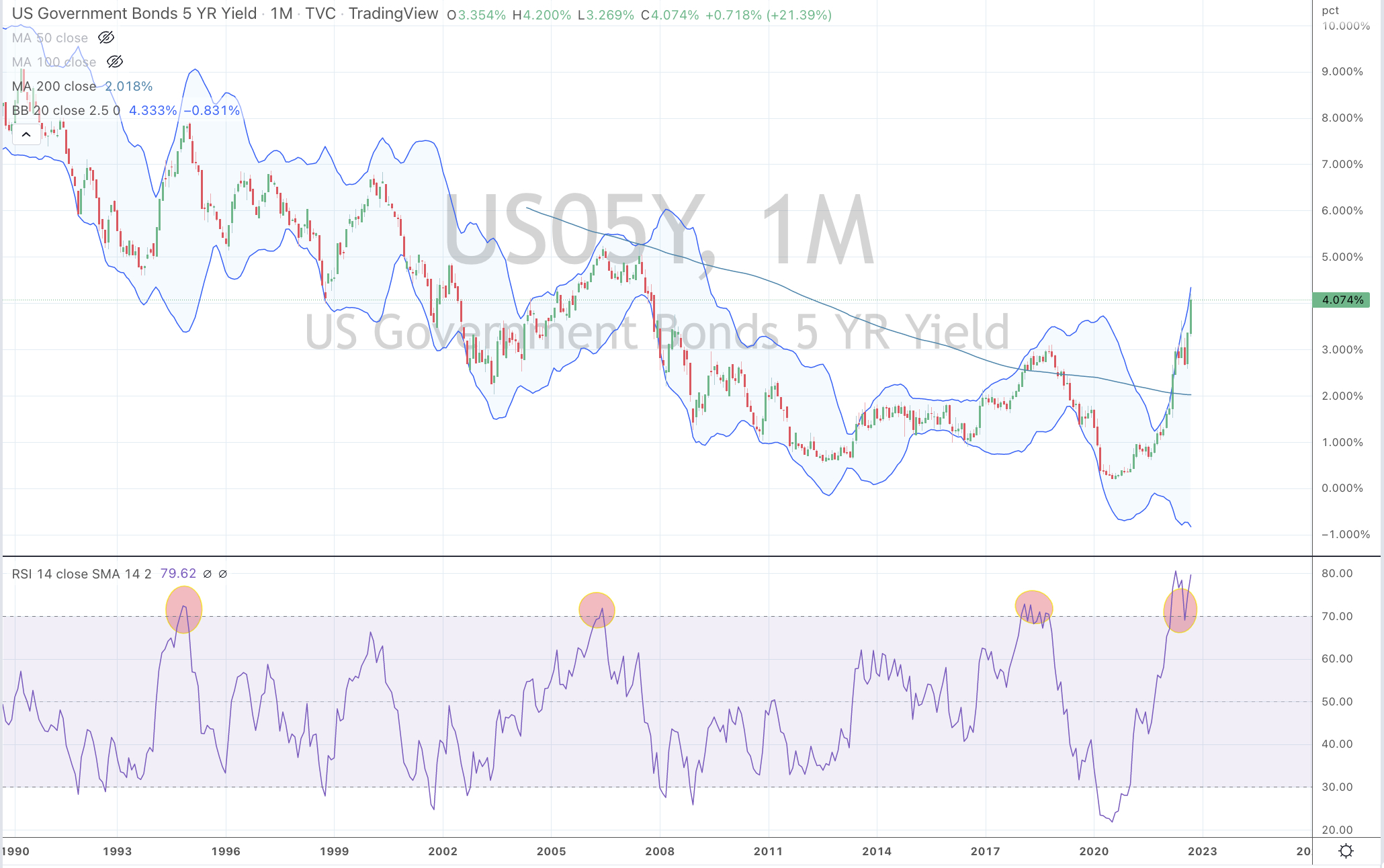
In the chart below, the vertical lines show the significance when the Japanese 10 year bond yield is (on a weekly chart) simultaneously Overbought and trading 2.5 standard deviations above its rolling weekly mean.

The S&P 500 then reaches a meaningful, long term peak.

There have been 5 notable moments over the past 15 years.

The most recent peak coincided with my December 28, 2021 newsletter citing the same point.

https://mailchi.mp/karriasset/a-distorted-sp-500-amongst-extreme-peaks.

August 6, 2022

by Rob Zdravevski

rob@karriasset.com.au

This is a rally that you rent….not own.

Since the June 16, 2022 lows, the Nasdaq 100 has rallied 19%.

Some stocks have soared 25% or more.

My articles between mid-May and mid-June wrote about the troughs and lows that I’m seeing in various markets.

In fact, my May 24th, 2022 newsletter collated a host of the articles written highlighting these oversold buying signals.

https://mailchi.mp/karriasset/buy-signals-appearing

Over the past few days, I’ve been divesting selected positions which are exhibiting ’selling tendencies’.

This doesn’t redefine my investing style and strategy as a ’trader’.

And the emphasis is on selected holdings.

This note written 5 days ago was a preview to my current selling thoughts.

I have been asking myself if the stocks in portfolios are ones that I’m ‘dating’ or ‘marrying’…..

and I remind myself to not confuse fortuitousness with any type of genius.

A 15%-20% return within 4-6 weeks is more than adequate.

Heck, it’s 2 years worth of return when comparing to a normalised, long term average and we are facing lower growth in the economy.

Over the past few days, I’ve been divesting selected positions which are exhibiting ’selling tendencies’.

Such ’tendencies’ and a rising probability of a ’trading peak’ is shown in the Nasdaq 100 Index as seen in the 2 charts below.

The Daily chart shows the Nasdaq 100 trading up to 2.5 standard deviations above its daily mean and back to (above) its 100 day moving average. To compliment the case, it is within a whisker of being overbought on its daily RSI indicator.

The weekly chart shows the NDX rallying to its rolling weekly mean and coincidentally touching its 26 week moving average.

Beyond this, the ’set-up’ in my other indicators just don’t marry up to suggest an extension of the recent rally in certain securities or indices,

hence, I’m only renting, not owning.

August 5, 2022

by Rob Zdravevski

rob@karriasset.com.au

Perth much healthier than ‘sister’ oil & gas cities

Here is another example of framing a news story.

Today’s headline is;

“Perth office vacancy highest in nation”

August 4, 2022 –  Perth’s office vacancy rate has grown to 15.8 per cent in the past six months, up 0.8 per cent since January…6 months earlier, the news was that vacancy rates had fallen.

3 Feb 2022 — Perth’s CBD office vacancy rate has fallen to 15 per cent. Perth’s CBD office vacancy has fallen in the past six months but is the second …and previously we read;

5 Aug 2021 — Vacancy rates also improved across Perth office markets…

1 June 2021 — The real Perth CBD office vacancy rate is closer to 15% when the level of static vacancy and buildings which are about to be withdrawn from ..
Does 15% or 15.8% really matter.

It’s a real shame that news stories don’t continue to elaborate that Perth has the nations highest proportion of C & D grade buildings which doesn’t help the numbers when reporting on “prime CBD properties”.

I’d like to see what the vacancy rates are for Class A & B buildings.

In July 2021, I wrote this note as Calgary saw office vacancy rates hit 24%.

Today, Calgary’s CBD vacancy rate is in the vicinity of 32%, while Houston’s is 24%.

We love a good headline in Australia.

A little perspective is also good.

August 4, 2022

by Rob Zdravevski

rob@karriasset.com.au
And if Oil fell a further 25%

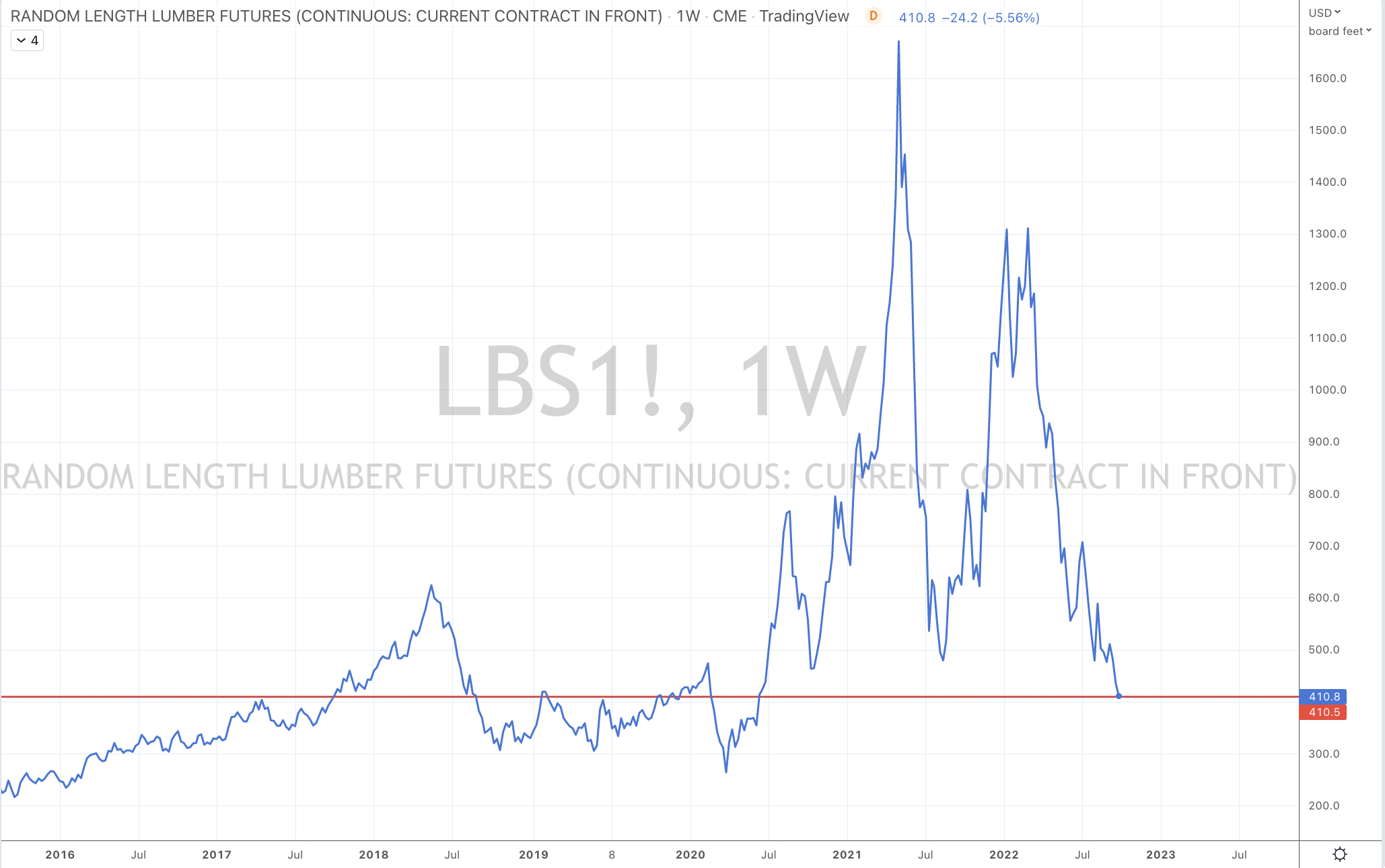
To follow the previous post, this chart shows you the correlation of the AUD/JPY and the WTI Crude Oil price.

What would inflation, interest rates, company margins etc etc look like if Oil fell to $66.50 per barrel by New Years Day 2023 ?

August 4, 2022

by Rob Zdravevski

rob@karriasset.com.au
Back to watching the AUD/JPY

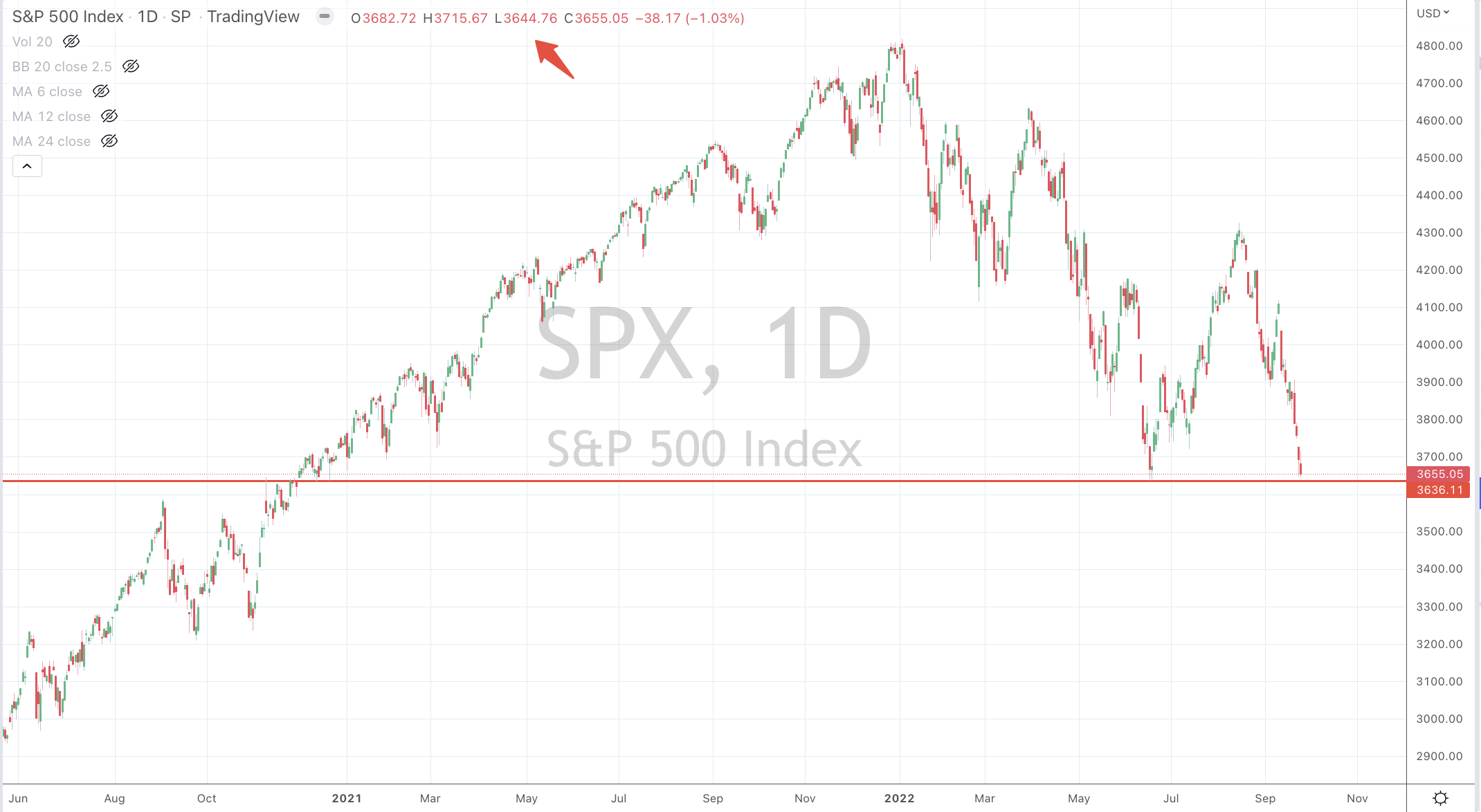
I think the AUD/JPY is due to decline (represented by the blue line and the right hand margin).

In turn, the Australian 2 year government bond yield should also pullback.

Which in turn, suggests that commodities prices (as expressed in the CRB Index) are heading lower.

Specifically, energy and agricultural commodity prices.

Industrial and Precious metals have mostly completed their retracements.

A weaker AUD versus a (slightly) recovering Yen also portends weakness int he ASX 200.

August 4, 2022

by Rob Zdravevski

rob@karriasset.com.au

Inflation is being left on the shelf.

The ISM Manufacturing Price Paid Index is a leading indicator.

The overnight release of the July 2022 data shows the index falling 24% from the previous month.

It reflects a change in prices paid by industry representatives for the products or services they receive.

It’s a monthly survey of supply managers from 18 U.S. industries where respondents estimate prices paid in the production process: whether they have grown, fallen or have not changed.

In my recent posts, I’ve been highlighting the decline in commodity prices is/will lead to lower input prices,

along with rising inventories resulting in discounted prices of existing, finished products

and how that will result in the moderating of inflation and interest rates. Not a collapse but simply an abatement.

Throughout my 2022 presentations, I have mentioned the idea of how ‘inflation can be left on the shelf’.

In this February 18, 2022 note,

I wrote,

“It’s also the start of an odd period where higher prices of finished goods (due to the higher price paid by buyers of raw/base/industrial commodities) may be left on the shelf.

Rising prices have been evident but we can’t assume that higher prices are automatically paid for.”

So there is your picture.

Prices rose to a point where buyers walk away and when they saw producers scrambling to secure materials, one can predict that inventories will rise.

Now that material prices have fallen by 30% or more, buyers can source product from those who have acquired (and worked) their materials at the current lower prices.

Additionally, those higher priced inventories will eventually need to be discounted in order to generate cashflow and reduce their stock which is tying up working capital.

And thus survey respondents are either buying product at cheaper prices than earlier in the year or can expect lower prices in the near future.

August 2, 2022

by Rob Zdravevski

rob@karriasset.com.au

Benchmarking Sucks and a safer time to buy ahead

My work suggests that this ‘trading’ bounce in many markets, assets and securities may see an end in the first couple days of the coming week.

The recent market advance has been a combination of a ‘bounce’ occurring once prices satisfied a host of mean reversions and extremes, coupled with notable pessimism and bearish investor readings along with short covering and ‘benchmarking’.

Because when mature, large index weighted Goliath’s such as Apple and Amazon rise 20% over a 4 week span, benchmarked money managers need to buy (chase) those and other stocks which are trending higher, in order to stay close to the index returns and the performance of their competitors.

Many fund managers have expressed a view to me over many years, similar to, “it sucks being benchmarked”.

But if you did benefit from the ‘fat part of the trade, let’s sell and pack up for the rest of the year and go on holiday?

After all, that is more than a year’s adequate return all within 30 days. 

Alas! Many of us won’t do that. It wouldn’t be fun (sic) until we squandered half of those gains, which then keeps us at the table for the rest of the year.

In all seriousness, there are many gap-up’s that markets will back and fill.

The setup in the weeks ahead should be a safer moment to accumulate for those longer-term investors.

July 31, 2022

by Rob Zdravevski

rob@karriasset.com.au

Macro Extremes (week ending July 29, 2022)

The following assets (on a weekly timeframe) registered an Overbought or Oversold reading and/or have traded more than 2.5 standard deviations above or below its rolling mean.

Extremes “above” the Mean (at least 2.5 standard deviations)

None

Overbought (RSI > 70)

None

The Overbought Quinella – Both Overbought and Traded at > 2.5 standard deviations above the weekly mean)

None


Extremes “below” the Mean (at least 2.5 standard deviations)

Japanese government 10 year bond yield

Sugar

Oversold (RSI < 30)

U.S. 10 year minus U.S. 5 year government bond yield

U.S. 5 year minus 3 month government bond yield

Australian Coking Coal (it also reverted to its 200 week moving average)

Hot Rolled Coiled Steel

Tin

The Oversold Quinella – Both Overbought and Traded at > 2.5 standard deviations above the weekly mean)

None

Notes & Ideas:

This past week’s big news was the continued and stronger rally in equities and the notable absence of oversold commodities and currencies from the list. They have all ventured away from their recent ‘extremes’.

The list below highlights those with the larger weekly percentage rates of change.

Extreme measures were telling us to expect a bounce. Recent editions of ‘Macro Extremes’ and my blog posts flagged oversold extreme lows in various equity indices (and some commodities and currencies) since June 13, 2022.

In fact, last week’s ‘Macro Extremes’ re-visited that point.

Those equity indices have risen between 6% and 15% over the past 6 weeks.

Some examples include Amsterdam’s AEX rise of 13%, the Russell 2000, Nasdaq and MidCap 400 have risen in the vicinity of 14% while Switzerland’s SMI and Australia’s ASX 200 have improved 7%.

Specific stocks have been more impressive. Rockwell Automation and Nucor have risen 25% in only 4 weeks.

I also found it interesting that the Nasdaq Biotech Index only rose 0.2% for the week. Although that index is 17% above its mid- June low, it has eased 4% from its recent high, 3 weeks ago.

My work suggests that this ‘trading’ bounce in many markets, assets and securities may see an end in the first couple days of the coming week.

The recent market advance has been a combination of a ‘bounce’ occurring once prices satisfied a host of mean reversions and extremes, coupled with notable pessimism and bearish investor readings along with short covering and ‘benchmarking’.

Because when mature, large index weighted Goliath’s such as Apple and Amazon rise 20% over a 4 week span, benchmarked money managers need to buy (chase) those and other stocks which are trending higher, in order to stay close to the index returns and the performance of their competitors.

Many fund managers have expressed a view to me over many years, similar to, “it sucks being benchmarked”.

But if you did benefit from the ‘fat part of the trade, let’s sell and pack up for the rest of the year and go on holiday?

After all, that is more than a year’s adequate return all within 30 days. 

Alas! Many of us won’t do that. It wouldn’t be fun (sic) until we squandered half of those gains, which then keeps us at the table for the rest of the year.

In all seriousness, there are many gap-up’s that markets will back and fill.

The setup in the weeks ahead should be a safer moment to accumulate for those longer-term investors.

The U.S. yield curve remains inverted for the 5th week in a row and oversold for 3 consecutive weeks while the U.S. 5 year minus 3 month yield spread also remain oversold.

I’ve also got some work do in the LNG and Gas market this week. Specifically, the Dutch TTF Gas price rose 20% on the week and now has seen a 130% rise (from EUR 83 to EUR 191) over the past 7 weeks.

Incidentally, Brent Crude Oil eked a gain of only 0.03% which is a contrast to other rallies in the energy complex.

While Copper and Silver rose 7% and 9% respectively for the week, after being entrants in the previous week’s oversold categories. Copper has risen 13% from its fortnight intra-day low.

Furthermore, during the week, the AUD Silver reached my Buy price of $26.50. It closed Friday’s trading 10% higher at $29.12.

In currency land, the Chilean Peso strengthened 5.2% (I’ll write about that later in terms of a Copper trade) and the Japanese Yen firmed 2% against the USD, which added to last week’s 2% rise.

Bond yields continue to fall meaning that the bond buyers were the more aggressive, as yields are other longer journey to mean revering.

For example, the Australian 2 year bond yield has fallen from 3.60% in the past 4 weeks to 2.57%. I think, it’s plausible that it works its way down to the 1.55% mark over the coming months. 

More on this in an another note which will be based on the higher probability of sharper retracements and mean reversions being seen following parabolic price moves.

Since those lows in equities around June 13-16, 2022, we have seen a peak in bond yields such as the French 10’s declining from 2.48% to 1.39% and the German 2’s have fallen from 1.30% to 0.27%.

What if the German 2’s or the Swiss 10’s go back to a negative yield?

Good for technology stocks perhaps? 

While a major ‘short trade’ in government bonds has made many a sizeable fortune over the past 18 months, staying ‘short forever’ has also become known as the ‘widow maker trade’ where many have lost fortunes especially in the case of shorting Japanese 10 year bonds.

A possible or ‘pending’ mean reversion in bond yields is bigger deal than the one currently occurring in the equity market. I feel a seperate blog post is required for this topic.

The larger advancers over the past week comprised of; 

Bloomberg Commodity Index 4.6%, WTI Crude Oil 4.1%, Gasoil 3.7%, Gold 3.2%, Copper 6.7%, JKM LNG 7.5%, Coffee 3.5%, Heating Oil 4.9%, JKM LNG 8.3%, Coffee 5.1%, Orange Juice 12.5%, Palladium 5.5%, Platinum 2.6%, Silver 8.5%, CRB Index 3.9%, Cotton 3.7%, Dutch TTF Gas 19.4%, Urea Florida Gulf 16.4%, Urea Middle East 19.9%, Silver in AUD 8.4%, Silver in USD 9.4%, Corn 9.2%, Oats 2.8%, Soybeans 11.6%, Wheat 6.4%, AEX 3.5%, KBW Banks 2.2%, CAC 3.7%, DAX 1.7%, Dow Jones Industrials 3%, DJ Transports 5.8%, MIB 5.6%, Bovespa 4.3%, MOEX 5.6%, Kospi 2.4%, S&P MidCap 400 4.9%, Nasdaq 100 4.5%, Sensex 2.6%, Oslo 4.1%, Copenhagen 3.1%, Helsinki 3%, Stockholm 2.7%, Russell 2000 4.3%, SOX 4.4%, S&P 500 4.3%, FTSE 100 2%, Australia’s ASX 200 2.3%, Istanbul 2.3%, Toronto’s TSX 3.7%, S&P SmallCap 600 4.7% and the Nasdaq Composite soared 4.7%.

The group of decliners included;

Australian Coking Coal (19.2%), Baltic Dry Index (11.7%), Hot Rolled Coiled Steel (7.4%), Lumber (9.9%), LNG (6.6%), Gasoline (3.4%), Sugar (2%), CSI 300 (1.6%), HSCEI (3.1%) and the Hang Seng Index fell 2.2%.

July 30, 2022

by Rob Zdravevski

rob@karriasset.com.au