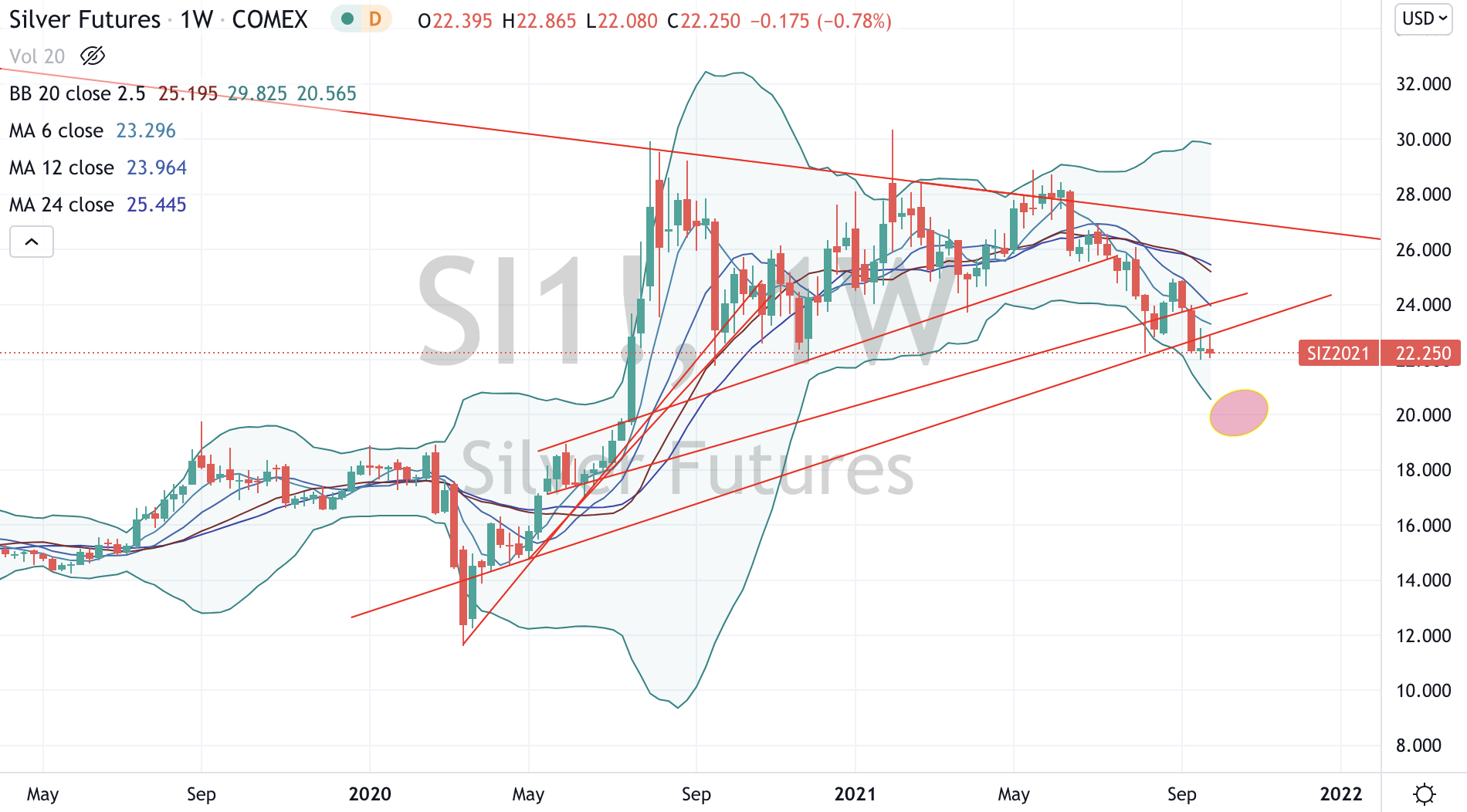
Silver is searching for a floor
September 28, 2021 Leave a comment
Silver is closer to a buy than a sell.
A further 10% lower makes it attractive,
looking for a $19.80 – $20.10 entry
September 28, 2021
by Rob Zdravevski
rob@karriasset.com.au
Trying to hear what's not being said
September 28, 2021 Leave a comment
Silver is closer to a buy than a sell.
A further 10% lower makes it attractive,
looking for a $19.80 – $20.10 entry
September 28, 2021
by Rob Zdravevski
rob@karriasset.com.au
September 28, 2021 Leave a comment
The notion of energy transition isn’t binary.
In the absence of economic viability, price still matters. The transition to renewables requires a pragmatic reality especially when if a lower cost producer exists.
“Higher fossil fuel prices will spur a faster shift to renewable sources, all else equal, as they become economically competitive in more uses/geographies. But very high oil/gas prices risk a voter backlash against decarbonization policies, which are vital to a cleaner future.”
from the embedded tweet within this article
September 27, 2021 Leave a comment
At the time of writing (an hour before Monday’s opening bell), the S&P 500 and Dow Jones Industrials futures are unchanged, but the Nasdaq 100 futures were lower by 0.70%….
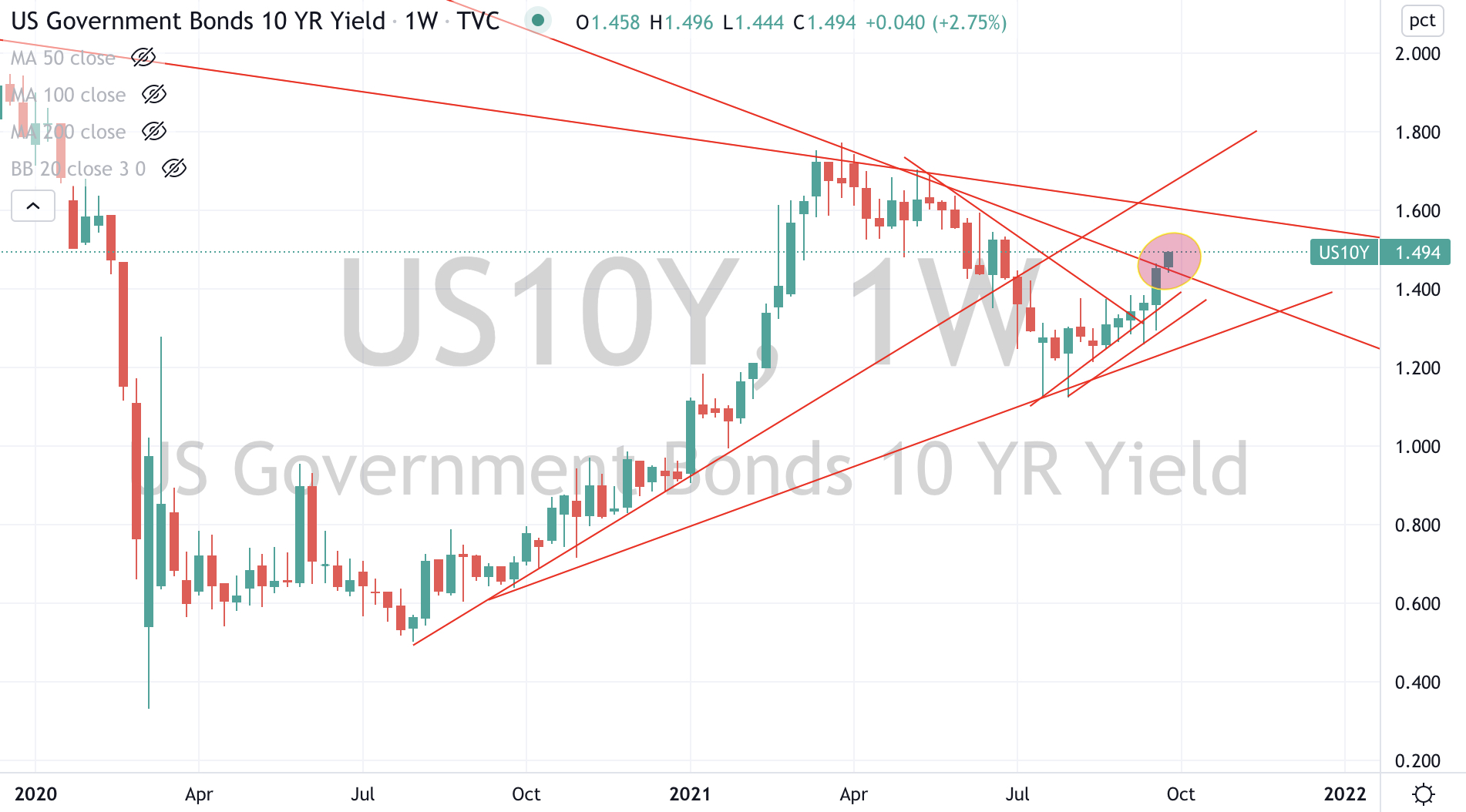
one reason is the 10 year bond yield is breaking above some resistance lines. A higher bond yield is negative for high flying growth stocks.
but we need to watch a few other indicators in the coming day or so before calling a 1.65% yield.
September 27, 2021
by Rob Zdravevski
rob@karriasset.com.au
September 27, 2021 Leave a comment
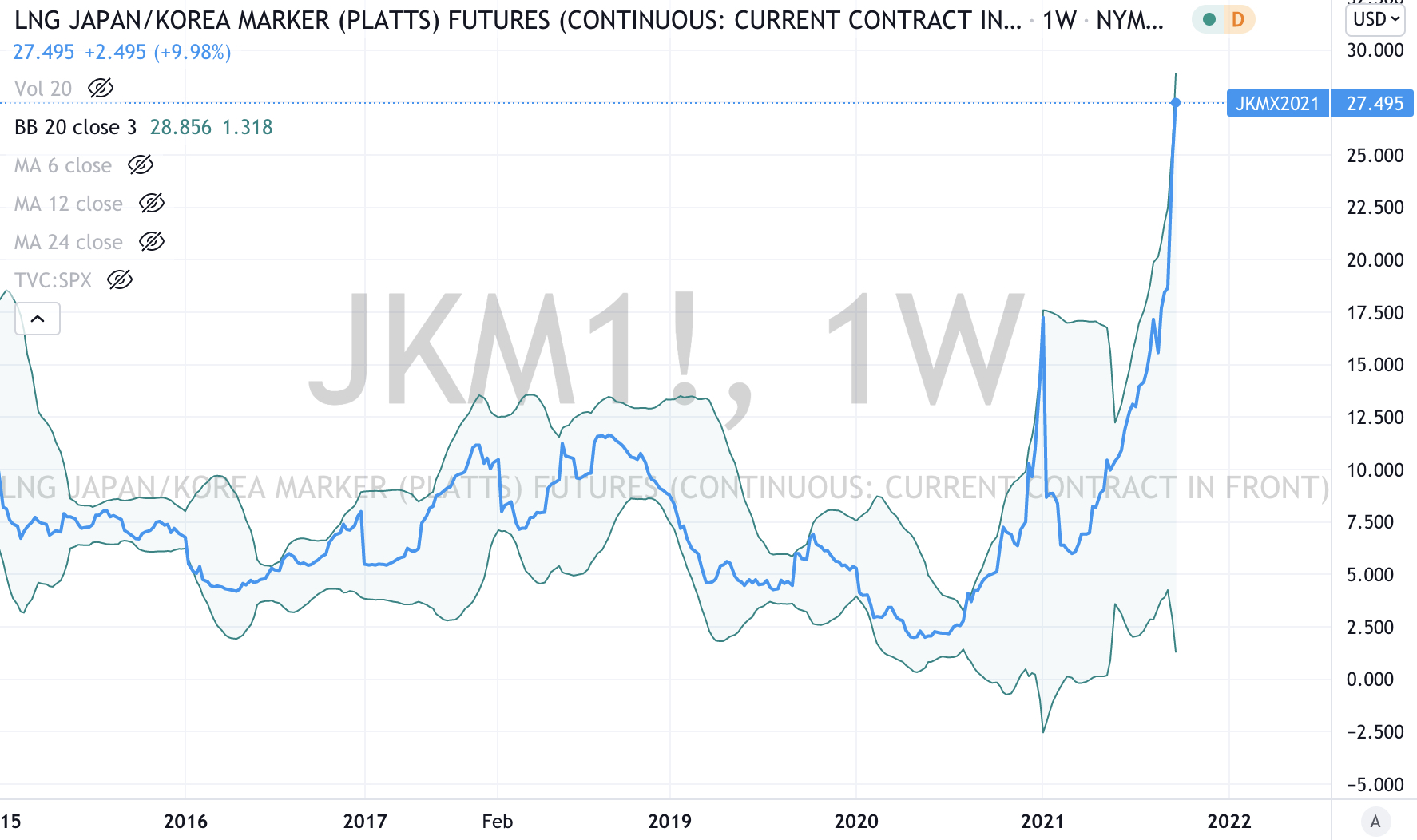
The price of the LNG JKM price has risen 5 fold over the past 12 months.
The weekly chart below shows its latest move reaching a 3 standard deviations extreme.
A 45% rise over the past few weeks assists my view that this peak suggests an equal decline in the coming months.
it’s also prudent that any LNG suppliers who have bet on the ‘spot’ market lock in prices now.
In other words, it’s a sellers market.
September 27, 2021
by Rob Zdravevski
rob@karriasset.com.au
September 27, 2021 Leave a comment
because these 2 banks have massive residential mortgage exposures,
so it’s all fine having such market share until they start realising that they don’t want to become landlords when defaults occur,
but the Reserve Bank of Australia can’t raise interest rates as it will affect the largest asset class in the country to adversely.
Is that something to think about?
https://www.afr.com/companies/financial-services/cba-and-anz-sound-house-price-alarm-20210923-p58u8e
September 26, 2021 Leave a comment
The following assets (on a weekly timeframe) registered an Overbought reading or traded more than 2.5 standard deviations above its rolling mean.
Extremes “above” the Mean (at least 2.5 standard deviations)
Gasoil
Overbought (RSI > 70)
Aluminium
Hot Rolled Coil Steel (for the 52nd consecutive week)
The Baltic Dry Index,
Amsterdam’s AEX,
Tin
Natural Gas
and India’s Sensex & NIFTY 50 equity indices
The Overbought Quinella – Both Overbought and Traded at > 2.5 standard deviations above the weekly mean)
None
Assets (securities) which touched the other side of the extreme, being Oversold (where the RSI is < 30) or were at least 2.5 standard deviations below its mean are;
Extremes “below” the Mean (at least 2.5 standard deviations)
Copper
Germany’s DAX
Brazil’s BOVESPA equity index
U.K.’s FTSE 100 equity index
The S&P MidCap 400 index
And as surprising as it seems, the Dow Jones Industrial Average (there is more work to be done on what it means in relation to recent and future action in the U.S. year government bond yields).
Oversold (RSI < 30)
Iron Ore
The Oversold Quinella – Both Overbought and Traded at > 2.5 standard deviations above the weekly mean.
None
Notes & Ideas:
The big news the price action in the bond market and what may occur this coming week. Avid readers will know that I always advocate the importance of watching the credit markets in order to help you understand the equity markets.
Bond yields are rising. It’s a topic I have been presenting to various investment groups lately, albeit my view of notably higher interest rates is a multi-year view.
Over the past 2 weeks, we’ve seen the Aussie 10 (10’s) year government bond yield rise from 1.27% to 1.40%. The Canadian’s have followed rising 1.29% to 1.38%, Spain’s 10’s have risen by a third (0.35% to 0.43%) and the U.K’s 10’s have soared from 0.58% to 0.92% over the past 4 weeks.
These are notable moves not necessarily signalled in the financial media and they are more evident considering these yields bounced off their Oversold extremes several weeks ago.
I am also watching the Copper/Gold Ratio to also assist with a directional call on interest rates.
The larger advancers over the past week comprised of Brent crude 3.7%, WTI crude 3%, Aluminium 2%, Coffee 4.3%, Heating Oil 2.6%, Tin 5%, Baltic Dry Index (shipping) 8.6%, Platinum 5.3%, Wheat 2% & the U.S. KBW Banking Index 3%.
The group of decliners included Cocoa (2.8%), Bitcoin (11%), Ethereum (15%), the Hang Seng Index (2.9%) and HSCEI (3.8%) (note: interested buyer at 7,800).
Chinese equity indices are nearing oversold with the CSI 300 still heading lower. France’s CAC-40 has entered a new weekly downtrend.
In FX, the AUD and EUR are trending lower against the USD. The Swedish Kroner also looks set to move lower.
A suggested rise in the U.S. Dollar portends weaker commodity prices including Gold whose downtrend is picking up steam. In fact, Gold in AUD needs to hold hold a A$2,312 support level.
But I think that higher interest rates, lower commodity prices and a weaker AUD is short lived, in the short-term the recent higher moves in rates could be a head-fake.
September 26, 2021
by Rob Zdravevski
rob@karriasset.com.au
September 20, 2021 1 Comment
Not just yet on buying the Iron Ore and Steel names.
I need the AUD, Iron Ore and selected stocks to all sync up and trade down to prices which are little lower than today’s closing prices.
September 20, 2021
by Rob Zdravevski
rob@karriasset.com.au
September 19, 2021 Leave a comment
The following assets (on a weekly timeframe) registered an Overbought reading or traded more than 2.5 standard deviations above its rolling mean.
Extremes “above” the Mean (at least 2.5 standard deviations)
Shanghai Composite equity index
Russia’s MOEX equity index
Bloomberg Commodity Index
Overbought (RSI > 70)
Hot Rolled Coil Steel (for the 51st consecutive week)
The Baltic Dry Index,
Amsterdam’s AEX,
and India’s NIFTY 50 equity index
The Overbought Quinella – Both Overbought and Traded at > 2.5 standard deviations above the weekly mean)
Aluminium
Natural Gas
Assets (securities) which touched the other side of the extreme, being Oversold (where the RSI is < 30) or were at least 2.5 standard deviations below its mean are;
Extremes “below” the Mean (at least 2.5 standard deviations)
Brazil’s BOVESPA equity index
U.K.’s FTSE 100 equity index
Oversold (RSI < 30)
None
The Oversold Quinella – Both Overbought and Traded at > 2.5 standard deviations above the weekly mean.
Iron Ore
Notes & Ideas:
And this week’s list is smaller again as many asset as finding their new trends on their way to an ‘extreme’.
The larger advancers over the past week comprised of Natural Gas +3.4%, Baltic Dry Index +11%, WTI Crude +3%, Brent Crude +3.3%, Tin +2%, Wheat +3%, Cocoa +2.3%, Rice +2%, Heating Oil +3%, Gasoil +3.5% and Lumber and lean Hogs both rose 4%.
The group of decliners included Iron Ore (13%), Copper (4.6%), Platinum (2.7%), Gold (2.2%), Nickel (4%), Shanghai Composite (2.4%), China’s CSI 300 (3.1%), the HSCEI (4.8%), Brazil’s Bovespa (2.5%) and the Helsinki 25 (2.5%)
Notable deletes include;
Cocoa, Japan’s Nikkei 225 index, the Swiss SMI and the Nasdaq 100 index fell from its overbought levels, following the S&P 500’s departure from the list last week.
Incidentally, it staggers me how much energy is spent by market pundits ‘calling a correction’. Beyond the perspective that 10% decline in the S&P 500 would merely see it trading at levels seen this past May but it may surprise some readers that it has already cleaned 2.5% from its recent September 2nd intra-day high of 4,545.
Amongt the list of the week’s advancers and decliners, Silver’s decline of 6.5% caught my eye, adding to the previous week’s fall of 3.6%. Although it’s not trading at my ‘extremes’, it is already 2 standard deviations below its weekly mean.
In other news, Brazil’s Bovespa has now fallen 8% over the past 3 weeks and Iron Ore has halved since July 19th.
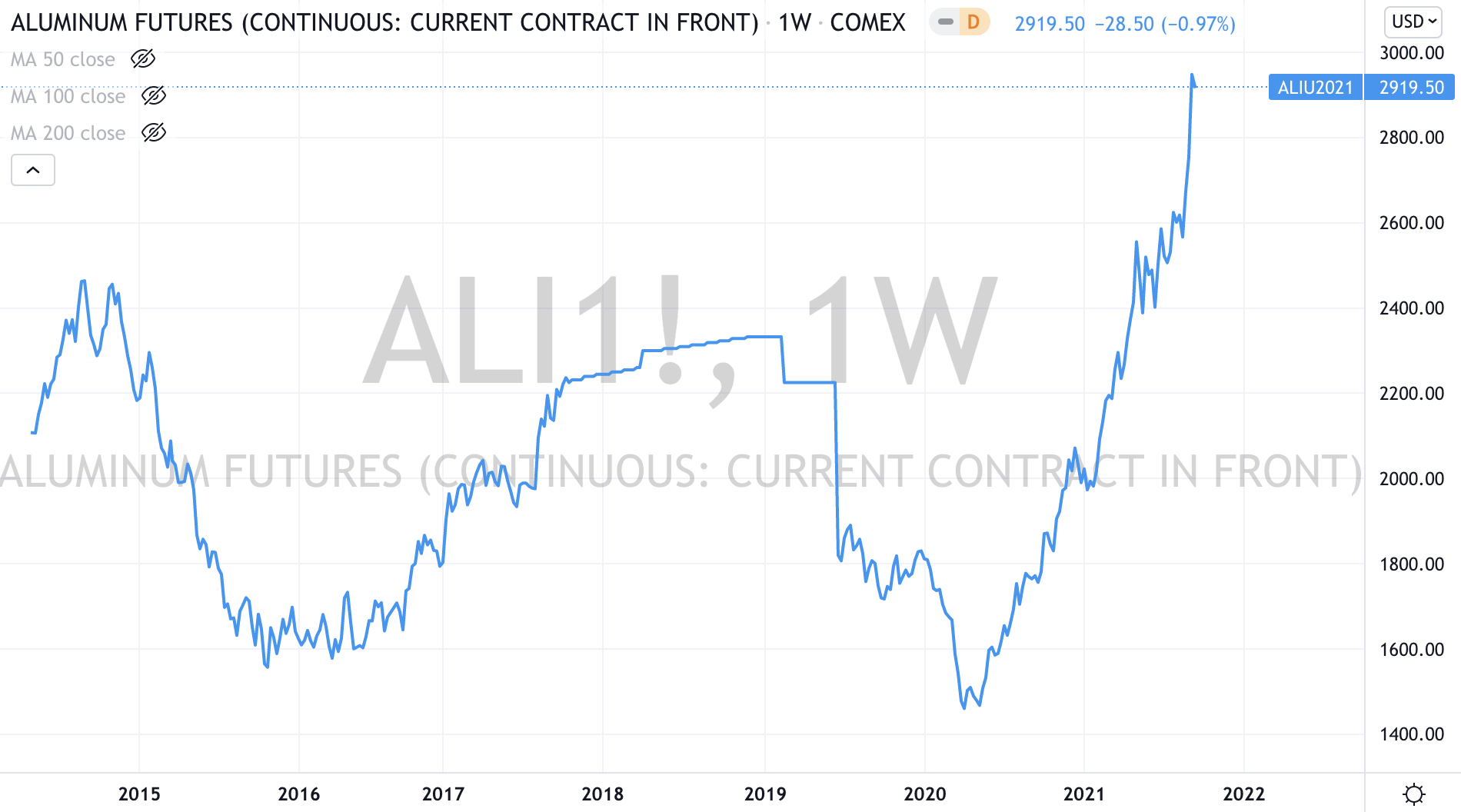
Media mentioned Aluminium’s climb to $3,000 but didn’t give a glance when it was $1,500 only a year ago.
Natural Gas continues to soar and has, ever since it broke above a resistance trend line which I wrote about in this post, The Mother of All Breakouts
September 19, 2021
by Rob Zdravevski
rob@karriasset.com.au
September 19, 2021 Leave a comment
I’ve been reading about a period of time in U.S. history which was known as the Gilded Age
https://en.wikipedia.org/wiki/Gilded_Age
and how it then turned into the Progressive Era
https://en.wikipedia.org/wiki/Progressive_Era
and trying to find parallels to the past 30 years and next 30 and whether history repeats.
September 16, 2021 Leave a comment
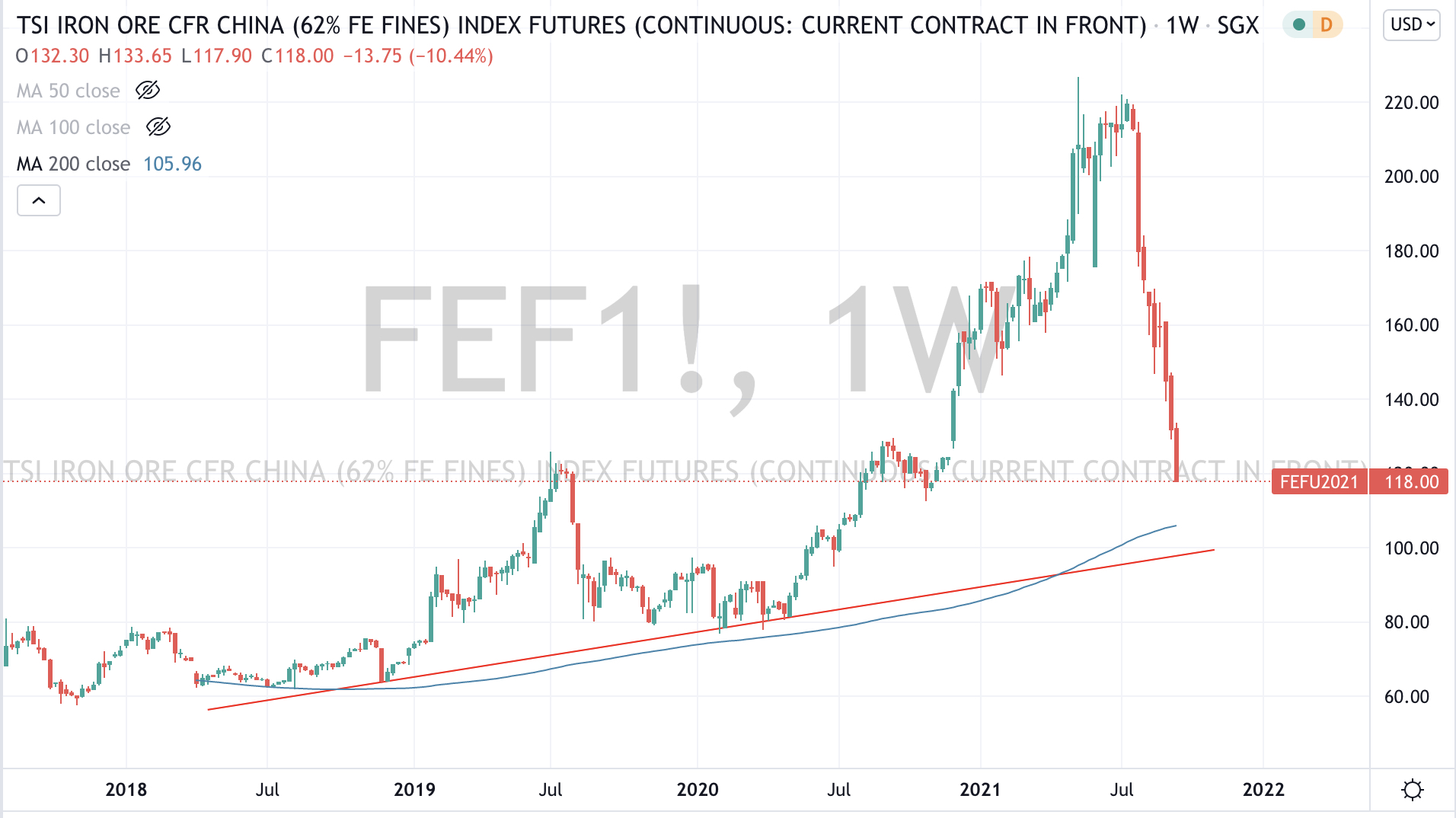
Iron Ore has now fallen to the $124 target (currently trading at $119) which I have been writing about, however I am now revising my downside target to the $99 level.
The chart below shows the price of Iron Ore converging to its 200 week moving average.
Mean reversion is another topic I have been harping on about lately too, especially amongst commodities and selected stocks which have soared to extremes and more so those price charts resembling parabolas.
This means I now look for Fortescue Metals (FMG.AX) to trade down to the $15.50 mark and BHP (BHP.AX) to visit $38.50 with $34.50 presenting a compelling entry point.
While all of that is going on, cheaper iron ore means better profits for steel makers.
September 16, 2021
by Rob Zdravevski
rob@karriasset.com.au