Tin

Monitoring if London Tin price trade down to $18,800 (+/- $300)

Currently at $22,825

March 16, 2023

Crude Oil mean reversion complete

Well, Well.

WTI Crude Oil has mean reverted to its 200 week moving average. Brent Crude is close but yet to do so.

Heating Oil and Gasoil (diesel) look like being in their way there too.

Who woulda thunk after all that palaver of Oil trading to $200 upon the outbreak of war in Ukraine.

The oil price has halved since that ‘invasion high’.

However, other extremes haven’t been registered and I’ll respect the downward trend which is still exhibiting strength.

There will be a few ways about how I’ll express my Long Oil view.

March 16, 2023

by Rob Zdravevski

rob@karriasset.com.au

Welcome to the Ides of March

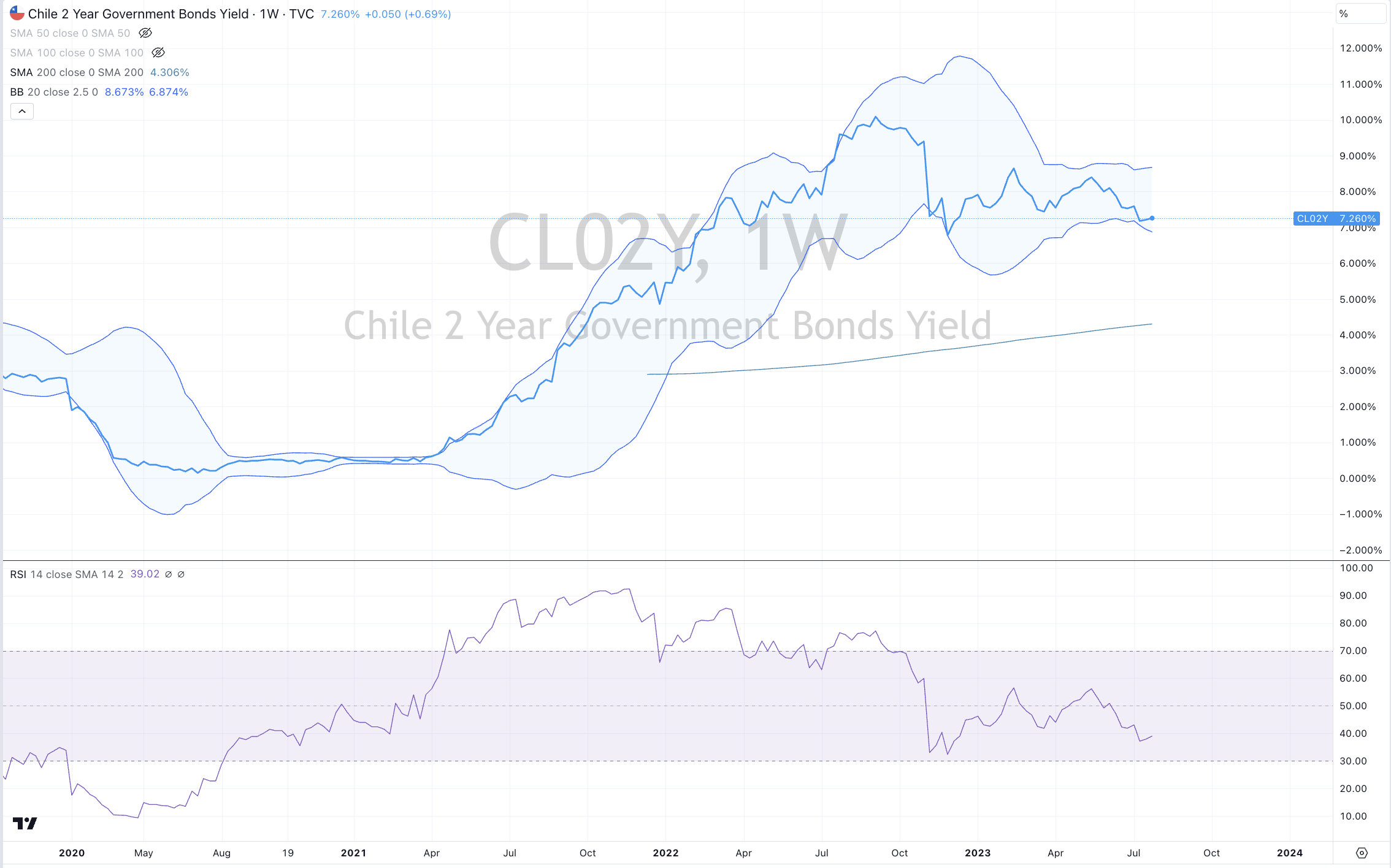
A couple days ago, this type of headline was appearing, “US two-year Treasury yields drop the most since 1987”

This is misleading.

If only they could specify the ‘drop’. Was it the fastest ? The greatest percentage?

My reminder is to not let such media headlines create so much noise that you are derailed from your investment strategy.

Firstly, a few days ago, those yields are only back to where they were on September 21, 2022 (6 months ago).

Secondly, today’s yields are the same as 6 weeks ago (February 3rd,2023).

The better headline may have been “bond prices rise as buyers aggressively bid for U.S. Treasuries”.

In fact, more buying of 2 year bonds shouldn’t be surprising, as it would merely send the yield back to its 50 week moving average, which is hardly a stretch considering the preceding parabola.

The greater concern would be for those who shorted 2 year Treasuries at lofty ‘yield’ heights betting the Fed would continue its rate hikes into its 8th, 9th or 10th time.

Even if they did, the probability of a streak continuing diminishes the length that the streak continues. Put another way, if you shorted 2’s at 5.05%, you deserved to get whacked.

It was a time to buy bonds, not short or sell them.

Alas, but that’s what makes a market.

March 15, 2023

by Rob Zdravevski

rob@karriasset.com.au
Being early on bond yield peak

While others are reporting today’s moves in bond yields…..

…..this note and preceding editions of my ‘Macro Extremes’ post highlighted stretched heights in 2 year bond yields….

although my reading of the tape now says that it’s not a one way move towards middle to longer term mean reversion.

Perversely, they may be a another chance to buy bonds at the same or higher yield in weeks/months to come.

March 14, 2023

by Rob Zdravevski

rob@karriasset.com.au

Preserving Capital and Taking Less Risk – Latest Newsletter

Macro Extremes (week ending March 10, 2023)

A weekly Macro, Cross Asset review of prices trading at extremes which may generate future investment ideas and opportunities.

The following assets (on a weekly timeframe) registered an Overbought or Oversold reading and/or have traded more than 2.5 standard deviations above or below its rolling mean.

Extremes “above” the Mean (at least 2.5 standard deviations)

German 5 year government bond yields

U.S. 2 year government bond yields

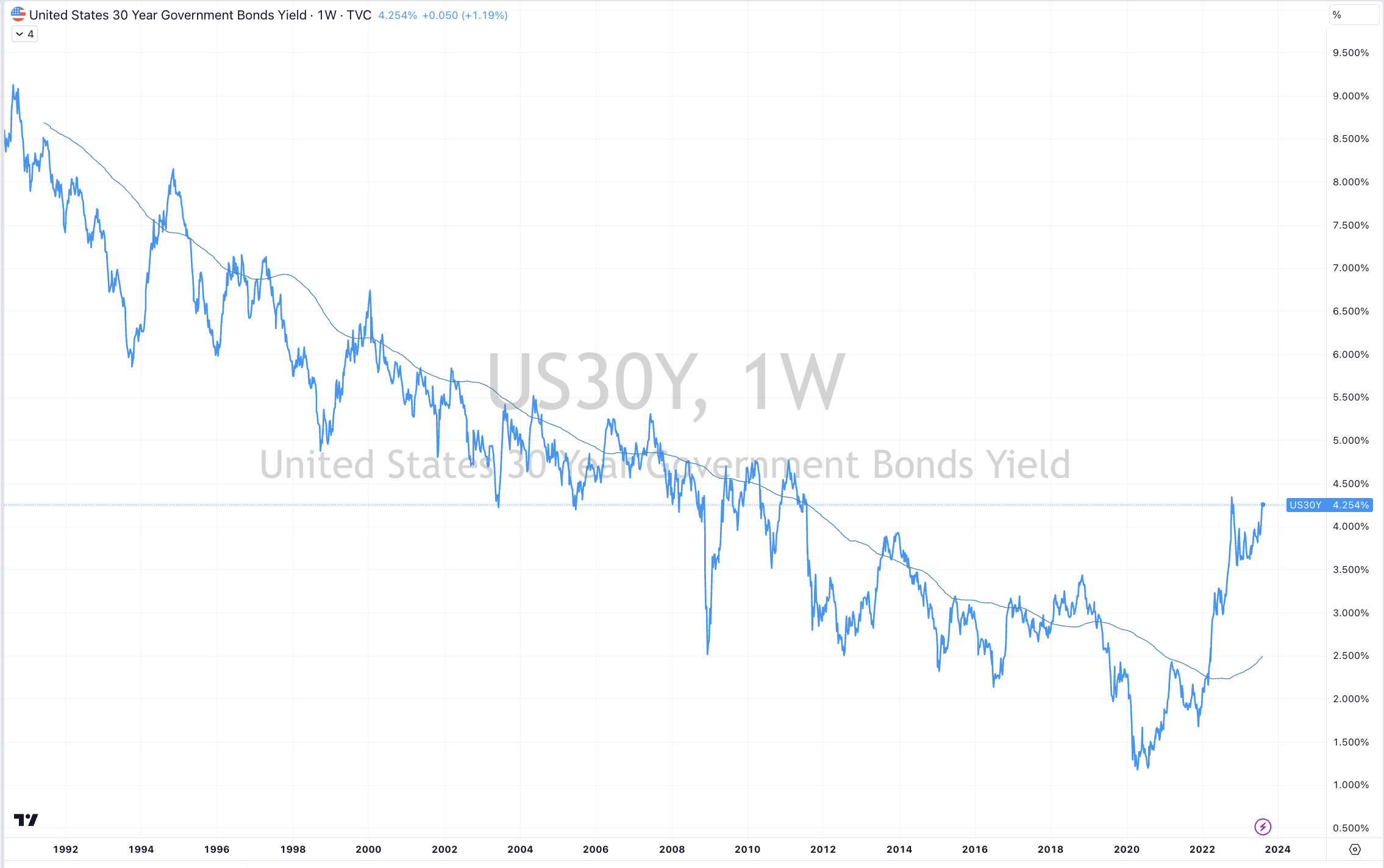
U.S. 5 year minus U.S. 5 year inflation breakeven 

Overbought (RSI > 70)

Cattle

The Overbought Quinella – Both Overbought and Traded at > 2.5 standard deviations above the weekly mean)

German 2 year government bond yields

Hot Rolled Coil Steel (HRC)

Gold (in AUD)

Extremes “below” the Mean (at least 2.5 standard deviations)

U.S. 10 year minus U.S. 2 year yield spread

U.S. 10 year minus U.S. 5 year yield spread

U.S. 30 year minus U.S. 10 year yield spread

Corn

Wheat

KBW Bank Index

DJ Industrials

Nasdaq Biotechs

AUD/EUR

CAD/USD

AUD/SGD

Oversold (RSI < 30)

Urea (U.S. Gulf) 

Urea (Middle East)

The Oversold Quinella – Both Overbought and Traded at > 2.5 standard deviations above the weekly mean)

None

Notes & Ideas:

Equities were weak across the board led by U.S. banks, mid caps and small caps, while some holdout from the broad decline such as Taiwan only easing 0.5% and the Bovespa practically unchanged at -0.2%.

Selected equity indices double dipped back down toward their 200 week moving average such as the Russell 2000.

The Shanghai Composite had a outside bearish week as did the CSI 300, CAC, MIB, HSCEI, IBEX, KOSPI and the Nasdaq Composite (to only name several)……

And the Nasdaq Biotech Index revisited an oversold extreme.

Amongst bonds, yields fell. Bonds were being bought across all durations.

Some yield spreads (curves) have also started to appear in the weekly ‘extremes’ list.

Not withstanding the coming weeks of gyration, there is room for yields to fall if we simply observe 1) the percentage at which yields are trading above their 50 and 200 week moving averages, 2) their relevance to 5 year inflation breakeven rates and 3) honouring an eventual mean reversion (or convergence) down to a 200 week moving average. 

In commodities

The Baltic Dry Index remains on a tear.

Most energy contracts resumed their weakness (for which I’ll look for lower entry prices soon) and 

Gold started touching overbought levels in various currencies, while the Gold Volatility Index also had a notable rise for the week.  

JKM LNG is closing in on my buy target although we need temper expectations of prices skyrocketing again. It’s not prudent to paint ‘shapes’ of V’s or W’s.

Palladium was weaker as it nears an entry level.

Softs were weak again as Wheat completed a mean reversion back to its 200 week moving average.

In past notes, I’ve been warning of lower Corn prices, which this week started touching the lower end of its pendulum.

I’m watching the Copper/Gold Ratio for help in interest rate direction.

And Cattle is Overbought for the 22nd consecutive week.

In currencies, the Aussie was weak, everywhere, against everyone.

The AUD/EUR saw it lowest close since January 2022 and the AUD/GBP has its lowest close in 12 months.

Some of these currency crosses are appearing in the extremes list.

The larger advancers over the past week comprised of;

Rotterdam Coal 2.5%, Baltic Dry Index 17.6%, Lean Hogs 3.4%, Lumber 2%, Orange Juice 6.2%, Dutch TTF Gas 17.5%, Gold (in AUD) 3.5%, Gold (in CAD) 2.3%, Oats 4.5% and Turkey’s BIST rallied 3.9%

The group of decliners included;

Aluminium (3.3%),Bloomberg Commodity Index (3.5%), Cocoa (2%), WTI Crude (3.8%), Gasoil (5.1%), Heating Oil (4.8%), Tin (6.3%), Natural Gas (19.3%), Nickel (2.2%), Palladium (6%), Platinum (1.8%), Gasoline (3.8%), CRB Index (3.7%), Urea U.S. Gulf (2.8%), Urea Middle East (6%),Brent Crude (3.8%), Silver (3.5%), Cotton (7.1%), Corn (3.5%), Rice (5.8%), Wheat (4.2%), SPGSCI (3.3%), Shanghai (3%), CSI 300 (4%), AEX (2.3%), KBW Bank Index (15.7%), CAC (1.7%), DJ Industrials (4.4%), DJ Transports (6%), MIB (2%), HSCEI (7.1%), Hang Seng (6.1%), IBEX (1.9%), Nasdaq Composite (4.7%), S&P Midcap 400 (7.4%), Nasdaq Biotech’s (6.3%), Nasdaq 100 (3.8%), Oslo (2.8%), Copenhagen (2.7%), Helsinki (3.8%), Stockholm (2.7%), Russell 2000 (7.9%), S&P SmallCap 600 (7.6%), SMI (3.8%), SOX (3.5%), S&P 500 (4.6%), STI (1.7%), TSX (3.9%), FTSE 100 (2.5%), ASX 200 (1.9%), ASX Small Caps (1.8%) and Mexico’s IPC fell 2.6%.

March 12, 2023

by Rob Zdravevski

rob@karriasset.com.au 

Interest Rates are extended

Here are 3 general moments when U.S. 2 year bond yields were extended.

We’re amongst one of those moments now.

If you are not a buyer of bonds, this study also implies that you shouldn’t lock in or fix your borrowing rate.

I predict a large hyperventilating fear campaign from banks and mortgage brokers trying to convince borrowers to lock in their interest rates.

In turn, real estate agents will try to persuade their vendors to lower their selling prices because “rates are going much much higher”.

I think this is another case of ‘people doing the wrong thing, at the wrong time’.

March 10, 2023

by Rob Zdravevski

rob@karriasset.com.au

Watching global Oil & Gas rig counts

Global Oil & Rig Count is at its highest since April 2020 but not higher than ‘pre-pandemic’ February or March 2020.

The U.S. numbers are meandering around same as 2022. They are not drilling nor obeying Biden’s wish. It’s no wonder because said he wants to increase taxes on oil producers.

The Canadians have got the most rigs deployed since early 2018.

More interestingly, on the statistical comparison front, is that the current global average is similar to 2017.

Today, WTI Crude is $78, while it spent most of 2017 trading around $54.

March 5, 2023

by Rob Zdravevski

rob@karriasset.com.au
Macro Extremes (week ending March 3, 2023)

A weekly Macro, Cross Asset review of prices trading at extremes which may generate future investment ideas and opportunities.

The following assets (on a weekly timeframe) registered an Overbought or Oversold reading and/or have traded more than 2.5 standard deviations above or below its rolling mean.

Extremes “above” the Mean (at least 2.5 standard deviations)

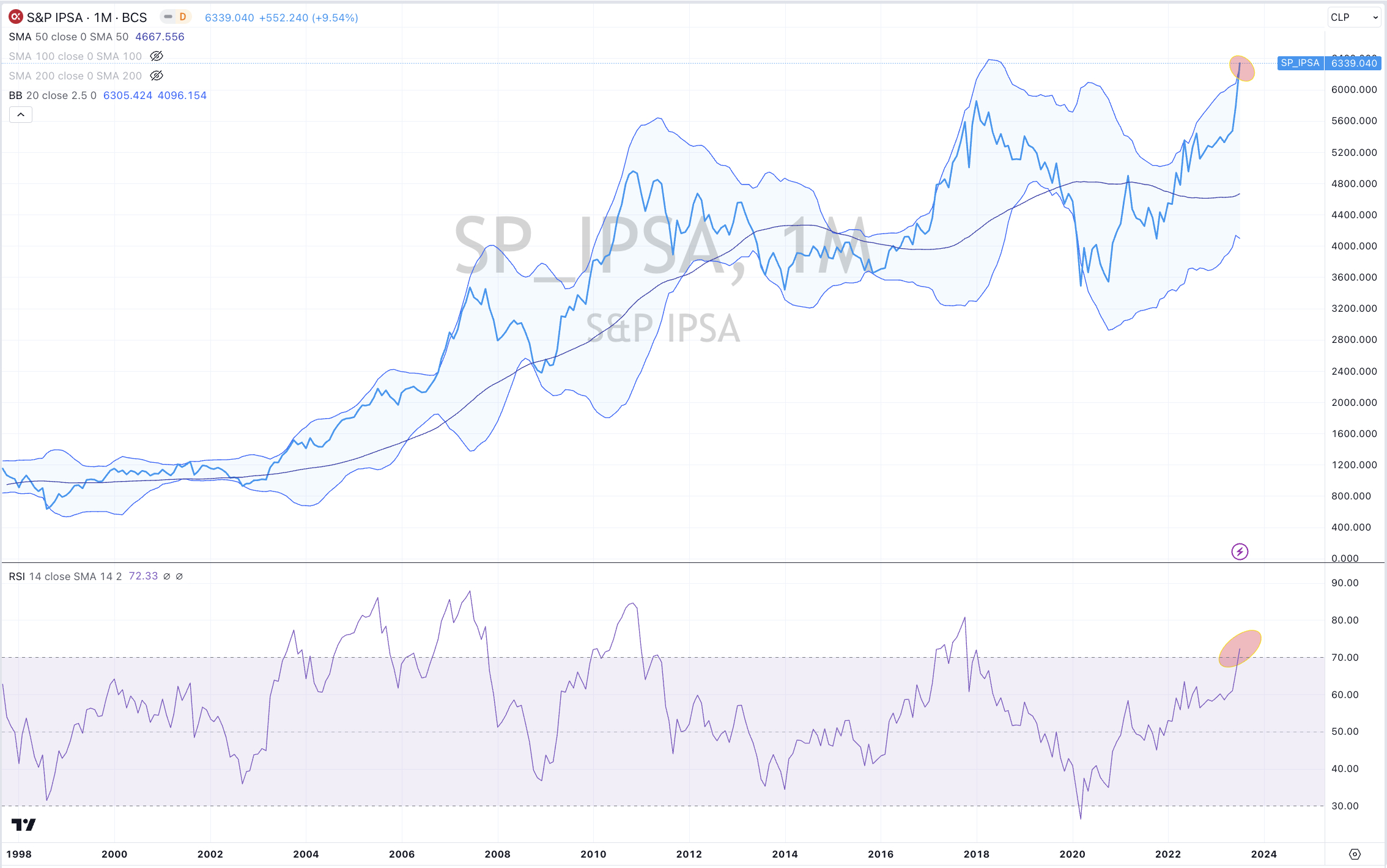
Chile

Overbought (RSI > 70)

German 2 year government bond yields

Cattle

IBEX and MIB

The Overbought Quinella – Both Overbought and Traded at > 2.5 standard deviations above the weekly mean)

U.S. 2 year government bond yield

German 5 year government bond yield

Hot Rolled Coil Steel (HRC)

Extremes “below” the Mean (at least 2.5 standard deviations)

U.S. 10 year minus U.S. 5 year yield spread

U.S. 30 year minus U.S. 10 year yield spread

Orange Juice

Corn

Oversold (RSI < 30)

Urea (U.S. Gulf) 

Urea (Middle East)

The Oversold Quinella – Both Overbought and Traded at > 2.5 standard deviations above the weekly mean)

None

Notes & Ideas:

Equities had a positive week,  following a few weeks sideways to downward travel.

Most indices recovered more than half of last week’s declines. 

Some indices are trending higher such as Spain’s IBEX, which closed at its highest level since March 2020 and Italy’s MIB is back to prices seen in 2008.

Following lat weeks implied snip that HSCEI has fallen 14% in the past 4 weeks, it rose 3.5% this week

Amongst bonds, yields generally rose, except for the yields in Australian government durations. Those yields fell.

We saw U.S. 2’s along with German 2’s & 5’s yields touching overbought extremes, while selected spreads (yield curves) involving the U.S. 10’s were at the lower end of their pendulums.

The U.S. 2 year bond yield saw its highest closing weekly price since mid-July 2007 and it also broke above its late October 2022 intra-day high, while the U.S.30 year minus 10 year bond curve remains in ‘inverted’ territory.

In commodities

The Baltic Dry Index continued a marvellous run, now having double in 2 weeks. Is this implying that shipping demand, the economy and GDP is all improving?

Natural Gas has risen 30% in weeks following those recent weekly Oversold extremes while Gasoline and Hot Rolled Coil Steel continued their upward trends.

Sugar had a bearish outside week, most energy contracts rose and softs continued their weakness.

Silver and Platinum broke their respective 6 & 7 week losing streak.

I eluded to heightening ones attention when weekly streaks reach their 7th or 8th week.

Cattle is Overbought for the 21st consecutive week.

And finally, the Japan Korea LNG Marker (JKM) touched its lowest price since July 19th, 2021.

In currencies, nothing was doing….

The larger advancers over the past week comprised of;

Aluminium 3.1%, Baltic Dry Index 37.2%, Bloomberg Commodity Index 2.6%, WTI Crude 4.4%, Gasoil 5.9%, Copper 2.9%, Heating Oil 4.2%, HRC Steel 2.9%, Natural Gas 18.1%, Palladium 5.2%, Platinum 7.9%, Gasoline 6.6%, CRB Index 3%, Brent Crude 3.8%, Silver in AUD 1.8%, Silver in USD 2.5%, Gold in AUD 1.8%, Gold in USD 2.5%, Gold in CAD 2.5%, Rice 1.9%, SPGSCI 3.2%, Shanghai Composite 1.9%, CSI300 1.7%, AEX 1.9%, CAC 2.2%, DAX 2.4%, DJ Industrials 1.9%, DJ Transports 3.3%, MIB 3.1%, HSCEI 3.5%, HSI 2.8%, IBEX 2.9%, Nasdaq Composite 2.6%, S&P MidCap400 1.9%, Nasdaq Biotech 2.5%, S&P SmallCap600 1.9%, Nasdaq 100 2.7%, Chile 2%, Mexico 2.8%, TSX 1.8%, S&P 500 1.9%, Nikkei 225 1.7%, Oslo 2.4%, Helsinki 2.2%, Stockholm 2.1% and the Russell 2000 rose 2.3%  

The group of decliners included;

Rotterdam Coal (16.1%), Lean Hogs (1.7%), JKM LNG (4.4%), Coffee (5.3%), Tin (6%), Nickel (6.4%), Orange Juice (8.7%), Dutch TTF Gas (11.4%), Urea U.S. Gulf (5%), Urea Middle East (2.9%), Uranium (2.3%), Corn (1.6%), Oats (4%), Wheat (1.8%), BOVESPA (1.8%) and Singapore’s STI Index fell 1.5% into a 5th week of consecutive declines.

For reference, the ASX 200 declined 0.3% and the ASX Small Caps eased lower by 0.6%.

March 4, 2023

by Rob Zdravevski

rob@karriasset.com.au 
Before salivating over marquee property sales results….

Bought for $7.25 million in 2008 and hopeful of a $17 million selling price in 2023.
It’s all in the way the story is written and in turn, how it’s not.

https://www.afr.com/property/residential/rea-boss-owen-wilson-hopes-for-17m-for-toorak-pile-20230227-p5cnvy

This result would equate to a 7.1% compounded annual return……
while not yet deducting for stamp duties, maintenance or operating costs and (if there were) any borrowing interest costs or renovation and improvements since 2008…..

and this, in the most exclusive suburb, in one of world’s best performing real estate markets.

This is not a sleight on the property owner (for surely they bought well in 2008), rather it’s a critique on how the media frames the prices which marquee properties are sold for.

I’m encouraging readers to just ponder the mathematics before being wowed by a journalists figures.

Although, I can’t resist a snippy comment.

If one bought shares in the company which employs the gentleman owner of this property, (with an approx. 2008 average stock price of $5), then the annualised compound return (REA stock is now trading at $122) sits at 31.8%.

While both are concentrated ‘bets’, I’ll await the customary response that ‘you can’t wrong with property’ and ‘at least, I can touch it’.

For a topical reference, this other marquee property in the same suburb was bought for $108,000 in 1968 and now seeking a selling price of $45 million.

https://www.afr.com/property/residential/late-billionaire-david-hains-toorak-mansion-tipped-to-fetch-45m-20230221-p5cm5w

The compounded annual rate of return is a more impressive 17.7% p.a. and awfully prescient from one of Australia’s best investors (and most classiest organisations).

Although, that was then.

What if we optimistically assumed a constant 7% compounded annual return for both sample properties over the next 15 years (not 17% p.a.and nor for 55 years), could they respectively be worth $44 million and $115 million in the year 2038?

Surely, in many asset prices, the ‘fat part of the trade’ has been had, in those past days of lower interest rates and some degree of FOMO.

February 27, 2023
by Rob Zdravevski
rob@karriasset.com.au