Macro Extremes (week ending October 1, 2021)

The following assets (on a weekly timeframe) registered an Overbought reading or traded more than 2.5 standard deviations above its rolling mean.

Extremes “above” the Mean (at least 2.5 standard deviations)

U.K. 10 year government bond yields (Gilts)

U.S. 2 year and 5 year govn’t bond yields 

The Bloomberg Commodity Index

And the USD/JPY (telling us the Yen is weak)

Overbought (RSI > 70)

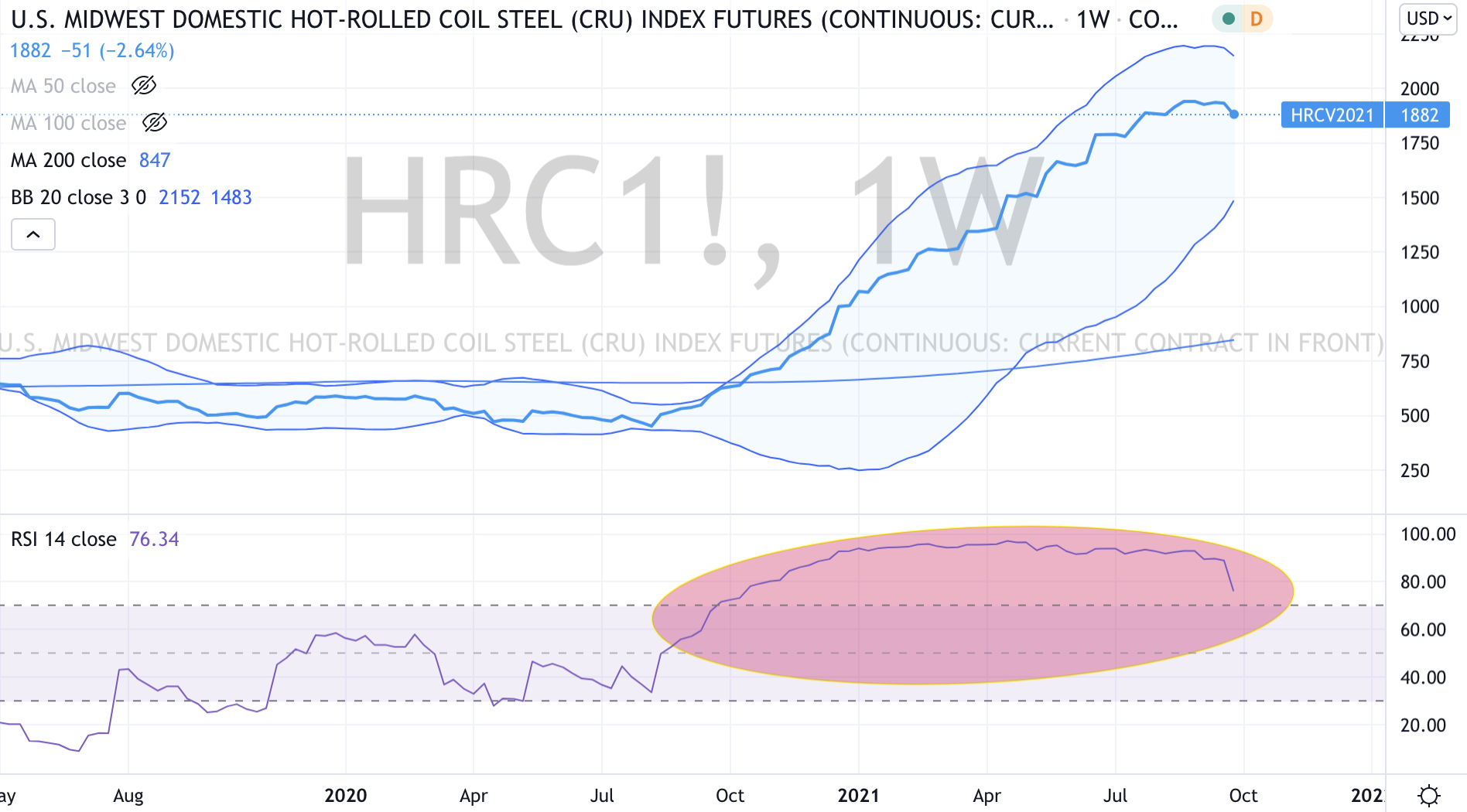
Hot Rolled Coil Steel (for the 53rd consecutive week)

Coffee

Tin

The CRB Index

and India’s Sensex & NIFTY 50 equity indices


The Overbought Quinella – Both Overbought and Traded at > 2.5 standard deviations above the weekly mean)

Gasoil

Heating Oil

Baltic Dry (shipping) Index

Natural Gas

And the JKM “Japan/Korea (LNG) Marker”


Assets (securities) which touched the other side of the extreme, being Oversold (where the RSI is < 30) or were at least 2.5 standard deviations below its mean are;

Extremes “below” the Mean (at least 2.5 standard deviations)

Germany’s DAX

South Korea’s KOSPI equity index

GBP/USD (meaning the British Pound has weakened)


Oversold (RSI < 30)

None

The Oversold Quinella – Both Overbought and Traded at > 2.5 standard deviations above the weekly mean.

None


Notes & Ideas:

The price action remained the bond market this past week with commodities also featuring the larger movers amongst the list below.

Bond yields have been rising. Following from last week’s round-up of movers over the past 2 weeks, we take a look at the past 6 weeks movers in yields.

Australian 10’s have risen from 1.07% to 1.49%.

U.S. 10’s from 1.13% to 1.47%

French 10 years from -0.15% to + 0.12%

U.K. 10’s have doubled from 0.52% to 1.01%. This weeks high was 1.06%.

Japanese 10’s are climbing, Korean 10’s are nearly overbought while the US10 year minus US2 year spread is on the verge of forming a bullish trend which is another indicator of stock market risk.

I am also watching the Copper/Gold Ratio to also assist with a directional call on interest rates and the USD (DXY) Index is above 94.

The larger advancers over the past week comprised of Baltic Dry Index (shipping) 12% (it’s up 30% in past 3 weeks), WTI crude 2.6%, Cocoa 4.6%, Iron Ore 6.7%, Gasoil 2.7%, Heating Oil 5%, JKM 13%, Coffee 5% (adding to last week’s 4.2% advance), Natural Gas 9.3%, Gasoline 2.9%, Sugar 5%, the CRB Index 2.2%, Corn 2.8%, Wheat 4.4% & the U.S. KBW Banking Index rose 2.4%, adding to last week’s 3% rise.

The group of decliners included Aluminium (2.4%), Cattle (2%), Nickel (5.3%), Orange Juice (3.6%), Rice (2%), Soybean (3%), AEX Index (3.1%), CAC-40 (2%), DAX (2.4%), S&P 500 (2.2%), TAEIX (4%), OMX Stockholm (2.6%), OMX Helsinki (2.3%), OMX Copenhagen (5.5%) (remember the Overbought signals on these in the last month), India’s Sensex (2.1%), Nasdaq (3.5%), the Nikkei tumbled (4.9%) and SOX fell (5.5%).

Note: the Philadelphia Semiconductor Index (SOX) has been generally trading sideways for 4 months and is the same price at February 2021. This somewhat validates the thinking that when the semiconductor shortage story hit mainstream, it was already built into the stock prices. The SOX has tripled from its March 2020 low and has risen 8-fold since January 2016.

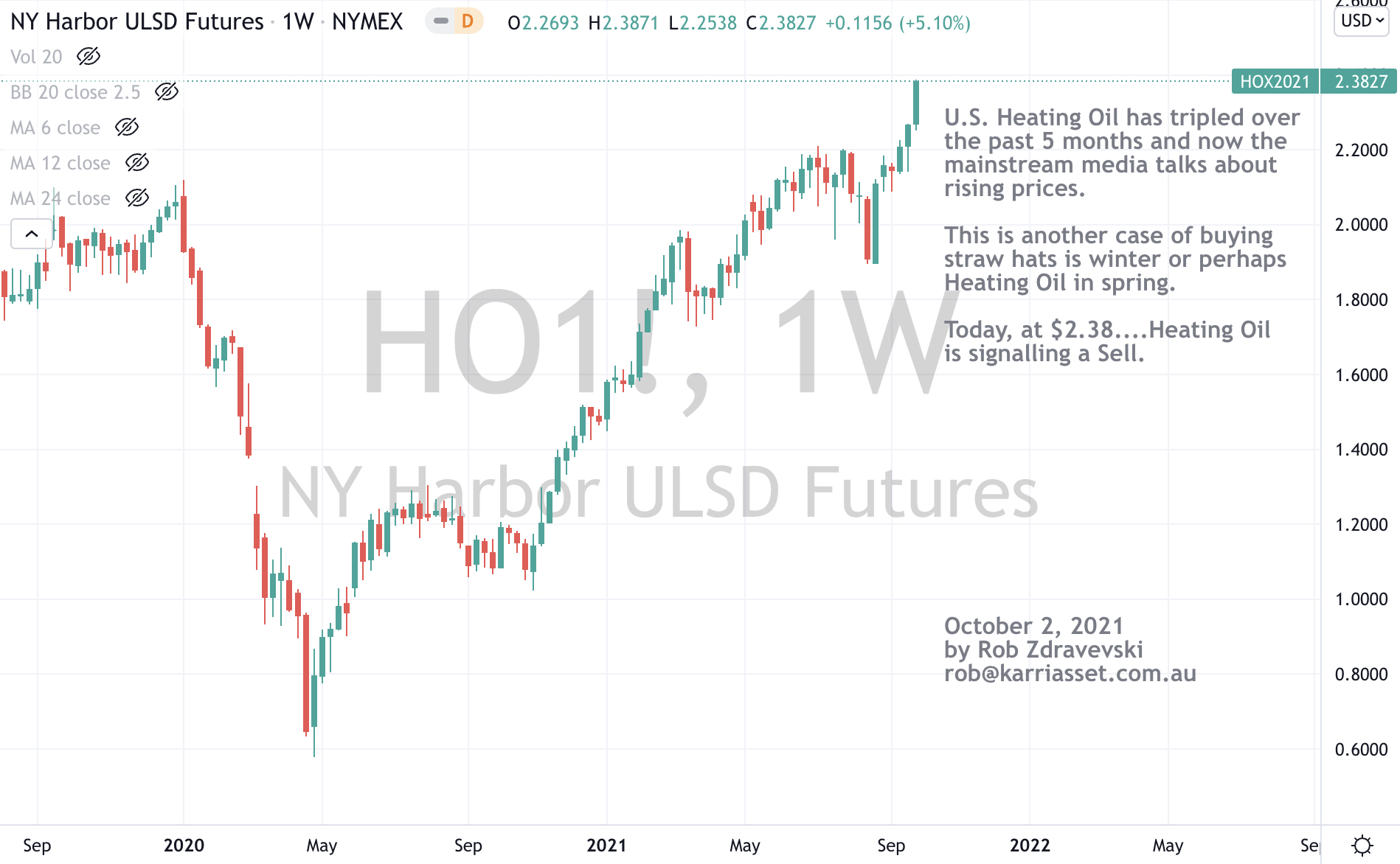
Heating Oil has soared 23% in a month and as the chart below illustrates, has tripled since April 2021, when it last flashed an ‘extreme’ buy signal. Today, my signals for Heating Oil suggest selling.

A rise in the U.S. Dollar has generally resulted in weaker commodity prices. Gold in AUD continues to hold a A$2,312 support level.

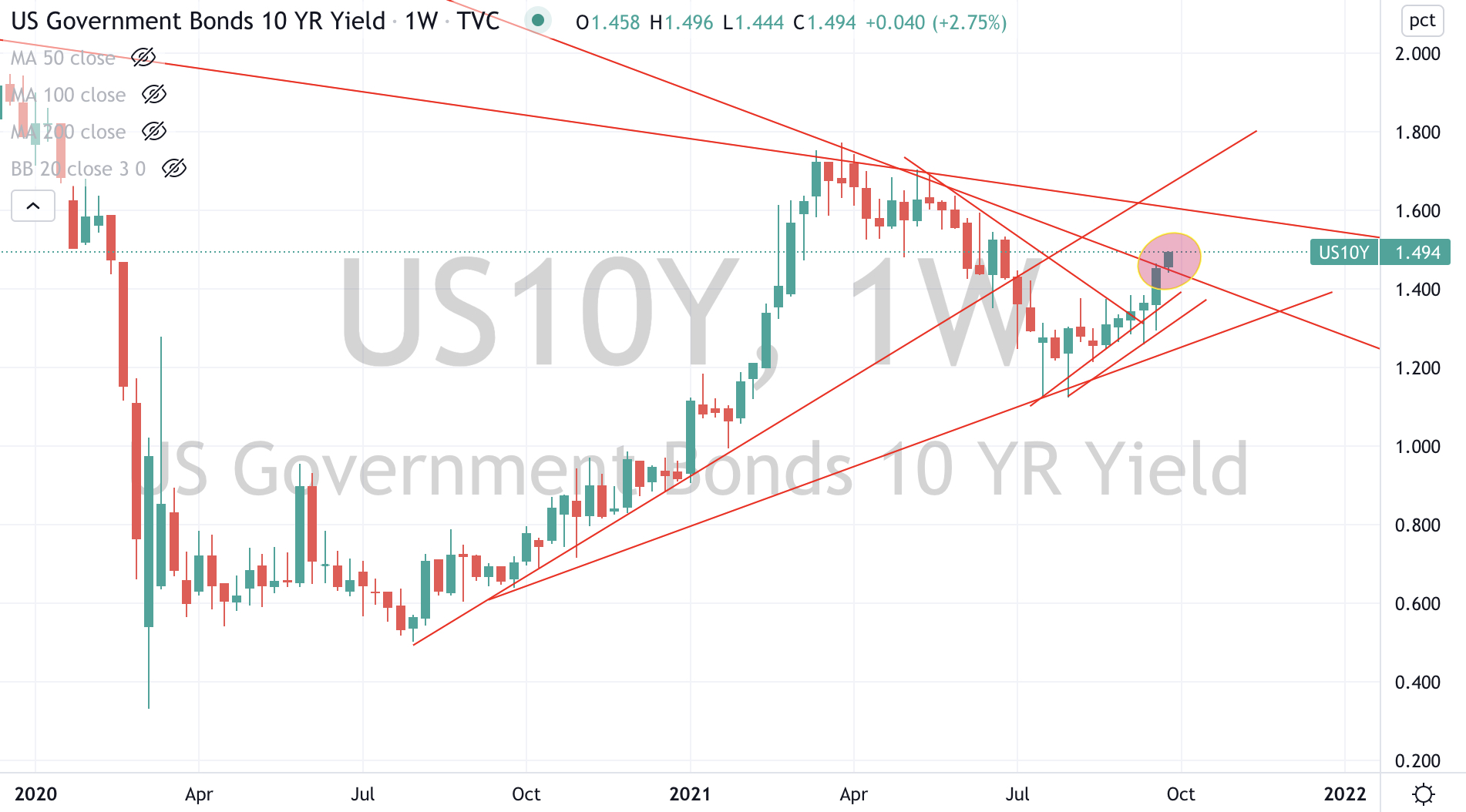
But I continue to watch and think that recent rise in interest rates will be a head-fake and lead to a reversal lower. The next resistance in U.S. 10’s is 1.62%. 

Higher U.S. interest rates means a rising AUD. If 10’s hit resistance and reverse lower, the lower AUD and weaker commodities trade is back on.


October 2, 2021

by Rob Zdravevski

rob@karriasset.com.au    
Long term mean reversions bring opportunities

Here are some quips about mean reversion, knowing when not to chase something and insisting on a bargain, or perhaps ‘buying straw hats in winter’.

There is significance in BHP’s recent pullback,
in the chart below,
see the notable reversion to its 200 week moving average,
note we are taking a long term view here, 
this chart is a weekly chart covering 25 years,
invariably BHP mean reverts,
parabolic moves see mean reversion quicker and savagely,
and often a subsequent resumption of the previous trend,
I don’t see a structural breakdown of the commodity supply complex and demand.

To coincide with a visit to the 200 week moving average,
using Fibonacci calculations (it’s something I use to help pick an entry price),
subjectively, BHP has retraced 62% of the advance from its March 2000 low,
which is another way of weeding out those who bought late into the rally.

And over a slightly longer period,
the chart below tells us that if BHP falls to $34.30,
it represents a 50% retracement of a 6 year advance, 
which started at $14.13 in early 2016,
$34.30 would represent an attractive risk/reward opportunity.

Rio Tinto has a similar analog and story.
I’ll only post a simple weekly chart below, with its 200 week moving average.

Using my mean reversion principles, 
the chart below is a simple example of Wesfarmers,
and when not to chase a stock,
and help identify whether you are being the marginal buyer,
WES has deviated to more than 50% above its 200 week moving average, 
never has it seen such an extreme,
add high valuations and one would be a fool to have been a buyer above $50, 
in fact $50 is where probability suggested selling,
citing the notion that the ‘fat part of the trade’ had been had.

From the book of ‘insisting on a bargain’
and depending on economic landscape and valuations,
I wouldn’t interested buying this stock unless it saw $36-$42,
wait for the mean reversion,
otherwise it may make for a pedestrian investment.

In another example, I’ll show you what the craze in lithium related companies looks like,
here is a chart of Pilbara Minerals (PLS.AX),
it has a market capitalisation of A$6 billion,
it’s trading at stratospheric levels above its 200 week moving average (WMA),
at a current price of $2.05, it is trading at nearly 200% above its 200 WMA
the recent rally resembles a parabola,
don’t be surprised if new investors today end up halving their money in the next several months.

While the next price chart is of a quality gold producing company, 
called Evolution Mining (EVN.AX),
it has a market capitalisation of A$6 billion,
it’s trading at 15% below its 200 WMA,
nobody likes Gold or gold stocks today,
seems like buying a straw hat in winter? 

Also appearing in the unloved category is Chinese equities,
the Hang Seng China Enterprises Index (HSCEI) tracks the performance of major H-shares,
H-shares are Renminbi-denominated shares issued by Chinese companies,
they are listed on the Stock Exchange of Hong Kong, 
which are traded in Hong Kong dollars. 

The HSCEI is trading on a current Price/Earnings (P/E) Ratio of 9,
and its currently 20% below its 200 week moving average.

………just something to think about.

October 1, 2021

by Rob Zdravevski

rob@karriasset.com.au

You are not a buyer when LNG rises 6 fold

Continuing on from the previous post,

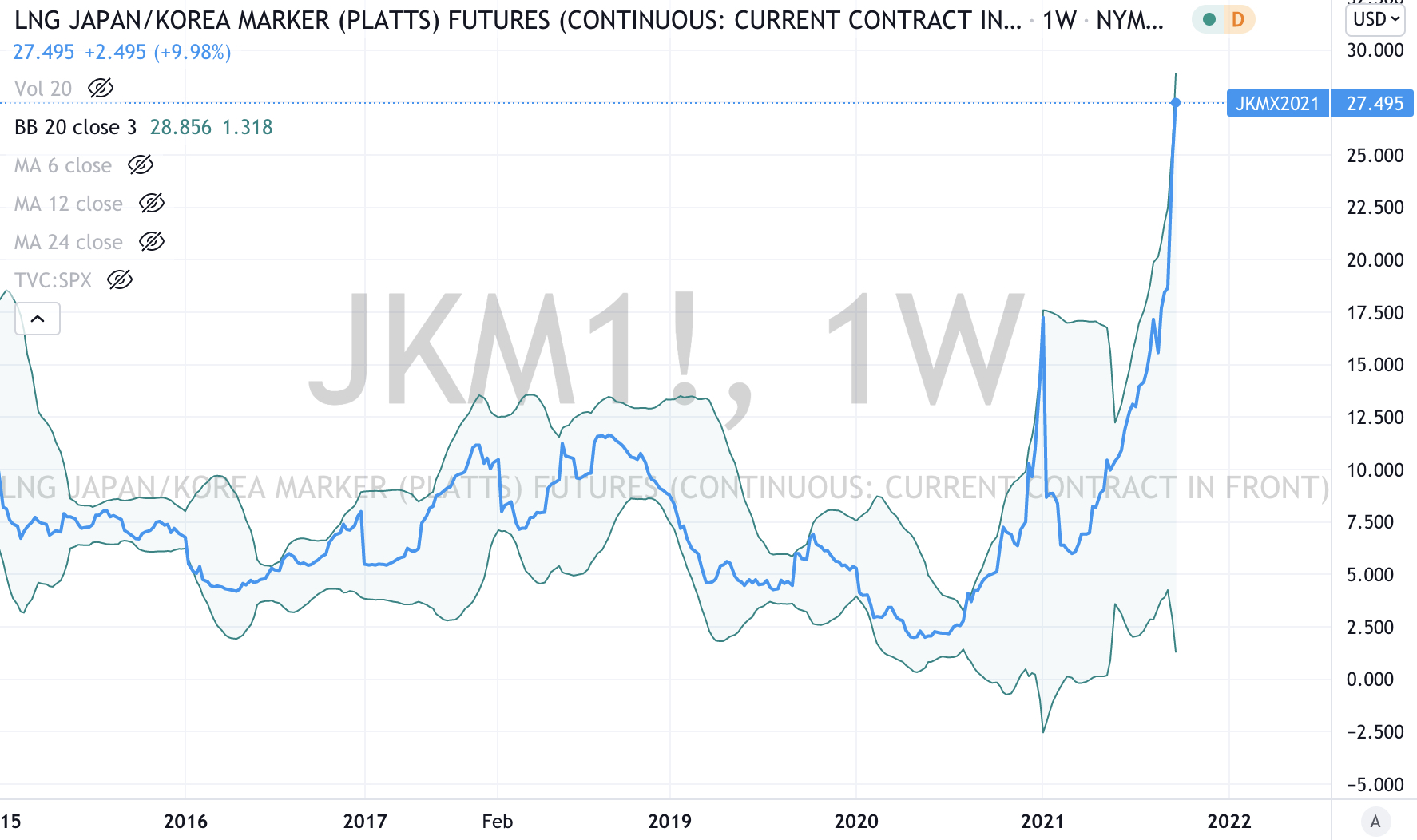
Take a look at the Platts JKM (the Liquefied Natural Gas “LNG” benchmark price) chart below.

This is a weekly chart showing the JKM now trading at 3.5 standard deviations above its mean and 280% above its 200 week moving average.

When coupled with my other indicators, this all adds up to an ‘extreme’.

Note the rare occasions when prices touch 3.5 standard deviations and the subsequent mean reversion.

Mathematics and probability suggest not entering a new ‘long’ position at these moments in time.

This study tells you to not chase prices higher. It’s a sellers market.

Buying should’ve been occurring through 2019 and 2020. You would’ve been buying in the range of $2.50 – $4.50. At that time, the 200 week moving average was hovering at a lofty $7.00.

……and then you hold and twiddle your thumbs.

Heck, it only took 2 years to make 6 times your money.

Today, we see traders buying and playing in the stratosphere displaying an inability to “buy straw hats in winter”.

Inversely, LNG producers should be selling or locking in future prices.

LNG prices are blinking an interim peak and suggest a meaningful mean reversion.

Natural Gas is close to doing so too…..

more on Nat Gas in the next post

September 29, 2021

by Rob Zdravevski

rob@karriasset.com.au

There is more to being overbought

Prices can stay ‘overbought’ for a long time.

In the chart below, the price of Hot Rolled Coil Steel (HRC) has been registering a RSI ‘overbought’ signal for 51 consecutive weeks.

The bands either side of the HRC price represent 3 standard deviations either side of its rolling weekly mean and the faint line hovering near the $850 mark is its 200 week moving average.

Albeit HRC is now trading at 122% above the 200wma and its price chart resembles a parabola, it hasn’t breached a 3 standard deviation level. It’s not registering the ‘extremes’ that I look for.

LNG prices on the other hand are blinking an interim peak and suggest a meaningful mean reversion.

LNG prices are trading at higher extremes than the already overbought Natural Gas price.

Look out for the next post.

September 29, 2021
by Rob Zdravevski
rob@karriasset.com.au

An interim high in oil prices

It all looks a bit heady. Oil prices should ease now. RBOB Gasoline is leading (its down 4% in last 2 days), Brent & Gasoil simultaneously went overbought and traded 2.5 std dev above its mean and LNG prices have gone parabolic and hit various extremes…….and whenever the media starts reporting about higher energy costs, petrol shortages and analysts increasing their oil targets to $100…..it’s probably adds up to being an interim high.

September 29, 2021

by Rob Zdravevski

rob@karriasset.com.au

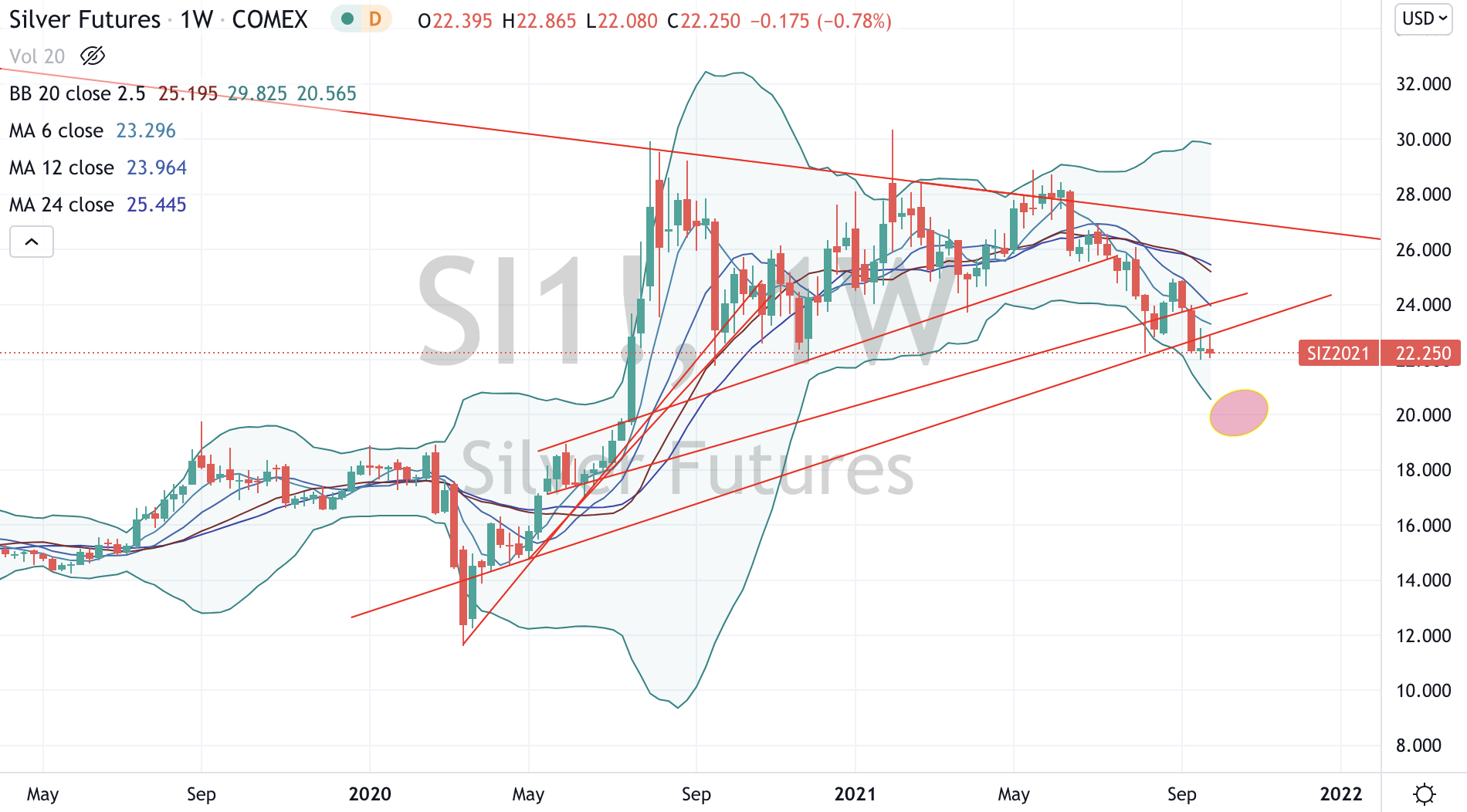
Silver is searching for a floor

Silver is closer to a buy than a sell.
A further 10% lower makes it attractive,
looking for a $19.80 – $20.10 entry

September 28, 2021
by Rob Zdravevski
rob@karriasset.com.au

Energy transition is delicate

The notion of energy transition isn’t binary.

In the absence of economic viability, price still matters. The transition to renewables requires a pragmatic reality especially when if a lower cost producer exists.

“Higher fossil fuel prices will spur a faster shift to renewable sources, all else equal, as they become economically competitive in more uses/geographies. But very high oil/gas prices risk a voter backlash against decarbonization policies, which are vital to a cleaner future.”

from the embedded tweet within this article

https://www.bloomberg.com/news/articles/2021-09-27/famed-gas-trader-arnold-says-europe-crisis-is-warning-for-u-s?sref=qLOW1ygh

Rising yields aren’t good for higher price/sales stocks

At the time of writing (an hour before Monday’s opening bell), the S&P 500 and Dow Jones Industrials futures are unchanged, but the Nasdaq 100 futures were lower by 0.70%….

one reason is the 10 year bond yield is breaking above some resistance lines. A higher bond yield is negative for high flying growth stocks.

but we need to watch a few other indicators in the coming day or so before calling a 1.65% yield.

September 27, 2021

by Rob Zdravevski

rob@karriasset.com.au

LNG JKM prices peaking

The price of the LNG JKM price has risen 5 fold over the past 12 months.

The weekly chart below shows its latest move reaching a 3 standard deviations extreme.

A 45% rise over the past few weeks assists my view that this peak suggests an equal decline in the coming months.

it’s also prudent that any LNG suppliers who have bet on the ‘spot’ market lock in prices now.

In other words, it’s a sellers market.

September 27, 2021

by Rob Zdravevski

rob@karriasset.com.au

read between the lines

because these 2 banks have massive residential mortgage exposures,
so it’s all fine having such market share until they start realising that they don’t want to become landlords when defaults occur,

but the Reserve Bank of Australia can’t raise interest rates as it will affect the largest asset class in the country to adversely.

Is that something to think about?

https://www.afr.com/companies/financial-services/cba-and-anz-sound-house-price-alarm-20210923-p58u8e